


Located in East Africa, Eritrea is a small country with a big personality. And as with its neighbor, Ethiopia, there’s a deep love for the humble coffee bean here. In fact, the Eritrean coffee ceremony is an integral part of life, and has been since time immemorial.
In this guide to the Eritrean coffee ceremony, I’ll take you on a deep dive into the coffee culture and traditions of this fascinating country. I’ll also show you how the coffee-making ritual in Eritrea differs from that of its more well-known neighbor. So, without further ado, let’s get started!
Table of Contents
What Is the Eritrean Coffee Ceremony?
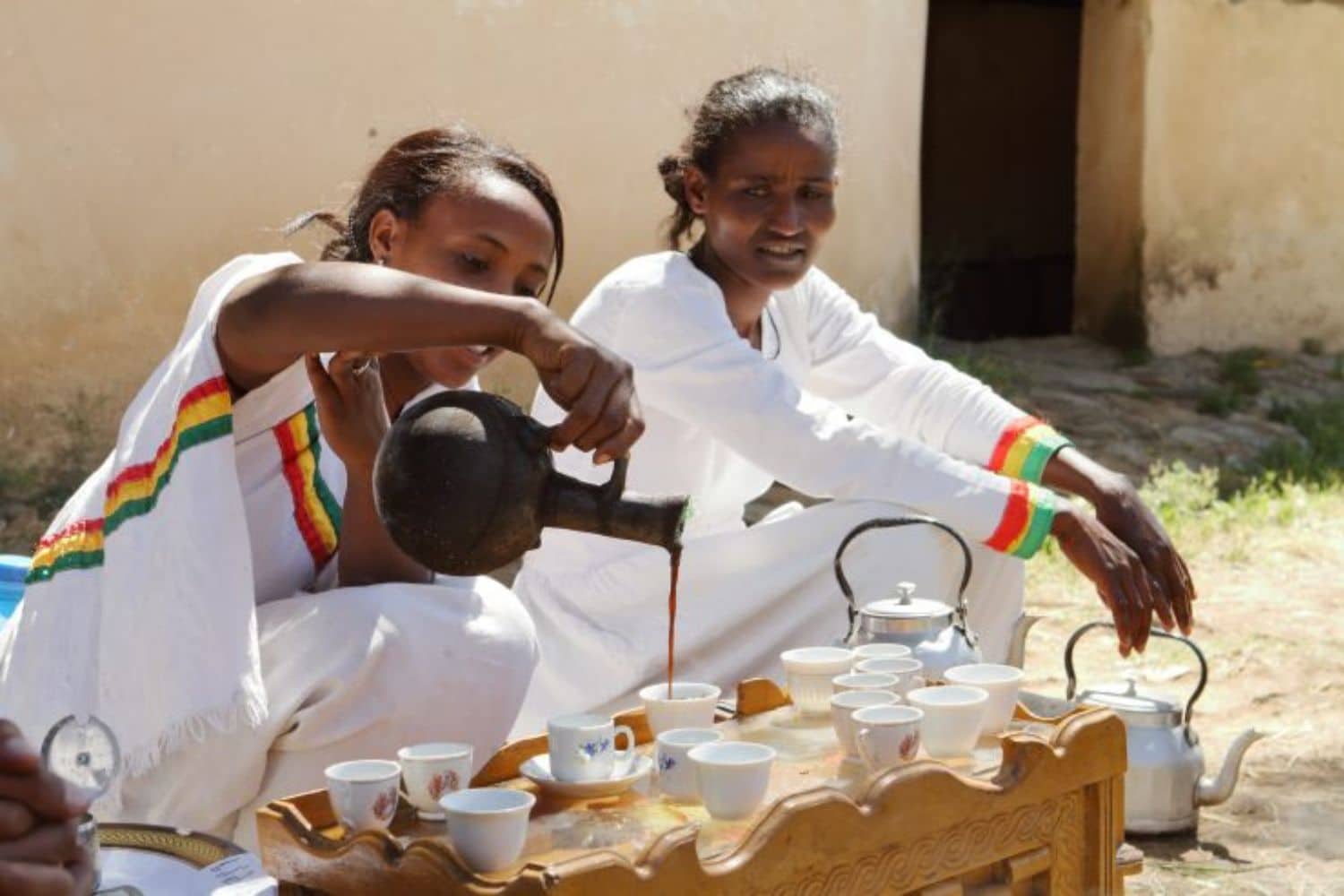
The Eritrean coffee ceremony is more than just a daily coffee break. Much more. As it happens, this ceremony is a super-important part of everyday life in Eritrea, often occurring in the evening once the day’s work is done.
Commonly referred to as Boon (coffee), the Eritrean coffee ceremony is a bonding experience that brings together families and community members. No matter what’s going on in life, the ceremony allows space and time for conversation and togetherness. And this is no quick catchup; rather, the ceremony often stretches across two or three hours, with distinct rituals and stages.
A deeply sensual and immersive experience, the Eritrean coffee ceremony includes food, incense and decoration as well as three increasingly weaker servings of coffee. Ultimately, this ceremony is about community, hospitality and respect for cultural tradition.
Why Is the Eritrean Coffee Ceremony Important?
As I just mentioned, the Eritrean coffee ceremony represents a vital way in which the population can preserve their traditions and cultural identity. However, don’t imagine that the coffee ceremony is some kind of relic from the past. Rather, this is a daily ritual that enables Eritreans to drink coffee while fostering a sense of community connection.
The coffee ceremony is an hours-long affair and provides plenty of time for meaningful conversation. Attendees are forced to slow down and be present with their family, friends and guests. And if there are grievances to be aired, this is the time to do so in a constructive and safe manner. In short, the Eritrean coffee ceremony is a time-honored tradition with distinct rituals that demands reverence and respect.
Eritrean vs Ethiopian Coffee Ceremony
Both Eritrea and Ethiopia are located in the Horn of Africa, which is widely regarded as the birthplace of coffee. With that in mind, it’s little wonder both countries cherish their African coffee ceremony traditions.
It could be said that the Ethiopian cultural coffee ceremony is more well-known than that of Eritrea. And sure, the rituals and traditions of both countries are very similar. However, the Eritrean coffee ceremony is distinct and acts as an important cultural expression for the country’s residents.
Shared Origins (Habesha Culture)
Seeing as Ethiopia and Eritrea are neighbors, it’s unsurprising that both countries are home to those who identify with Habesha culture. This ancient cultural heritage predates ideas of national boundaries and includes the Tigrayan and Amhara people.
Habesha culture prioritizes close community ties and religious traditions. And as we’ve already seen, the coffee ceremony is a valuable expression of Habesha cultural values.
In both Eritrean and Ethiopian culture, there are distinct steps involved in the coffee ceremony, including washing the green beans, roasting and grinding by hand. All these steps are performed in a manner befitting the occasion, and always by women. Finally, the coffee ceremony in both countries is a slow, ritualistic process, with snacks always served as well as three rounds of coffee.
Key Differences
There are quite a few significant differences that distinguish the Eritrean coffee ceremony from that of Ethiopia. These highlight the unique Eritrean identity, which is often in danger of being overshadowed by its larger neighbor.
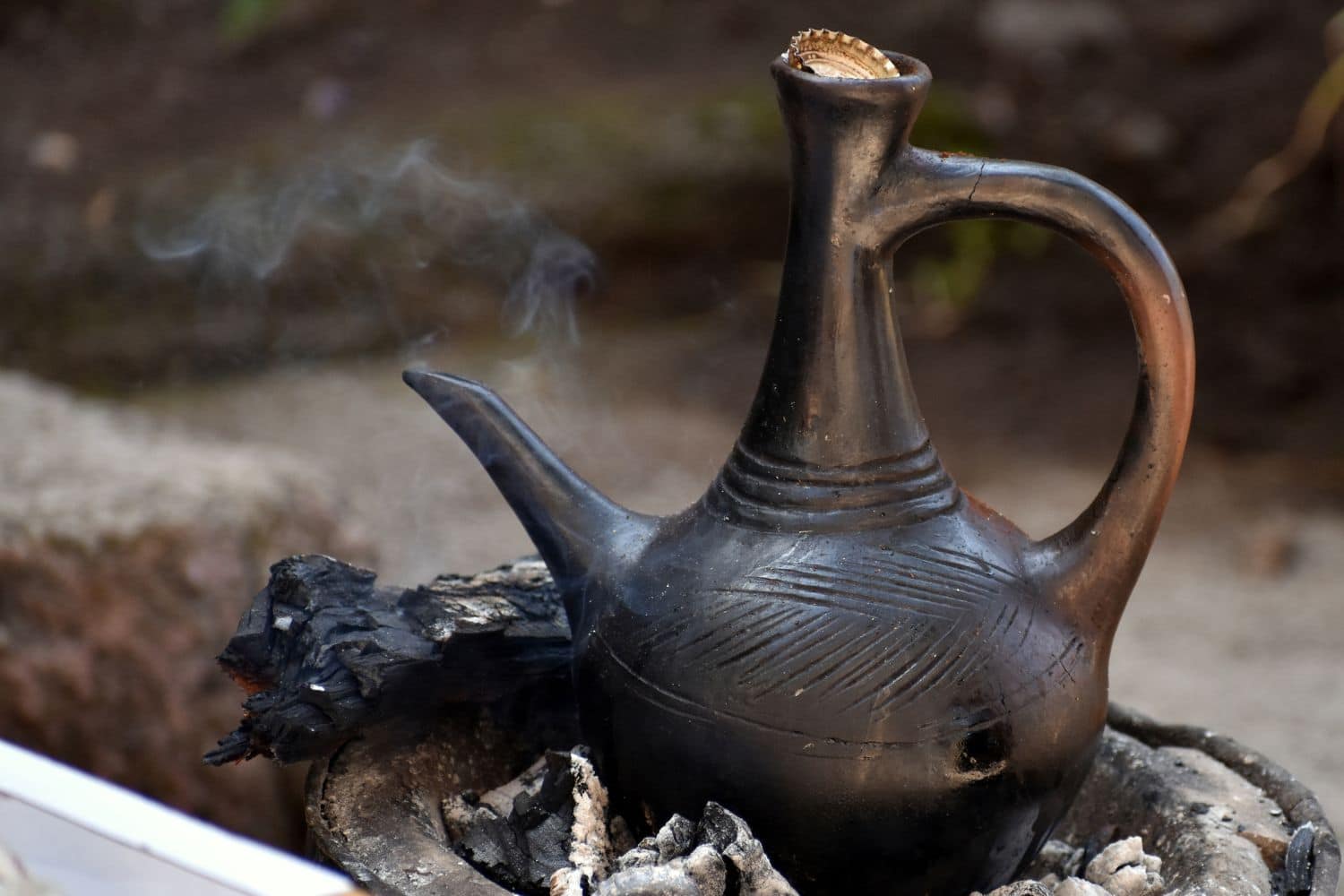
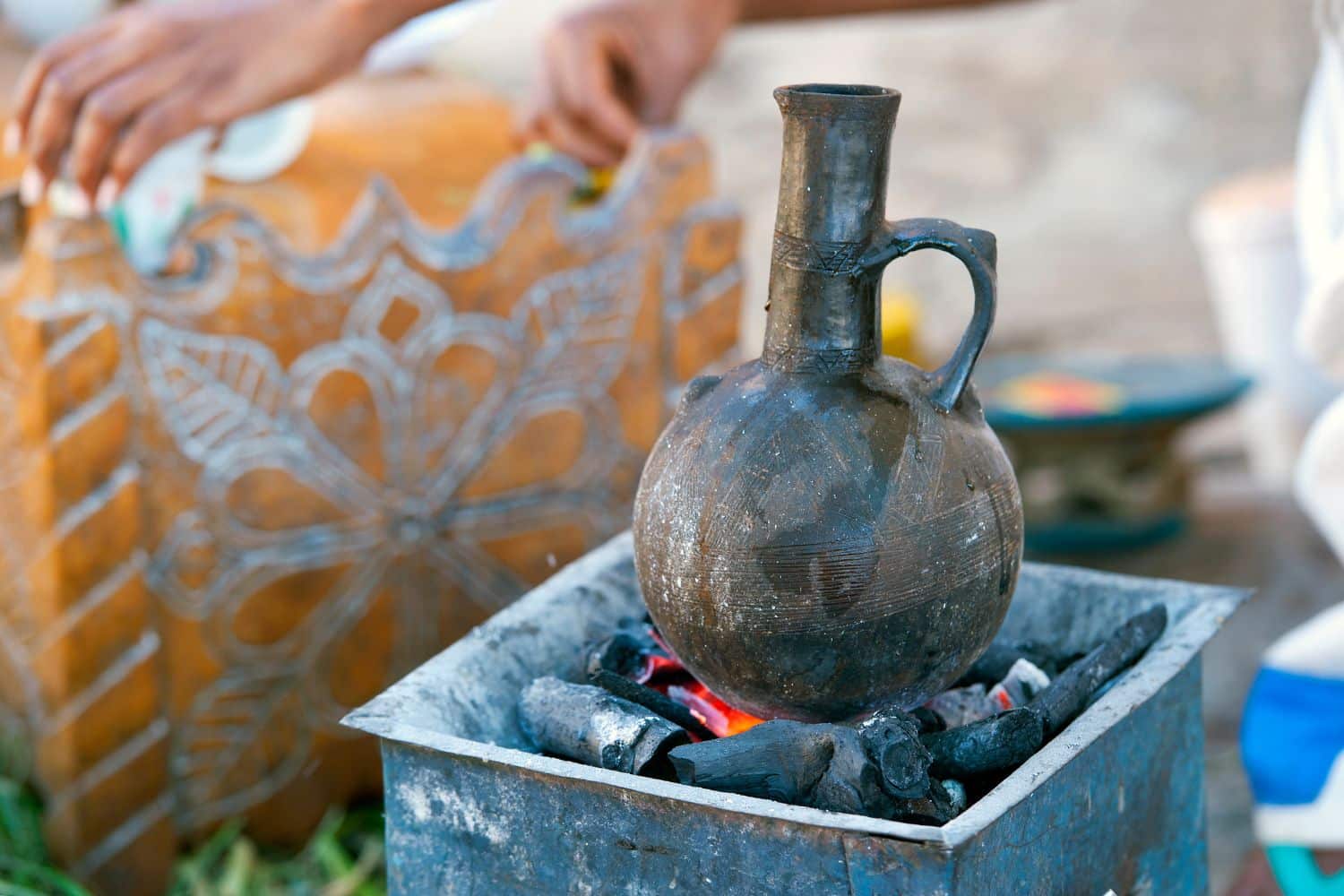
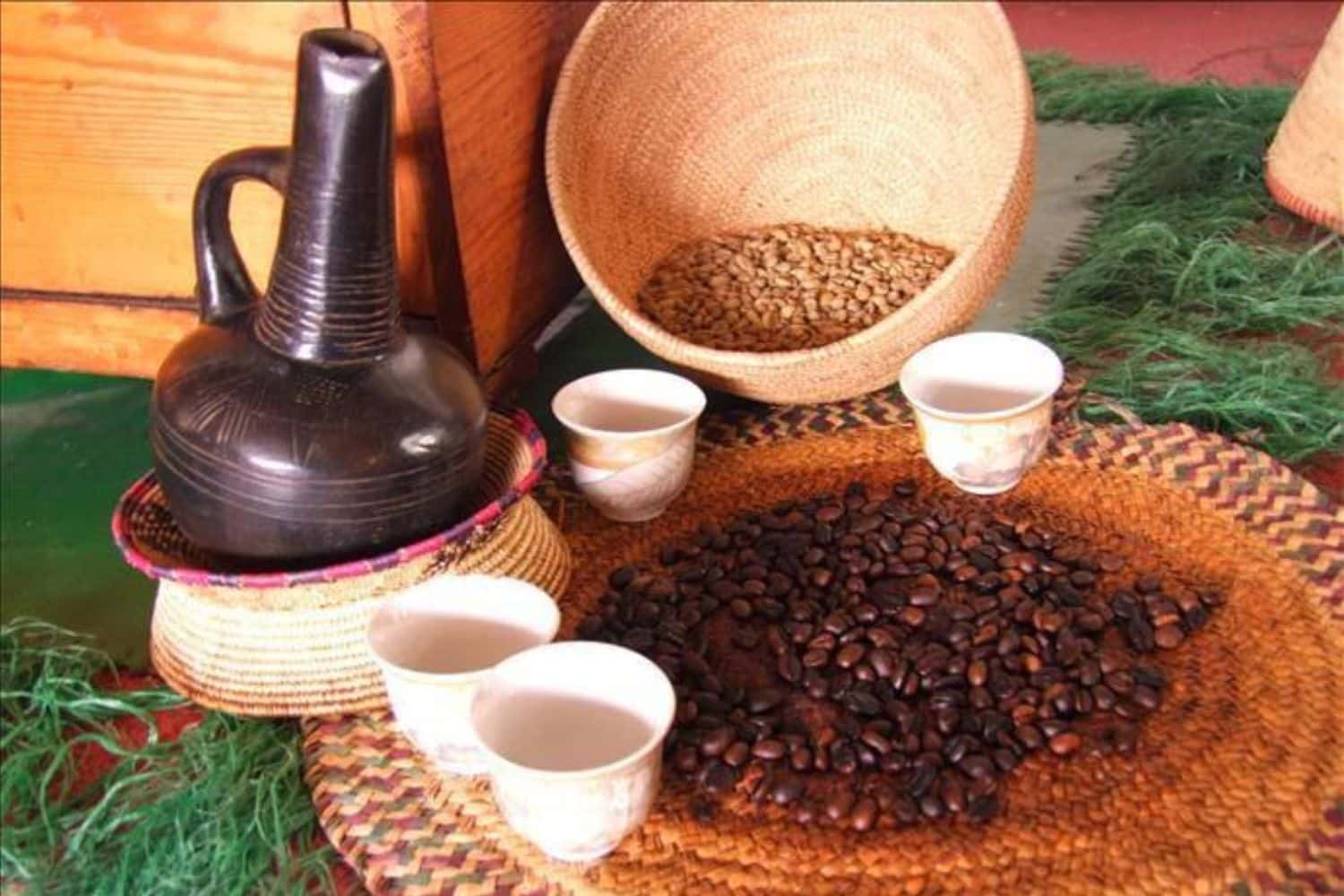
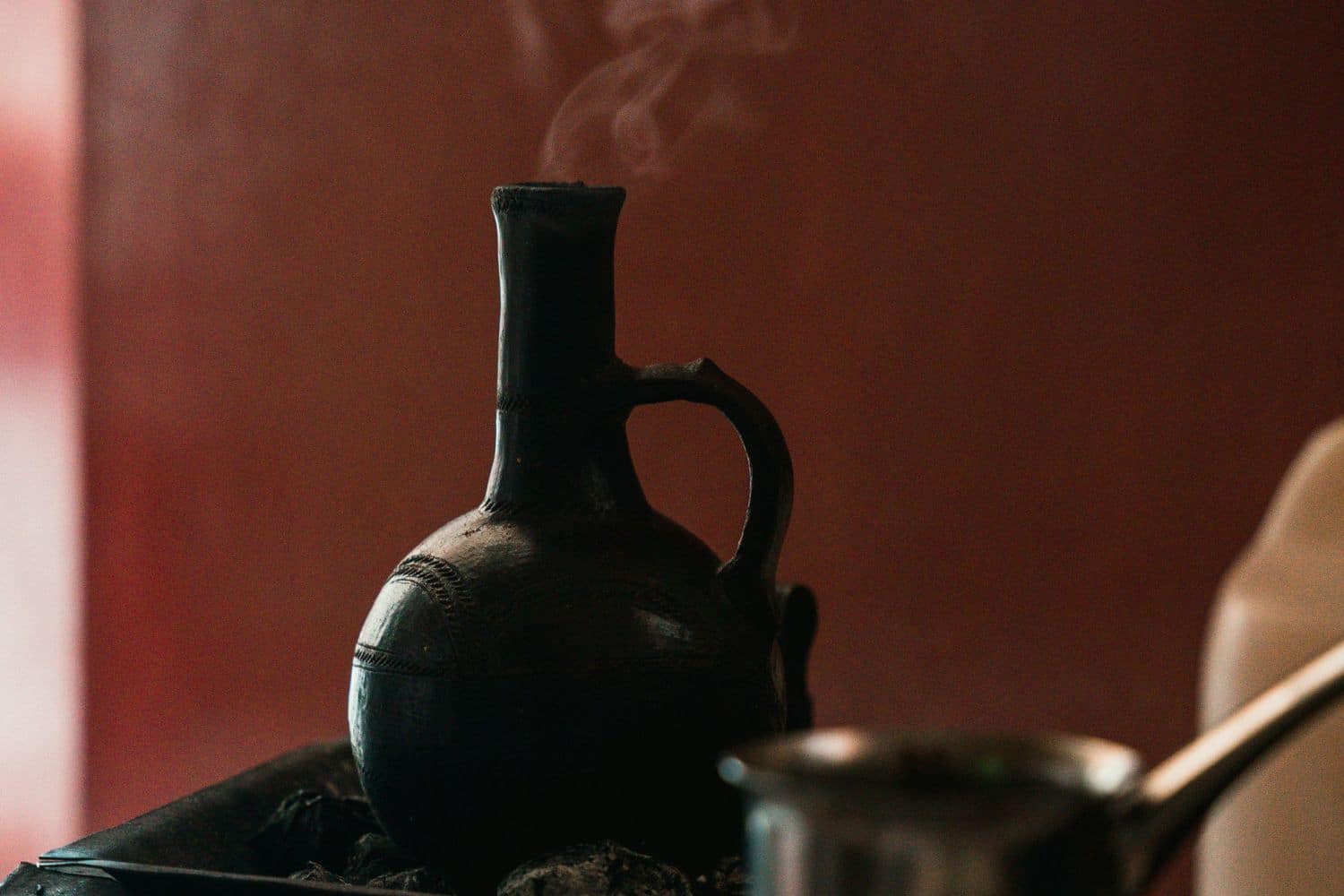
Eritreans use a distinctly different pot for brewing coffee. Called a jebena, the pot has only one opening at the top, used for both filling with coffee and water and pouring. This demands skill from the host, as it’s difficult to pour coffee without grounds. In Ethiopia, the jebena has an opening at the top for filling as well as a thin spout for pouring.
Eritreans also have different words for the three rounds of coffee consumed during the ceremony. What’s more, the word for coffee here is boon, while in Ethiopia it is most often called buna.
The small and shallow pan for roasting coffee is called menkeshkesh in Eritrea. A handmade, long-handled pan, the menkeshkesh is distinctly different from the griddle-like pan used in Ethiopia.
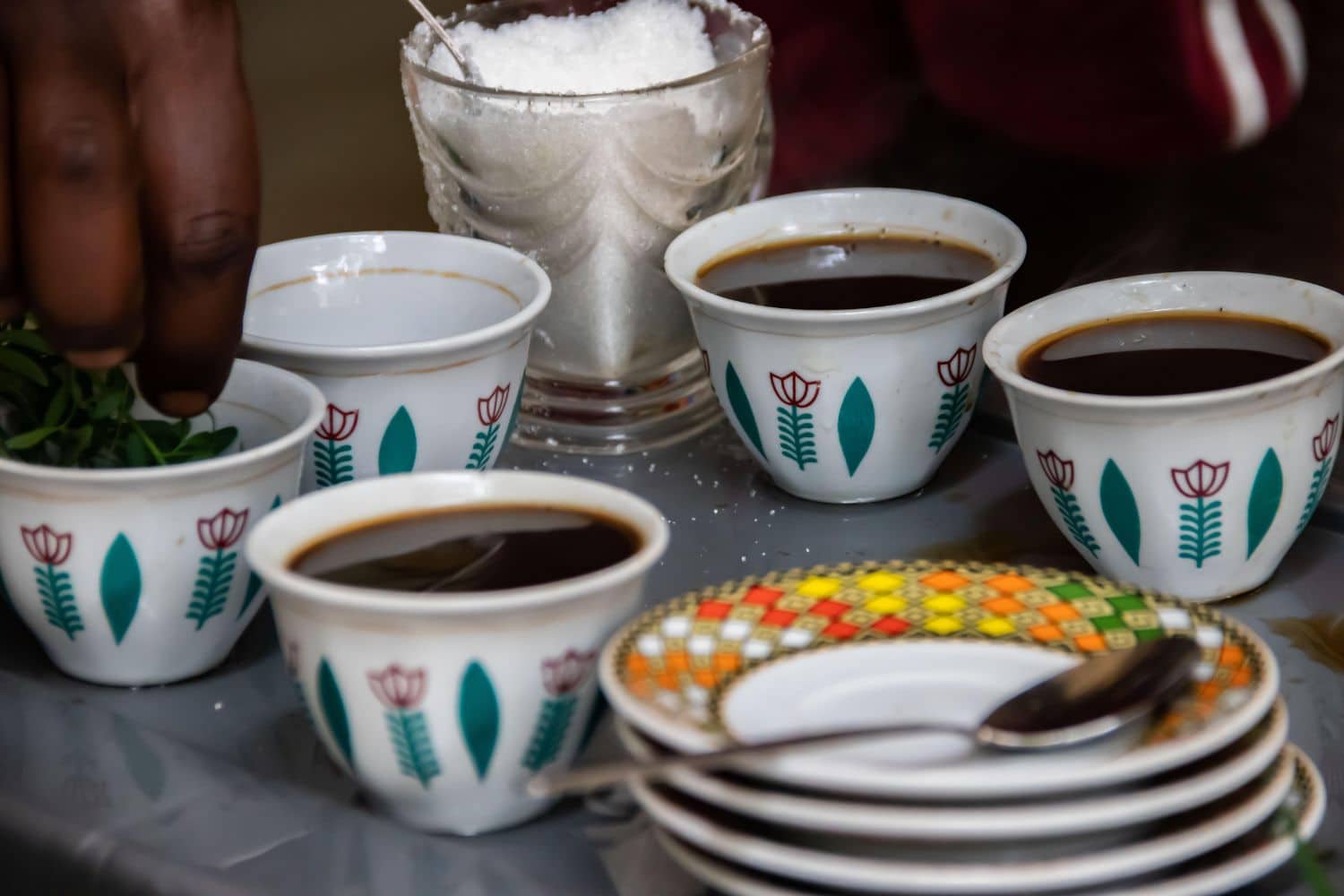
The coffee ceremonies in both countries feature small, handleless cups. In Eritrea, the cups are called finjal, and are slightly different from those used in Ethiopia.
Of course, differences can be found across the entire region. For example, specific types of incense or snacks will be used in certain areas. Heck, even the material used to make the coffee pot can vary, depending where you are in Eritrea.
The Cultural Meaning Behind the Ceremony
Thus far, I’ve touched on the importance of the Eritrean coffee ceremony to the country’s citizens. Let’s dive deeper into the cultural meaning behind it.
Hospitality and Respect
To be invited to an Eritrean coffee ceremony is the ultimate signifier of friendship and respect. After all, this is an incredibly hospitable culture that values community and the ties that bind. Furthermore, Eritrean culture prizes tradition, continuity and spirituality.
The Role of Women
While it might seem outdated to us, it’s always women who perform the crucial steps in the Eritrean coffee ceremony. These include setting the scene, roasting coffee and pouring for those gathered. This is almost a sacred role, and women are revered for their grace and dignity in the coffee ceremony setting.
Community and Conversation
Again, I’ve already touched on this, but it bears repeating. The ceremony is a special daily ritual that prioritizes conversation. It’s expected that community members will gather to share news, grievances or important matters. The Eritrean coffee ceremony is a safe space, and the sense of occasion means that all conversation will be respectful and open.
Step-by-Step: How the Eritrean Coffee Ceremony Works
Now that we have a clear idea of the Eritrean coffee ceremony’s cultural and social importance, let’s take a closer look. Whether the coffee ceremony is held in Eritrea or in an expat community, the steps are always the same.
1. Preparing the Space
Before guests arrive, the hostess prepares the space. The coffee ceremony is often held around a low wooden table, and the hostess will usually decorate the room with fresh and aromatic grasses called qetema or kushe. Finally, she will burn incense called etan, with the specific scent dependent on local traditions.
2. Washing and Roasting Green Beans
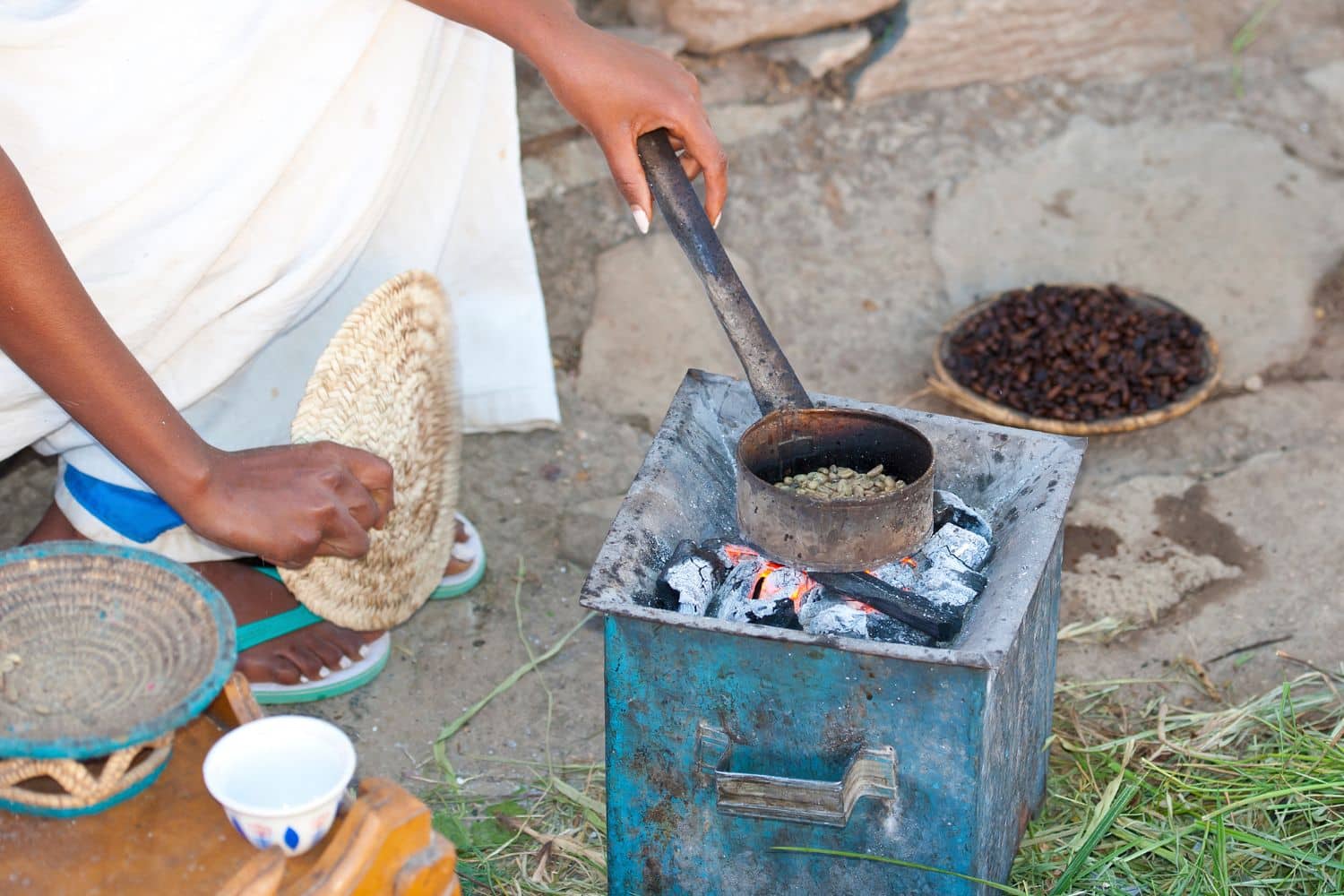
The second part of the Eritrean coffee ceremony ritual involves the hostess carefully washing the green coffee beans. This is performed while guests are present, signifying that the hostess is selecting only the finest beans for roasting. Once complete, the dried green coffee beans are slowly and carefully roasted in the menkeshkesh pan over a charcoal brazier. This fills the air with the rich scent of smoky roasted beans, further adding to the sensory experience of the coffee ceremony.
3. Grinding the Coffee
Now it’s time to grind the roasted beans in preparation for brewing. This is done by hand using a mortar and pestle. Again, the slow, methodical process is a key part of the coffee ceremony, exemplifying the unhurried and relaxing vibe.
4. Brewing in a Jebena
As I already pointed out, the Eritrean jebena is a clay pot for brewing coffee with just one opening at the top. The hostess carefully adds ground coffee and water to the pot before placing it on the charcoal brazier. Once the coffee has boiled, it’s allowed to settle for a few minutes. While Eritrean jebena coffee is often unfiltered, some pots do have a rudimentary filter inside to help keep used coffee grounds from escaping.
5. The Three Rounds
After grinding and brewing beans, the finished coffee is served in small porcelain cups called fijal. Furthermore, there are three specific “rounds” of coffee, each offering a different experience and each enjoyed slowly. First of all comes the awel round of strong, full-bodied coffee. The next round of coffee is called kele’i, and features a milder brew. It’s during this round that the conversation flows, usually accompanied by Eritrean snacks like popcorn and a special leavened bread called himbasha. Finally, the third and final one is when guests are treated to a much weaker cup of coffee. In this case, the hostess bestows blessings on all those present, signifying the end of the Habesha coffee ceremony.
What Does Eritrean Coffee Taste Like?
For the most part, Eritreans enjoy using natural process coffee from Sidamo or Harar during their coffee ceremony. Cultivated in Ethiopia, these coffees often feature distinct notes of berry and cane sugar, and the resulting brew is chocolatey, syrupy and full-bodied. To enhance the coffee’s intrinsic flavors and create a hot and intriguing aroma, the hostess will usually infuse the brew with warming spices like clove, ginger and cinnamon while it’s boiling in the jebena.
Final Thoughts: More Than Just Coffee
As we’ve seen throughout this guide, the Eritrean coffee ceremony is a deeply meaningful ritual that’s incredibly important to Eritreans everywhere. This ceremony is more than simply a coffee break to catch up with friends – it’s a cultural expression that helps Eritreans maintain a sense of history and tradition. What’s more, the Eritrean coffee ceremony brings together friends, community members and guests under one roof. In this way, the ritual ensures social cohesion and a sense of wellbeing.
If you happen to live near an Eritrean restaurant, I’ll wager that you’ll be able to experience a coffee ceremony firsthand. I strongly encourage you to do so – it’ll offer a powerful experience that you won’t forget in a hurry!
FAQ: Eritrean Coffee Ceremony
The Eritrean coffee ceremony is a traditional ritual meant to bring community members together to spend time in a meaningful way.
The type of incense used in an Eritrean coffee ceremony depends on the specific region. However, it’s most commonly frankincense, myrrh or sandalwood incense.
A jebena is the pot used in an Eritrean or traditional Ethiopian coffee ceremony to prepare coffee.