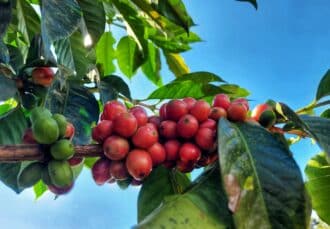



It might surprise you to know that there are over 120 species of coffee. The main four – Arabica, Robusta, Liberica and Excelsa – make up the bulk of global production. I’ve discussed the first three in previous posts, but not the latter. Until now, that is.
So, what is Excelsa coffee?
Excelsa is a lesser-known coffee that thrives in Southeast Asia, producing beans with a curious flavor profile. It’s mostly used in coffee blends to give them depth and complexity.
But is that all these beans are famous for? Definitely not!
Read on to acquaint yourself with what could be the coffee world’s best kept secret.
Table of Contents
Overview: What Is Excelsa Coffee?
Excelsa coffee, or Coffea excelsa, is one of four main coffee species cultivated worldwide today. Yet, it still remains relatively obscure.
Thriving in Southeast Asia, this coffee is remarkably resilient. Its hardy nature allows it to flourish in conditions where more delicate Arabica coffee varieties would struggle.
While Arabica (and to some extent Robusta and Liberica) can stand on their own flavorwise, this coffee operates quietly in the background. In other words, you’ll rarely find 100% Excelsa on grocery store or coffee shop shelves.
Then again, there’s a good reason for that.
While delicious in its own right,Coffea excelsa truly shines in coffee blends. Specialty roasters incorporate Excelsa beans (typically 5%-20%) in blends to create a nuanced and layered flavor profile.
A Brief History of Excelsa Coffee
The story of Excelsa coffee began in the late 19th century amid the great age of African exploration.
In 1904, French botanist Auguste Chevalier discovered Coffea excelsa growing wild near Lake Chad. He recognized this towering plant as something scientifically distinct from the already identified Arabica and Robusta varieties. Incidentally, the name “Excelsa” comes from the Latin, for “lofty” or “elevated.”
Due to a rust disease crisis in the 1890s, which decimated Arabica plantations, researchers actively searched for a replacement coffee that would diversify and strengthen global production.
Thus, Excelsa and Liberica seeds made the journey from Africa to Southeast Asia sometime in the 1920s. They took hold in French Indochina (modern-day Vietnam, Laos and Cambodia), Malaysia and the Philippines.
Southeast Asia proved to be an ideal adoptive home for Excelsa coffee. Vietnamese and Filipino farmers in particular, found that Excelsa thrived where Arabica struggled, carving out an important niche in the region’s economics and coffee culture.
Excelsa Coffee vs Arabica and Other Coffees
Understanding the four main coffee species requires looking beyond simple taste differences. That’s because where each species originated has a significant effect on its cultivation, processing and resilience.
Arabica (Coffea arabica), which originated in Ethiopia, demands higher growing altitudes of 800-2,200 meters above sea level (masl). It also needs cooler temperatures and distinct rainfall patterns to thrive.
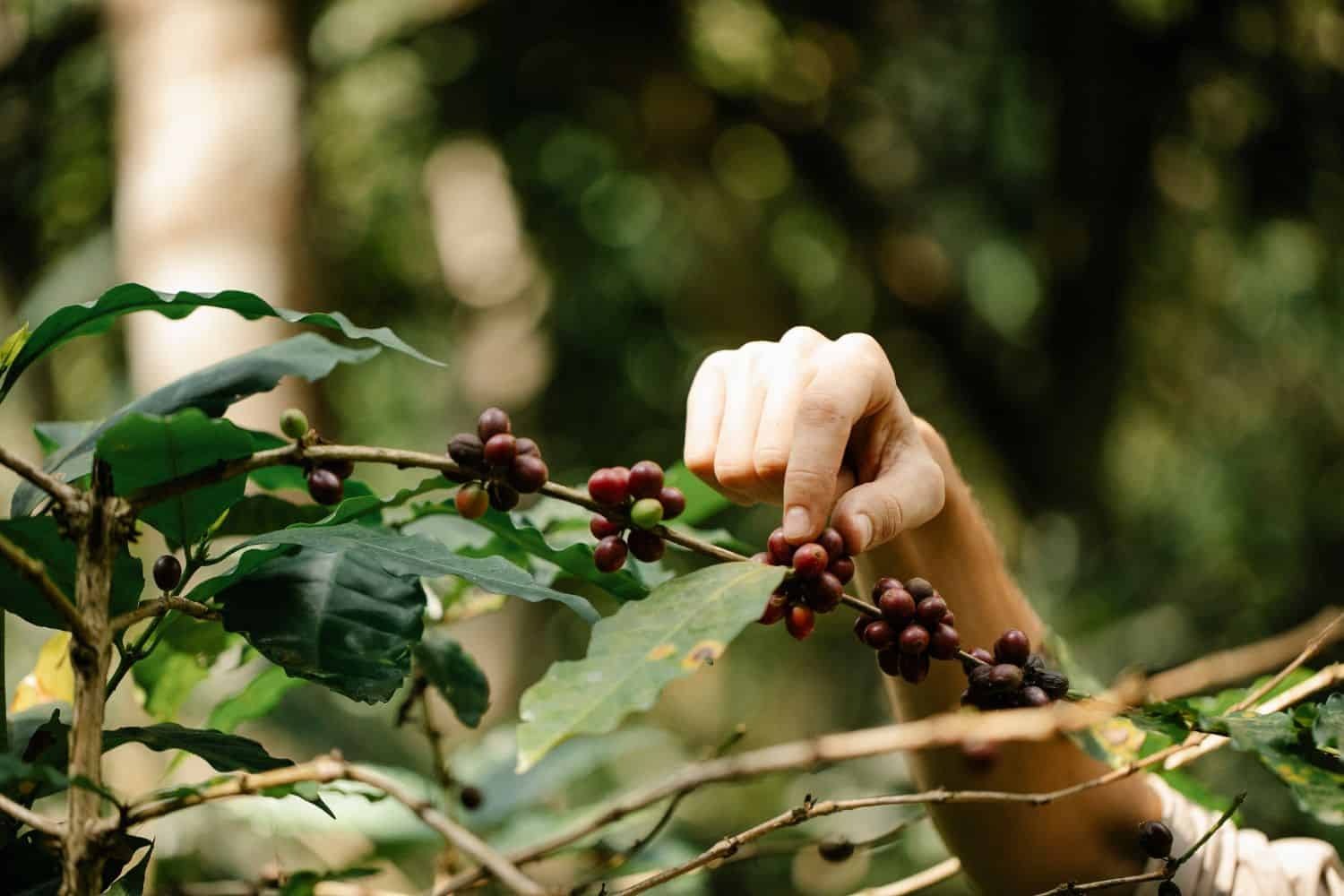
Its bluish-green beans are medium-sized (8-12 millimeters), oval and symmetrical with a characteristic S-shaped crease running down the center. Their uniform size simplifies processing and roasting.
In contrast, Robusta (Coffea canephora), originating in the Congo basin, thrives in lowlands, up to 800 masl. Its lower-altitude requirements make it the coffee to grow where Arabica cultivation is impossible.
This coffee’s dull-tan or dark-green beans are smaller and rounder with a straighter center crease. While less uniform than Arabica, Robusta beans are relatively consistent in size and shape, measuring 6-8 millimeters in length.
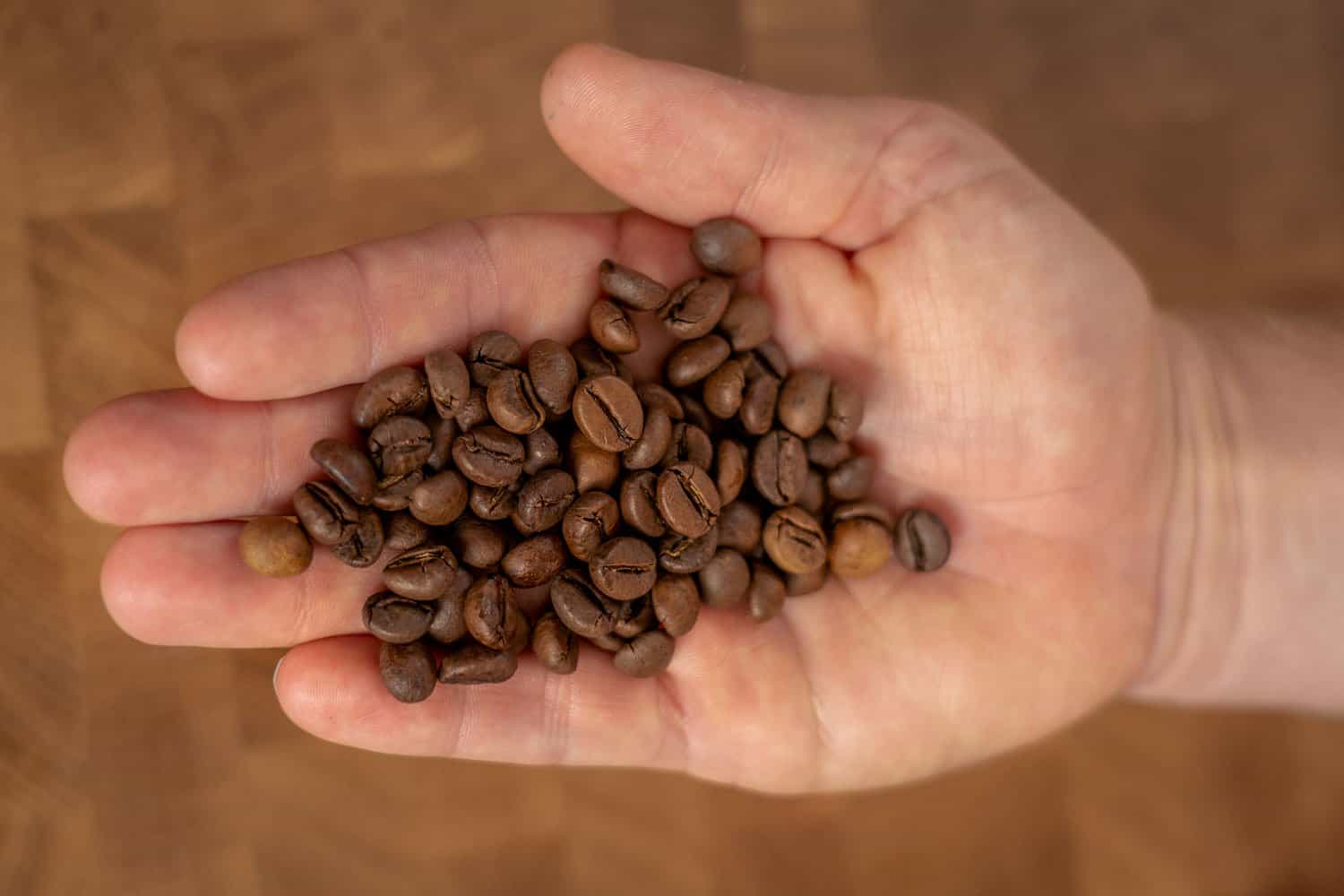
Liberica and Excelsa are notably different. They thrive at intermediate altitudes, with Excelsa preferring slightly higher elevations than Liberica.
Liberica (Coffea liberica), grows at altitudes of up to 1,000 masl. It loves coastal lowlands and high humidity areas, commonly found in its native Liberia. Therefore, it occupies ecological niches that neither Arabica nor Robusta can tolerate.
Similarly, Excelsa or Coffea excelsa, native to the Lake Chad region, grows optimally between 1,000 and 1,300 masl. This places it above typical Robusta zones but below prime Arabica territory.
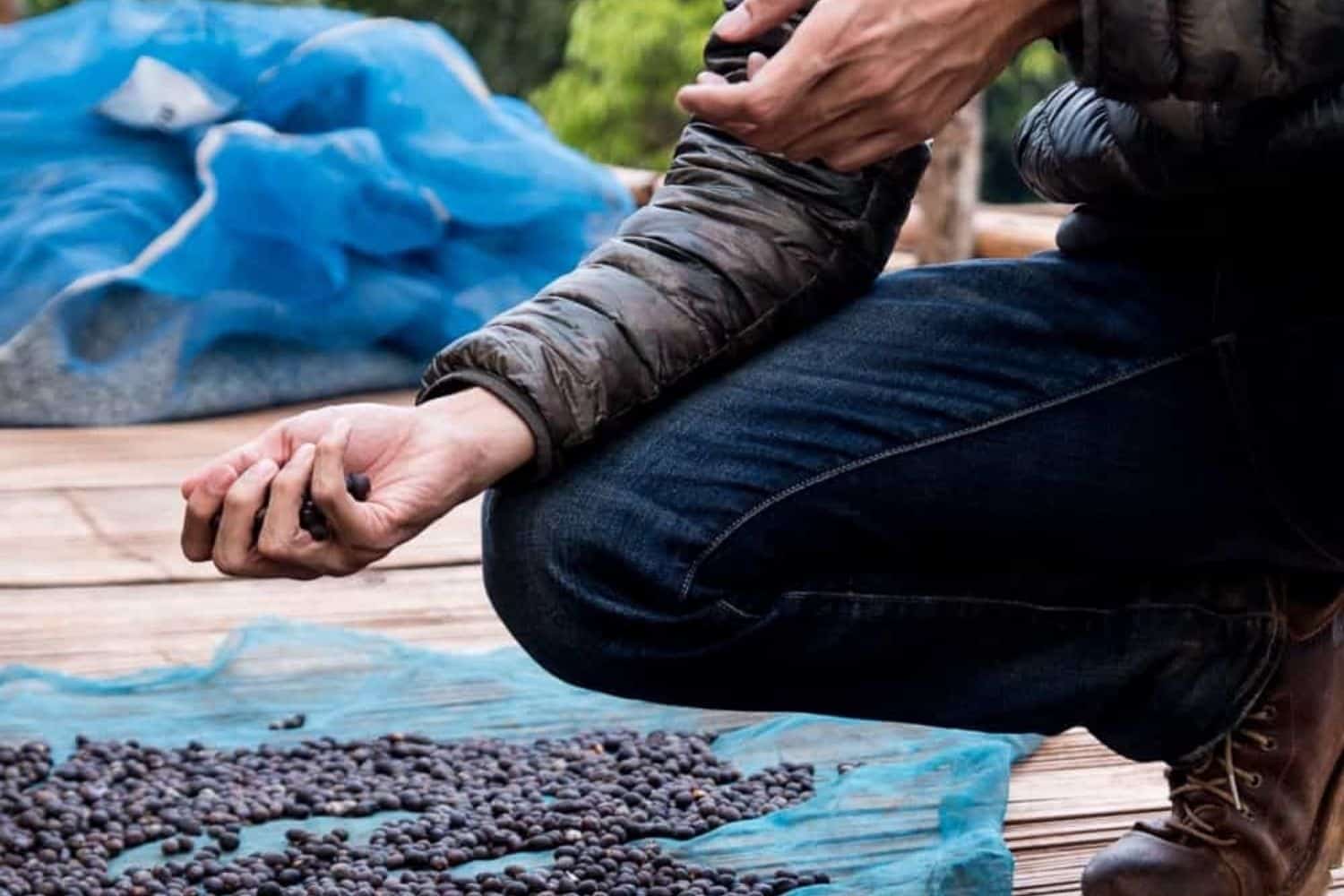
Liberica produces the largest beans of any of the commercial coffee species at 12-16 millimeters in length. These irregular-shaped, muddy-green beans, often “hook-shaped” or “malformed,” vary significantly in size, even within a single harvest.
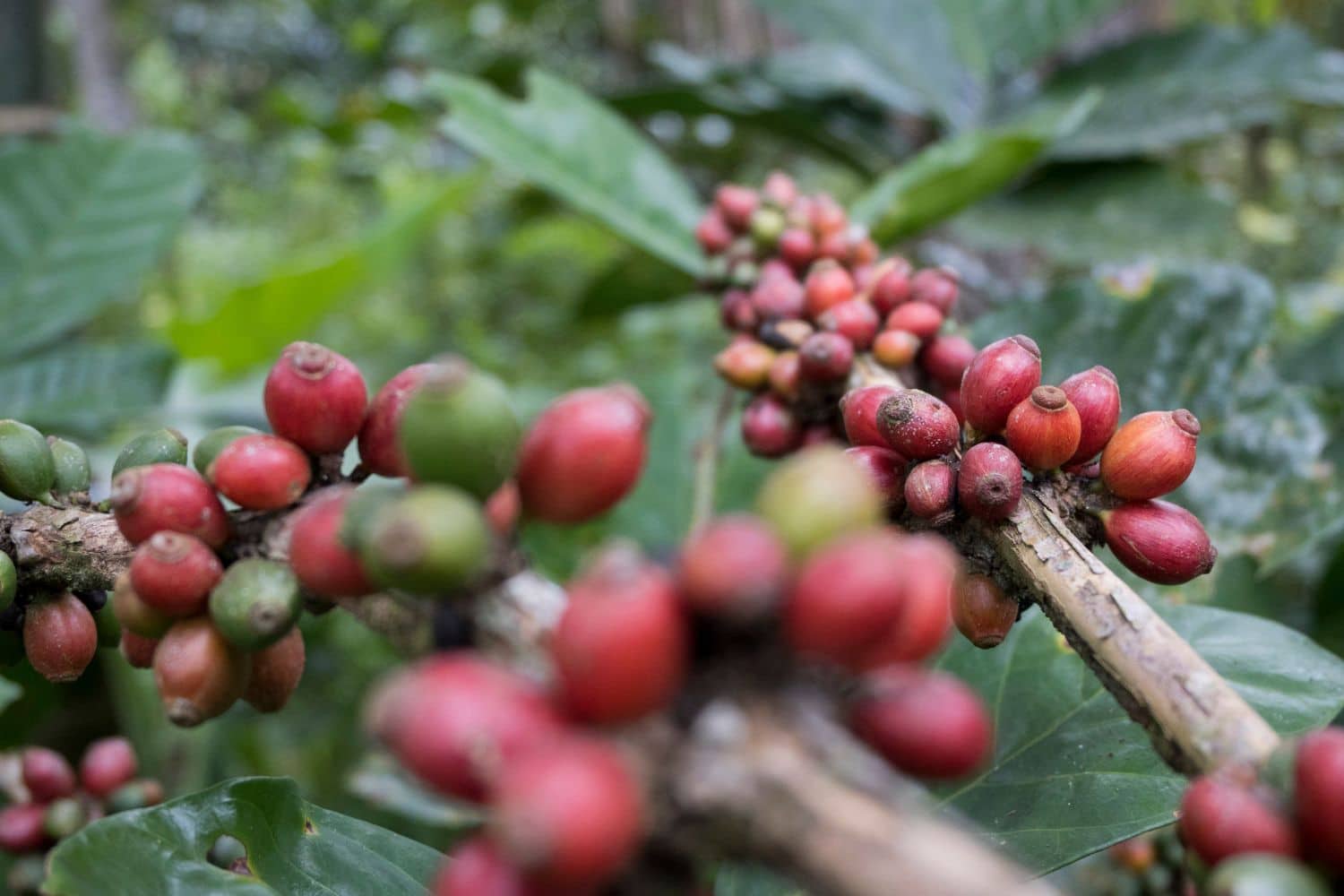
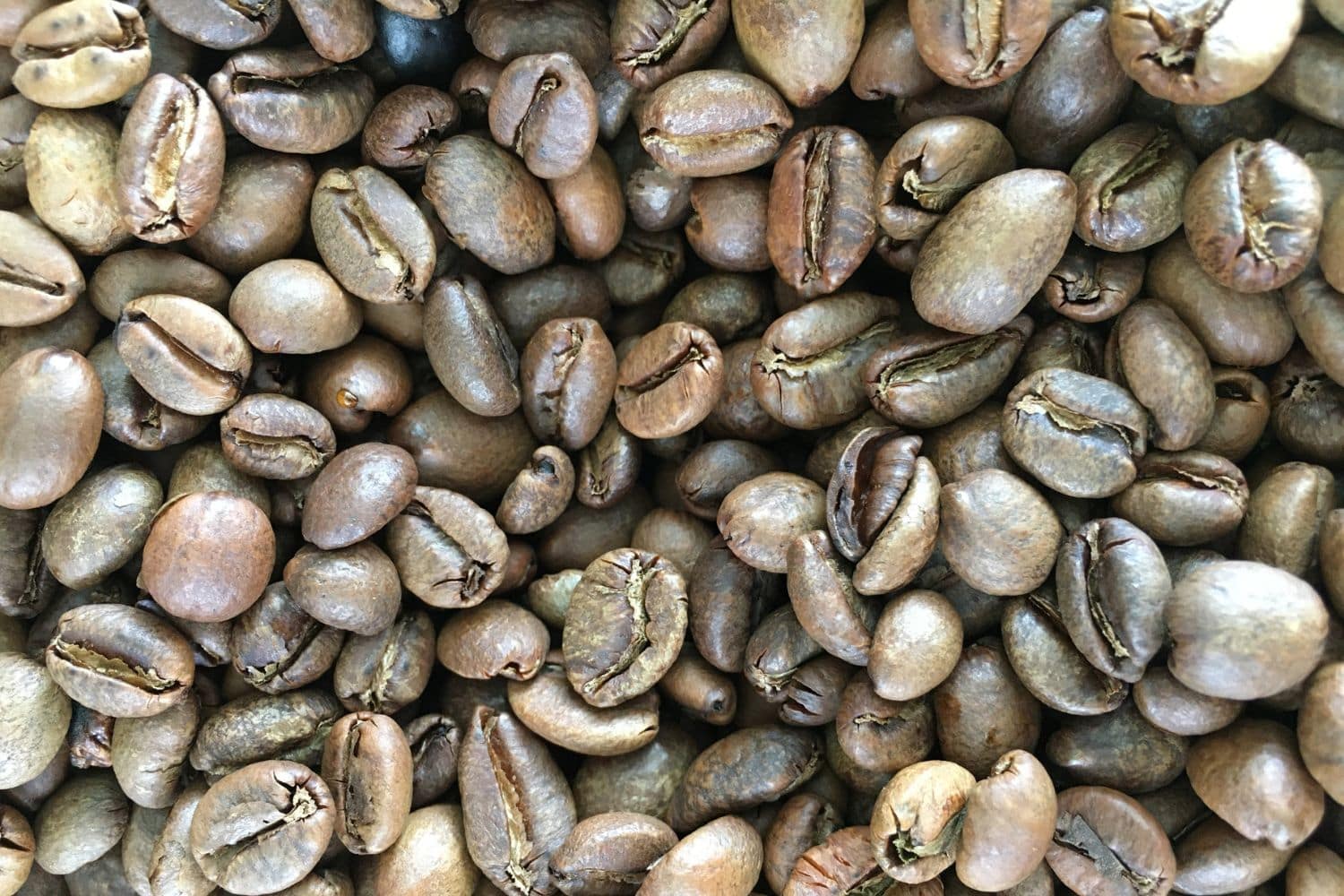
Excelsa coffee shares Liberica’s tendency toward irregular bean shapes. However, these olive-green beans are smaller than Liberica, more elongated and markedly asymmetrical. As with Liberica, their significant size variation makes uniform processing difficult.
Flavor Differences
Arabica’s flavor complexity makes it the darling of the specialty coffee industry. Depending on variety, terroir and processing, it can express floral notes, stone fruit or berry sweetness, chocolate or nutty undertones and wine-like qualities.
Its body ranges from light and tea-like to syrupy and full. Its acidity is equally wide-ranging, from crisp and vibrant to soft and malic. Most varieties contain 1.2%-1.5% caffeine by weight.
Robusta’s flatter flavor profile is earthy and grainy. It typically has a heavier body with lower acidity, which creates a mouth-coating, somewhat harsh sensation.
While high-quality Robustas can show pleasant chocolatey or nutty notes, the species lacks Arabica’s aromatic complexity. However it’s prized for its higher caffeine content (2.2%-2.7%), deeper body and excellent espresso crema.
Liberica offers perhaps the most controversial flavor profile in the coffee world. Some find it fascinatingly complex, while others consider it unpleasantly unconventional.
Tasters describe it as “unusual,” with smoky, woody, floral and funky characteristics. Some detect savory notes not found in other coffees.
This coffee’s body is typically medium and syrupy, the acidity remains low and the caffeine content falls somewhere between Arabica and Robusta, at 1.2%-1.6%.
Lastly, we have Excelsa. It delivers the most paradoxical flavor experience of the four species.
This coffee shows bright, tart, fruity Arabica-like notes on the front of the palate. At the same time, it finishes with darker, almost smoky undertones, typical of Robusta and Liberica.
This duality is Excelsa’s defining feature. Q graders often note tropical fruit flavors like jackfruit or tamarind, along with wine-like or berry notes. The body is typically medium, and the caffeine content is similar to that of Liberica.
Notably, Excelsa’s flavor duality gives it more blending value than Liberica’s more polarizing profile.
Disease and Pest Resistance
The four main coffee species also vary in their vulnerability to pests and diseases.
Arabica is notoriously susceptible to coffee leaf rust, coffee berry disease and pests like the coffee berry borer. This vulnerability stems partly from Arabica’s narrow genetic base, which reduces disease resistance.
Robusta fares slightly better. In fact, it partly earned its name thanks to its superior disease resistance to coffee leaf rust and coffee berry disease. It also shows greater tolerance for drought, poor soils and temperature fluctuations.
Liberica and Excelsa both have robust disease resistance similar to Robusta. They rarely suffer significant losses from coffee leaf rust or berry disease.
Is Excelsa Coffee a Variety or a Species?
As mentioned, the botanical understanding of what is Excelsa coffee underwent a radical revision in the late 20th century. Advanced genetic research revealed that Coffea excelsa shared a closer DNA relationship with Coffea liberica than first thought.
In 2020, this led to a reclassification from a distinct coffee species to a variant of Liberica (Coffea liberica var. dewevrei).
Unfortunately this reclassification caused quite some confusion in the industry, as Excelsa coffee had already established its identity.
Producers, green coffee buyers and roasters continued to refer to it as Excelsa rather than Liberica dewevrei due to its distinct growing characteristics and unique flavor profile. This continues to be the case today.
Excelsa Coffee Production Today: Cultivation Challenges
Quantifying exact Excelsa production worldwide has proved challenging. Many producing countries don’t separate Excelsa statistics from Liberica figures. To make things worse, many farmers blend Excelsa and Robusta harvests.
However, industry estimates suggest global production at between 50,000-80,000 60-kilogram bags annually, a mere 0.1 percent of total global production.
Compared to Arabica’s 106 million bags and Robusta’s 78 million bags each year, Excelsa production is tiny, making it one of the rarest coffees in the world.
Is There a Future for Excelsa Coffee?
As coffee enthusiasts become more adventurous and knowledgeable, interest in Excelsa is slowly growing.
Climate change has also brought renewed attention to this resilient coffee species. As rising temperatures and unpredictable weather patterns threaten traditional high-altitude Arabica-growing regions, farmers and researchers are looking toward Excelsa and Liberica.
While pure Excelsa coffee remains rare, many forward-thinking specialty roasters are now experimenting with higher Excelsa percentages in their blends. These initiatives have given curious coffee lovers their first real opportunity to taste this remarkable bean.
Where Is Excelsa Grown?
Today, Excelsa coffee production remains concentrated in Southeast Asia.
Vietnam accounts for 60 percent of global output, with much of it destined for traditional blends used to brew ca phe sua da (Vietnamese iced coffee).
The Philippines comes in as the second-largest producer, accounting for 20-25 percent of global output. Like in Vietnam, Filipino roasters blend Excelsa with Liberica and Robusta for local consumption.
Malaysia, particularly the states of Johor and Perak, maintain smaller but consistent Excelsa production. Some experimental cultivation also occurs in Thailand, Indonesia and parts of India’s Western Ghats.
Sadly, commercial Excelsa production in its native Africa is virtually nonexistent today. Only the occasional wild or semi-wild trees remain.
What Does Excelsa Coffee Taste Like?
What truly sets Excelsa apart is its flavor profile. On first sipping on an Excelsa-heavy brew, you’ll encounter a fascinating interplay of flavors that seems almost contradictory.
This coffee delivers bright, tart, fruity notes reminiscent of Kenyan or Ethiopian coffee on the front of the palate. Then, it transitions into deeper, darker, smoky flavors on the finish.
Master roasters use Excelsa coffee’s duality to add depth, complexity and mystery to their blends.
How to Brew Excelsa Coffee
Because of its unique flavor complexity, this coffee requires careful brewing.
Pour-over is the ideal choice for brewing Excelsa coffee. The clean filtration reveals a bright, wine-like acidity and layered fruit flavors without the muddiness.
Use medium-roasted beans (dark roasts can be bitter), a medium grind and water just off the boil. The recommended coffee-to-water ratio is 1:16.
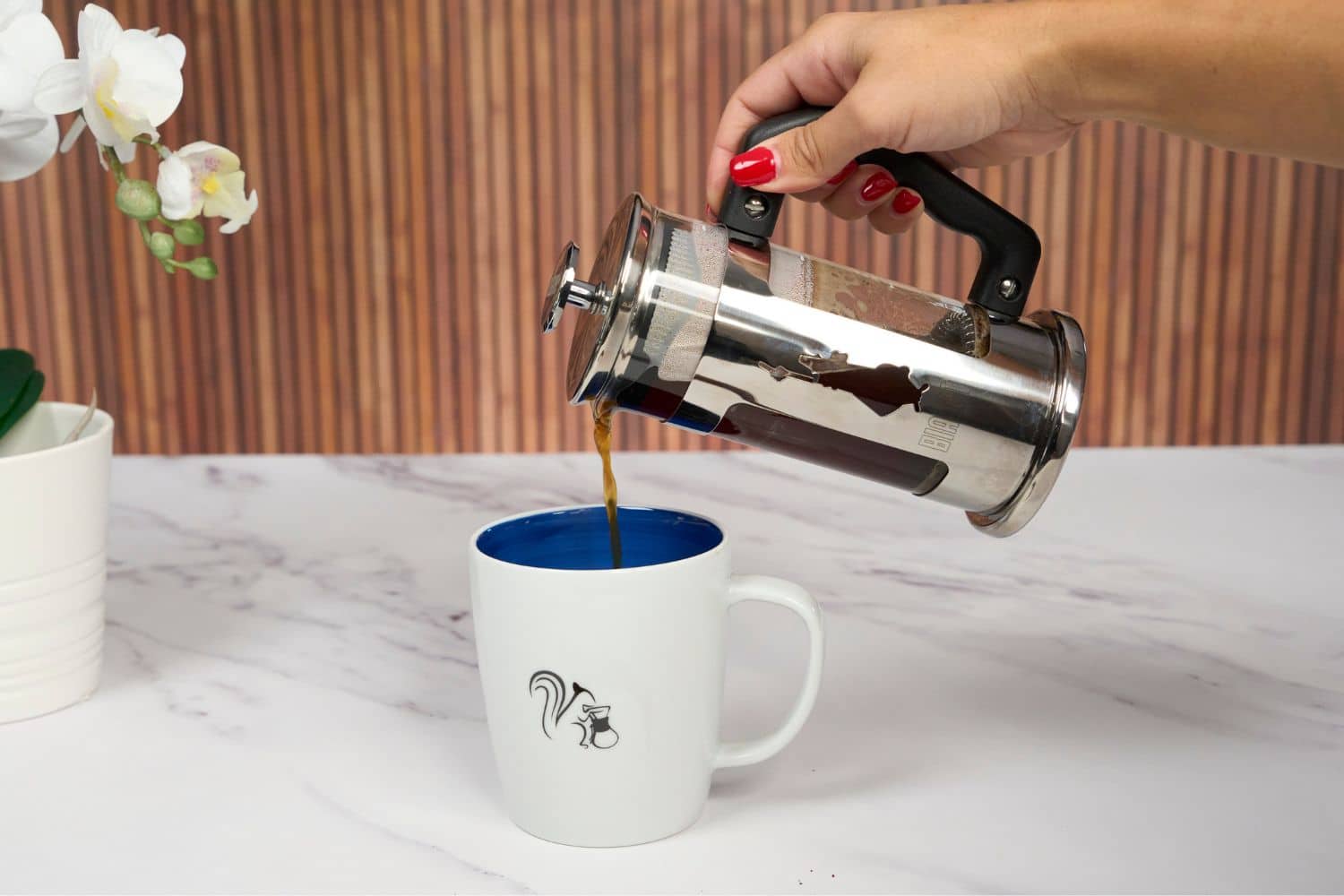
The French press also works surprisingly well here. The fuller body extraction emphasizes Excelsa’s darker, woody undertones while maintaining its characteristic tartness. Brew for four minutes using coarse coffee grounds.
Cold brew is another surprising option. It tames Excelsa’s sharpness, producing a smooth and mellow but complex concentrate, with pronounced dark fruit notes of plum and black currant.
But whatever you do, steer clear of espresso, unless the Excelsa is in a blend. This coffee’s acidity can turn sour and astringent when extracted under pressure, overwhelming the subtle complexities that make it special.
Can You Buy Excelsa Coffee Beans?
Theoretically, you can. That’s not to say it’ll be easy. Don’t be surprised if you get asked, “But, what is Excelsa coffee?” by less experienced baristas. It’s mostly hidden in blends and rarely mentioned on the packaging.
Your best bet is specialty roasters with direct-trade coffee relationships. These retailers occasionally stock small batches, particularly from the Philippines, where most Excelsa grows.
Search online for those offering single-origin Excelsa, then contact them to inquire about its availability.
As you buy, look for the following quality indicators:
Origin: Quality Excelsa coffee beans come from estates or provinces in the Philippines and surrounding Southeast Asian countries.
Roast date: Look for a roast date within 7-21 days.
Ambiguous labeling: Some retailers conflate Excelsa with Liberica, so watch out for this.
Price: Expect to pay premium prices due to this coffee’s scarcity and specialty status.
Final Thoughts
Excelsa is coffee’s hidden gem, and maybe it should continue to stay that way. Its tart, complex and unapologetically bold flavor profile makes coffee purists either swoon or recoil.
Besides flavor, here’s why Excelsa matters: coffee and climate change. As global temperatures rise and traditional Arabica regions face uncertainty, Excelsa’s hardiness and adaptability make it a potential lifeline for the industry.
Excelsa coffee also challenges our palates, expanding what “good coffee” can mean. As specialty coffee culture matures beyond the Arabica-Robusta binary, oddball varieties like Liberica, Excelsa and Stenophylla sure deserve their moment in the spotlight.
I hope you’ve learned something new from this exploration of Excelsa coffee. Ready to dive deeper? Read my complete guide to the most expensive coffees in the world. Click here to learn more.
Excelsa Coffee FAQ
Excelsa (Coffea excelsa) is a coffee species originating in the Lake Chad region in Africa, and now primarily grown in Southeast Asia. It has a tart, fruity flavor profile and a distinctive smoky finish.
Excelsa coffee’s unique flavor profile doesn’t appeal to mainstream tastes. It’s primarily used in proprietary blends, so consumers rarely encounter it on coffee shelves.
Neither is “better,” it all comes down to what you’re looking for in your cup. Robusta is bolder and earthier, but boasts a higher caffeine content and excellent espresso crema. Specialty coffee enthusiasts prefer Excelsa for its unique fruity, tart and smoky flavor profile, but as production is limited, it’s more expensive.