

Three terms for the same base: Espresso, lungo and ristretto are three types of coffee with Italian origins. The subtle difference lies in the amount of water used. This affects the extraction time, flavor and intensity, resulting in a coffee that is either full-bodied and aromatic, mild or small and powerful.
In this espresso vs lungo vs ristretto guide, I’ll clue you in on what to consider when preparing these Italian classics. I’ll also get you started with my own brewing parameters.
Table of Contents
Espresso vs Lungo vs Ristretto: Comparison & Differences
| Espresso | Lungo | Ristretto | |
|---|---|---|---|
| Dose (single shot) | 7-10 g | 7-10 g | 7-10 g |
| Volume (single shot) | 1 oz / 30 ml | 1.5 oz / 45 ml | 0.8 oz / 35 ml |
| Extraction time (single shot) | 15-20 seconds | 30 seconds | 15 seconds |
| Profile | Complex, full-bodied, balanced | Mild, pleasant bitterness | Concentrated, complex |
| Caffeine content per 100 ml* | 273 mg | 70-80 mg | 421 mg |
*According to our caffeine study
Choosing the Best Coffee Beans for Espresso, Lungo & Ristretto

A good home espresso machine or even a decent fully automatic coffee maker can handle any high-quality coffee beans. Plus, if you can make a full-bodied espresso or coffee with your beans, any other brewing method will work just as well.
When choosing coffee beans, you should experiment with different roasts, coffee blends, single origins and so on. After all, the difference in taste doesn’t depend (only) on the machine:
I like to use lighter roast Arabica beans for espresso. Experience has shown that even lungo or ristretto can bring out the complex, fresh flavors. However, depending on the contact time in the portafilter, each brew always yields a different flavor profile.
Many people love ristretto for its intense, bittersweet character. You can take it up a notch by using a medium roast blend of Arabica and Robusta beans or any dark roast coffee. But don’t say I didn’t warn you about how strong it’ll be.
When you’re making a lungo, consider using a medium roast single origin Brazilian coffee. These beans often have a chocolatey aroma and low acidity, a profile that pairs perfectly with this milder version of espresso.
Preparation Basics: What You Should Pay Attention to With Espresso
You can only make a good ristretto or lungo if you understand how to prepare espresso properly. The traditional Italian method uses a manual lever or semi-automatic espresso machine. However, the best fully automatic espresso machines – with their automated brewing process – now produce comparable results, especially when you’re using the best espresso beans possible.
Incidentally, I find that using high-quality espresso cups always makes the drinking experience more enjoyable.
Grind Size: Very Fine
I can’t give you concrete information about which grind size to use. That’s because every machine is different and you’ll need to adjust for multiple factors, including roast profile, roast date and your recipe. Still, what I can tell you is that you’ll need to use the best espresso grinder possible to achieve repeatable results. In short, I can provide you with two general rules of thumb:
For espresso, grind the coffee so finely that it falls out of the coffee grinder in almost clumpy pieces.
With a fully automatic machine, the finest grind setting is often the best.
Dosing and Tamping for Espresso

Fully automatic coffee machines automatically create a coffee puck in the brew group. This works somewhat similarly to tamping in an espresso machine’s portafilter. In addition, you usually can’t adjust the amount of coffee down to the gram, but only in preset increments.
With an espresso machine, you have to measure the dose manually using a coffee scale and tamp the ground coffee down in the portafilter yourself.
With both methods, your dose should be between 7 and 10 grams for a single shot. This applies to any espresso-based coffee recipe. On a fully automatic espresso machine, the highest coffee strength setting will usually come closest to this ideal. For more detailed information, check out the section on calibrating your coffee machine in my guide to the best fully automatics.
Water Volume & Brewing Temperature
The brewing temperature is already set correctly on most espresso machines and fully automatic machines. Then again, coffee bean nerds like me do like to change temperature settings depending on the coffee roast profile. One thing everyone will need to adjust is the water volume:
Serving size for espresso: 1 ounce (30 milliliters) for a single shot, 1.5-2 ounces (45-60 milliliters) for a double shot
Serving size for ristretto: 0.6-0.8 ounces (20-25 milliliters) single, 1.2-1.6 ounces (40-50 milliliters) double
Serving size for lungo: 1.5 ounces (45 milliliters) single, 3 ounces (90 milliliters) double
Of course, a more accurate way of monitoring serving size is to weigh your shots as they’re being extracted. I recommend starting with a 1:2 brew ratio of coffee to water.
Extraction Time: How to Avoid Over- or Under-Extraction
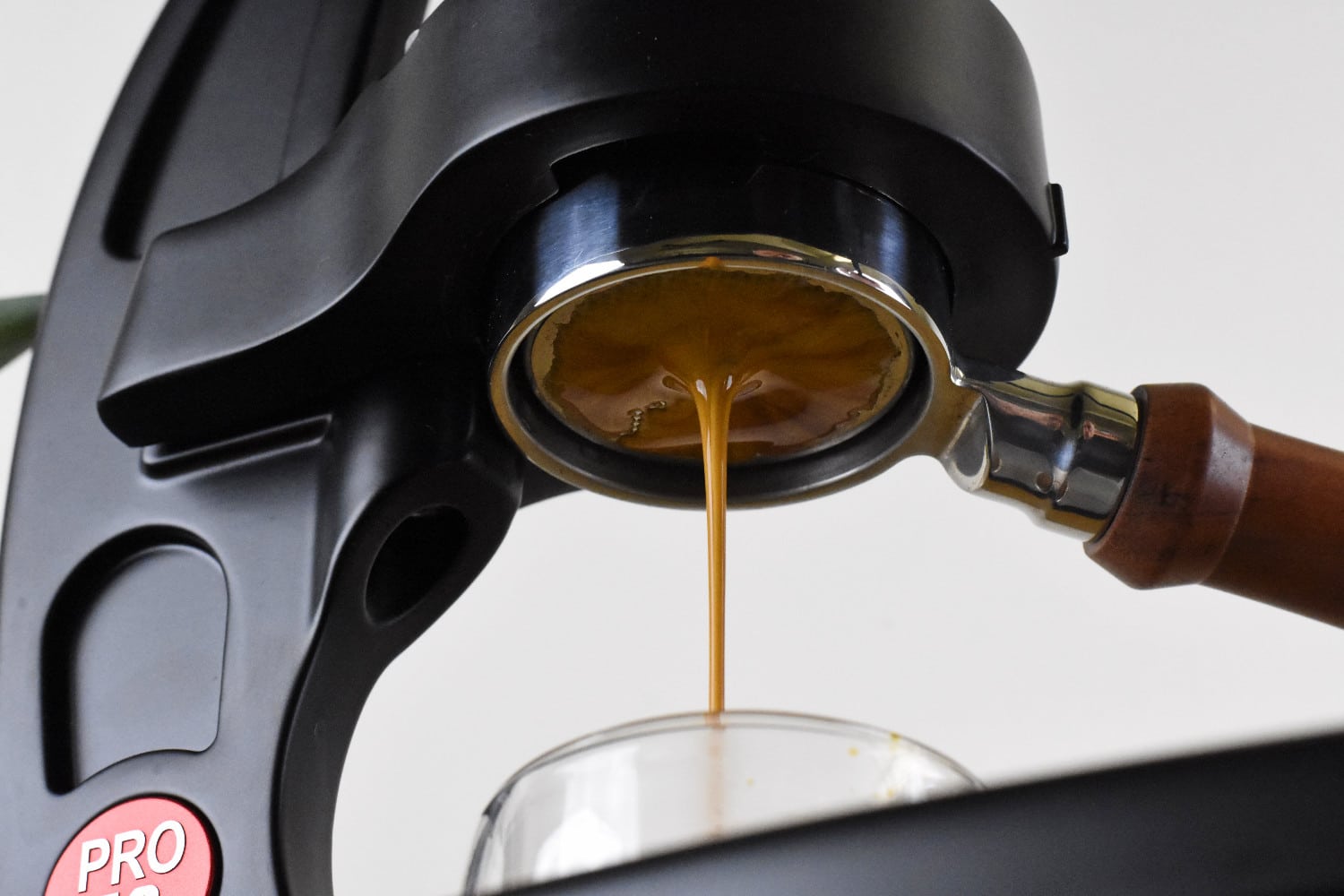
The contact time between water and ground coffee is crucial for the coffee’s flavor, depth, body and caffeine content. For a double espresso, an ideal extraction time is between 25 and 30 seconds.
Anything above that quickly leads to over-extraction and too many bitter compounds in the coffee; an under-extracted shot that runs too fast results in unpleasantly sour notes.
In both cases, you’ll need to adjust the grind size (finer for under-extraction, coarser for over-extraction). In simple terms, this changes the particle size and allows the water to flow through the coffee puck more quickly or more slowly. Even making a tiny change to your grind size will often result in a huge difference.
Since lungo and ristretto are all about the ratio of coffee to water, the same basic conditions apply to these two versions as well.
Understanding Extraction Phases & Flavor Compounds: Their Importance for Espresso, Ristretto and Lungo

Espresso is simultaneously a solution of solid components from the coffee bean in water, a suspension of solid coffee components in water and an emulsion of coffee oils and water. That’s why baristas make such a fuss about the beans and how they’re prepared.
Because coffee is so complex, every stage of the extraction process must be executed perfectly to achieve the Holy Trinity of espresso chemistry. Similarly, espresso is extracted in three phases, each lasting about eight seconds:
Phase 1: Extraction of acids
Phase 2: Formation of an emulsion and suspension; extraction of most flavor compounds and oils substances and oils
Phase 3: Extraction of bitter compounds, formation of the coffee crema
If the amount of water is adjusted for a lungo or a ristretto, this naturally also changes the total brewing time and, consequently, the distribution of brewing phases.
Although three phases still happen, a great deal is removed or added – especially in the third phase:
With a ristretto, the shortened (15-20-second) extraction time prevents (many) bitter compounds from being released. However, you don’t sacrifice the crema.
In espresso and lungo, on the other hand, the bitter compounds are more noticeable. The longer the extraction time, the more of these compounds are dissolved. For this reason, lungo is slightly bitter, though mild overall, since it is somewhat diluted.
What Is an Espresso Lungo?

The long espresso, known as “lungo” in Italian, is the barista’s take on a regular cup of coffee. Nevertheless, with its modest serving size, it remains firmly in the realm of espresso.
Lungo Preparation Settings
Lungo is prepared the same way as espresso. However, you use more water and the brewing time increases to between 30 and 40 seconds. Your dose of ground coffee remains the same. Experiment with setting the grind size to be slightly coarser than for espresso.
Lungo vs Americano: What’s the Difference?
In this popular alternative to drip coffee, you use more water than in a lungo. In addition, an americano is brewed like a regular espresso and only then diluted with hot water in the cup or glass.
The advantage: The espresso shot for an americano isn’t extracted any longer than it should be. After water is added, the balanced flavor is simply enhanced, but not altered in any other way.
What Is a Ristretto?

Ristretto is a smaller, very concentrated espresso made with half the usual amount of water. Because of the shorter extraction time, it delivers a higher concentration of caffeine, flavors and acidity. It should also display a nice crema.
In English, the Italian word ristretto translates to “restricted,” “limited” or “narrow.” Thanks to the limited extraction time, you don’t have to worry about any bitterness in your cup.
In Italian bars, many people order a ristretto doppio. This is a double ristretto made with twice the amount of ground coffee and water. However, the result isn’t just another espresso – it’s a distinct drink in its own right.
Ristretto Preparation Settings
Especially with a fully automatic machine, the grind size for a ristretto might be slightly finer than for an espresso. It’s best to set your machine to one of the finest grind settings possible. As with espresso, the coffee dose for a single shot is about 7 grams. Reduce the volume of water to around 0.8 ounces (25 milliliters).
In the best-case scenario, this reduces the extraction time to around 15 seconds.
If you’re using an espresso machine, I encourage you to experiment with your dose and grind size. I’ve experienced great results by reducing my dose slightly and increasing the grind size. This often leads to a more complex and sweeter shot. If you’d like to try your hand at making espresso, a beginner machine like the DeLonghi Stilosa or the Breville Bambino Plus will do just fine.
Other espresso Variations
Espresso can do it all – even as a ristretto or lungo. There’s an espresso macchiato with milk foam, for example. Or a corretto with grappa. Or milk-based specialty drinks like cappuccino, latte macchiato and flat white. Espresso is even the ideal base for a cold drink like caffè freddo. Oh, and let’s not forget caffeine monsters like red eye coffee and black eye coffee.
Espresso Macchiato: Espresso With a Little Milk Foam
An espresso macchiato is an espresso topped with a small dollop of milk foam. One to two teaspoons of foam are enough.
Double Espresso: Twice as Nice!
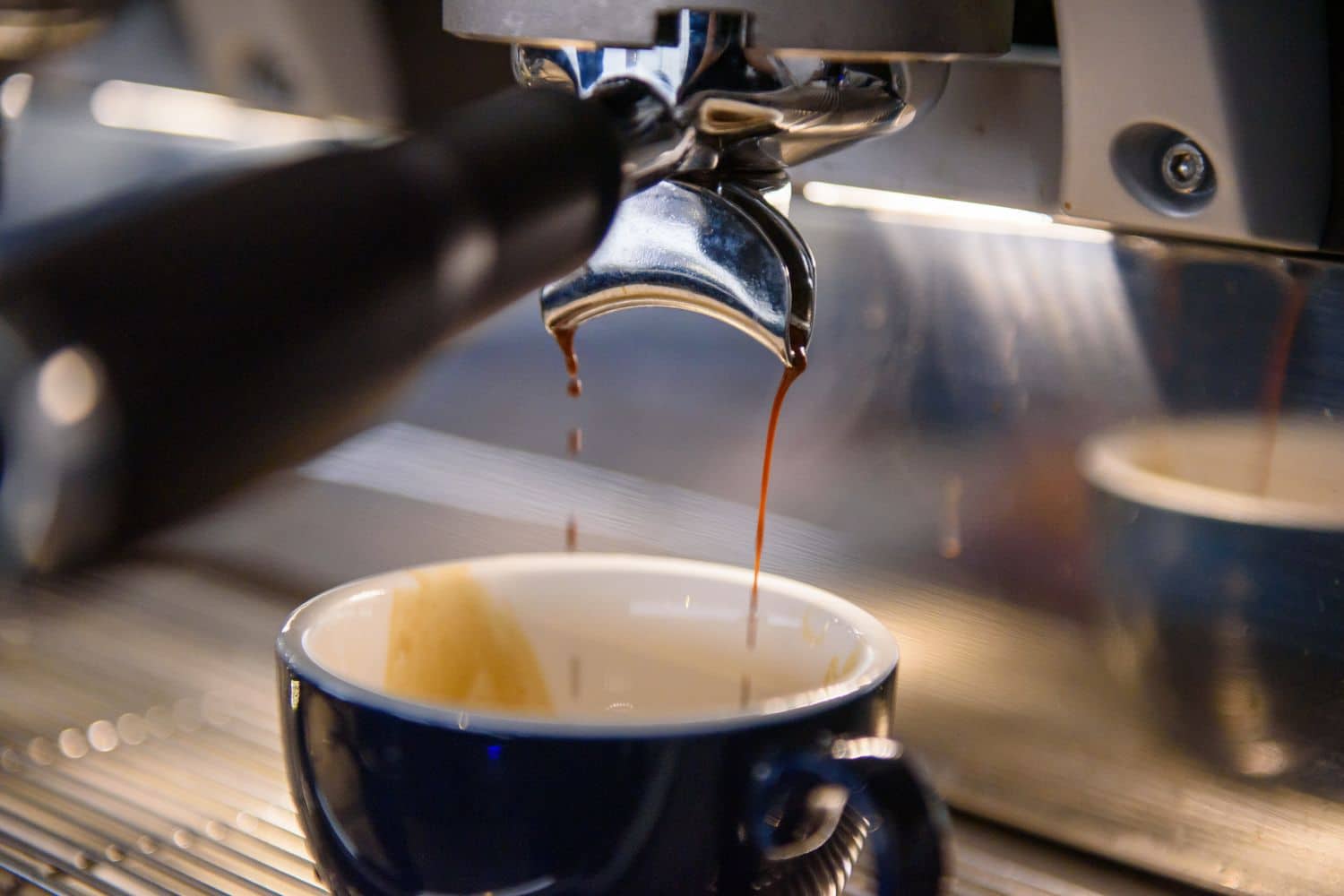
While a lungo uses only twice the amount of water, a double espresso (doppio) uses twice the amount of ground coffee and water as in a standard espresso.
If you’d like, you can add a little milk foam on top to make a doppio macchiato.
Caffè Freddo: Italian Iced Coffee
In the summer, a cool caffè freddo is the perfect choice. It’s espresso with ice cubes, blended or shaken. This Italian iced coffee can be sweetened with a little sugar. It’s served in a tall glass.
Corretto: Espresso With Alcohol

If you add a splash of grappa to espresso, it becomes a caffè corretto. In Spain, there’s a variation made with brandy called a carajillo. You can also use other liquors in your recipe, such as amaretto or cognac, and experiment with the base: coffee, americano, long coffee … give it a try!
Concentrated, Mild or Classic: Espresso Always Tastes Good
Espresso vs lungo vs ristretto: when it comes to coffee recipes, traditional Italian barista coffee is unbeatable in terms of variety and flavor. All three of these versions of espresso are sure to give you a jolt, but the undisputed caffeine king is the ristretto.
With 421 milligrams per 100 milliliters (according to my caffeine study), it’s like a tiny cup of wake up juice.
Then again, even espresso and the milder lungo can pack quite a punch. Whatever you do with your espresso, use good coffee beans, learn the proper extraction process and have fun along the way!.
Do you have any preparation or extraction tips? Which version of espresso do you like best? Feel free to leave me a comment!