


Am I the only one who doesn’t quite understand all the fuss about LAP Coffee? The Berlin-based coffee startup with its blue and white micro-shops is currently being thoroughly analyzed in tons of major news outlets. And plenty of industry experts in North America worry that the LAP business model could soon show up stateside.
According to many writers, LAP Coffee heralds the downfall of the specialty coffee scene. Every article quotes at least one café owner who sees his customers deserting him because of LAP’s ridiculously low prices. Two cents for a cappuccino – how is that even possible?!
The reports always provide the answer right away: LAP Coffee cuts corners on everything – the shop space, the ambiance and the espresso machine. Instead, drinks come from a fully automatic coffee machine. Oh dear.
Amidst all the hype, I quickly wondered if the wrong people were worried about their livelihoods. Even a brief expert review makes it clear that LAP Coffee’s business model primarily targets coffee chains like Starbucks and Tim Hortons.
Because a competitive analysis and market classification don’t tell the whole story, I sent the Berlin Coffeeness team over for coffee. This practical experience, if nothing else, showed that LAP Coffee could bring about positive changes in the coffee market. Perhaps.
Table of Contents
What Is LAP Coffee? The Concept Behind the Coffee Startup
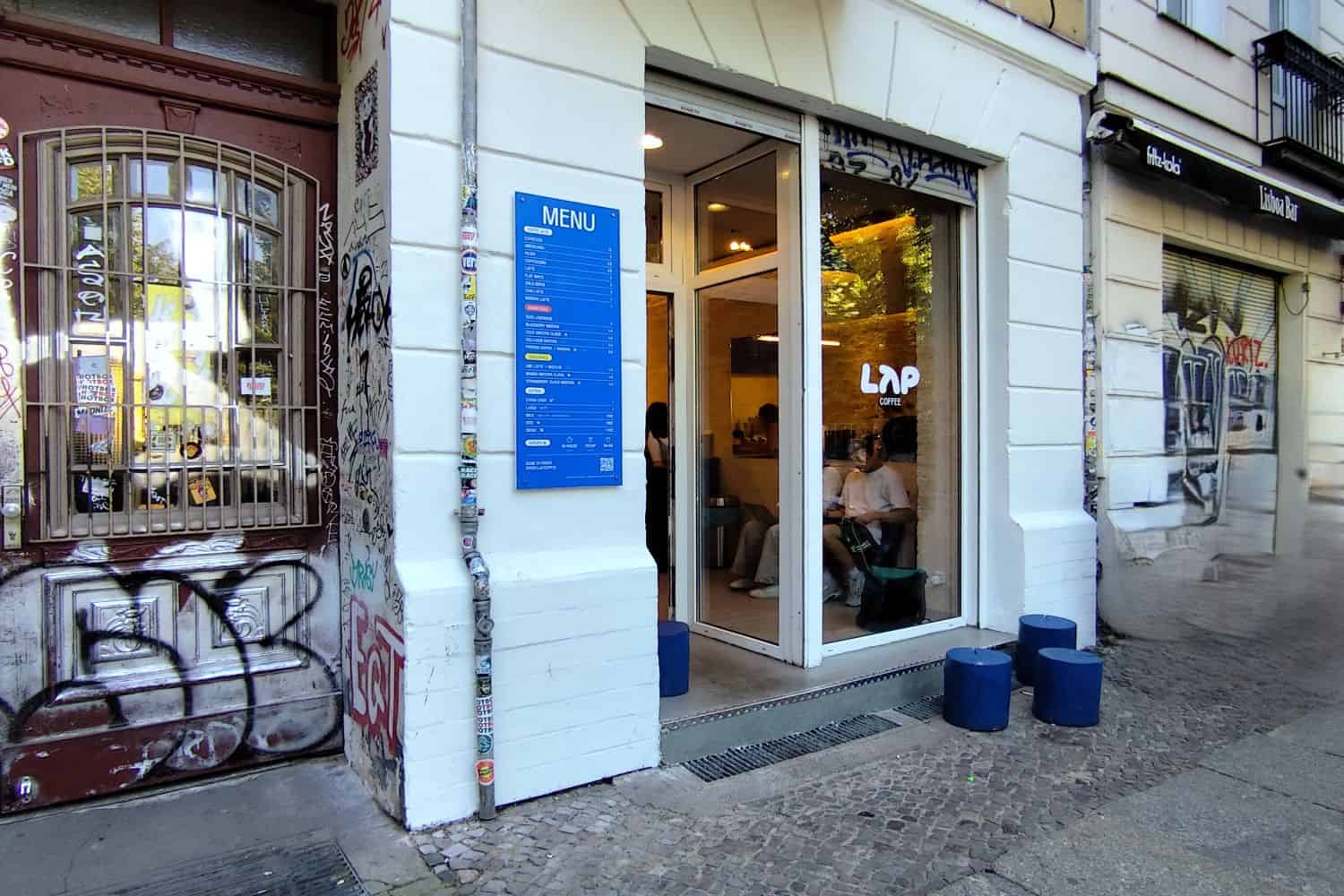
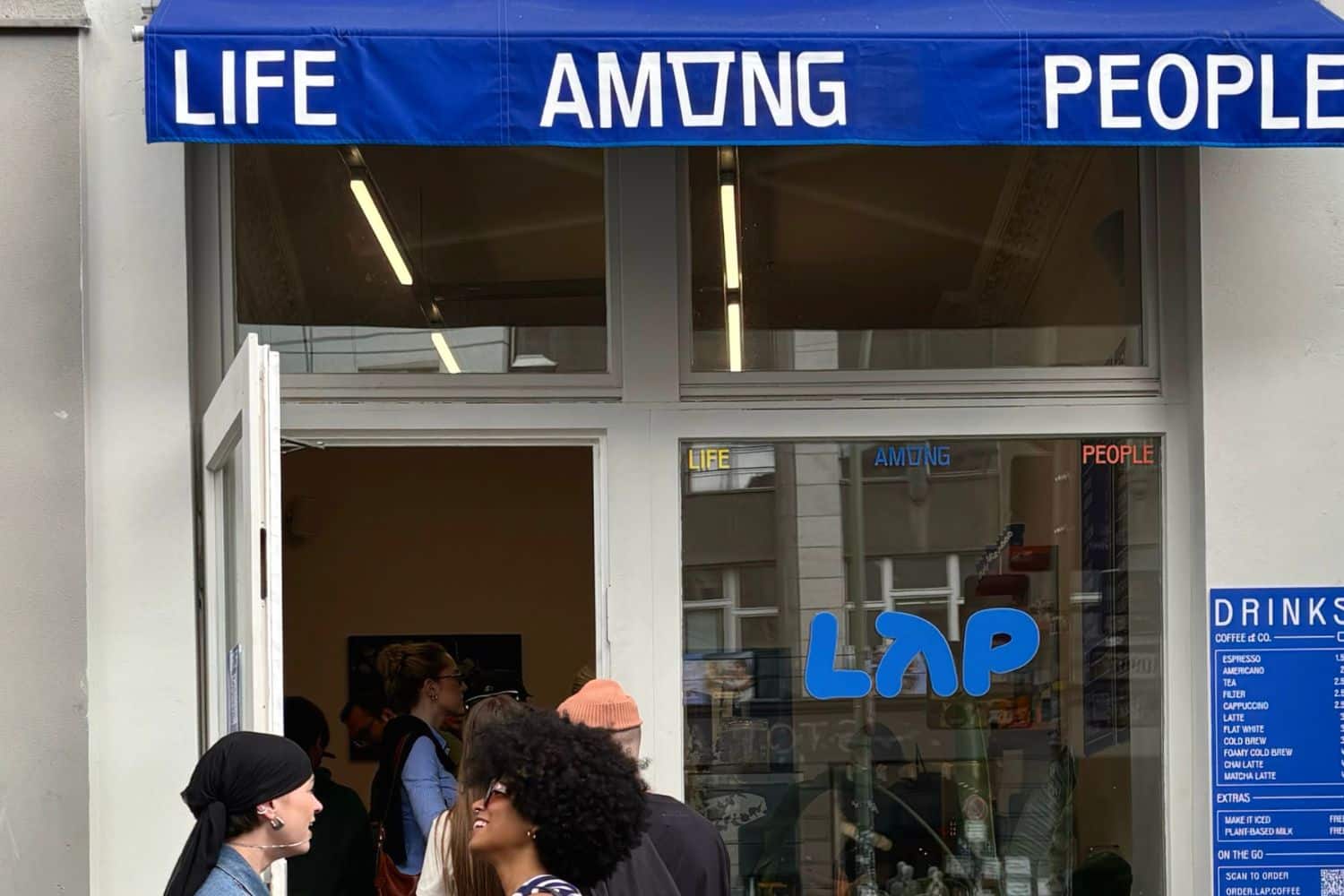
Understanding LAP Coffee doesn’t require in-depth conceptual analysis. A glance into one of its Berlin, Munich or Hamburg branches is enough: a coffee counter, one or two seats and that’s it. Small footprint, even smaller furnishings.
The ordering process is a prime example of efficiency. You order from the so-called Barista Host, and the preparation is handled by a few colleagues right next to them. If you’re in a particular hurry, you can even pre-order your latte via the app.
At LAP (Life Among People), no one is meant to linger; the business model targets busy walk-in customers who simply need a quick to-go coffee. While you can order your drink in a real coffee cup, there’s no reason to.
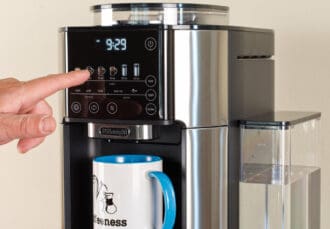
The most important symbol of this approach is the fully automatic espresso machine that’s built into the counter: the baristas briefly touch the screen, and the rest takes care of itself. Cappuccino in two minutes, Coco Matcha Cloud in perhaps five. In spite of the fact that they steam milk by hand.
Behind LAP is Micro Retail Technologies (MRT), led by Ralph Hage and Tonalli Arreola. Both had previously enjoyed success at other efficiency-focused app companies such as Flink and Lime.
They’ve clearly applied what they learned there to LAP and convinced several financially strong venture capital firms. LAP Coffee is currently opening one branch after another. Berlin is almost saturated, while Hamburg and Munich are just getting started.
And wherever a new micro-store opens, the customer rush is huge, while the mood among competitors is one of doom and gloom.
Competitive Prices and a Trendy Menu: How Does That Work?
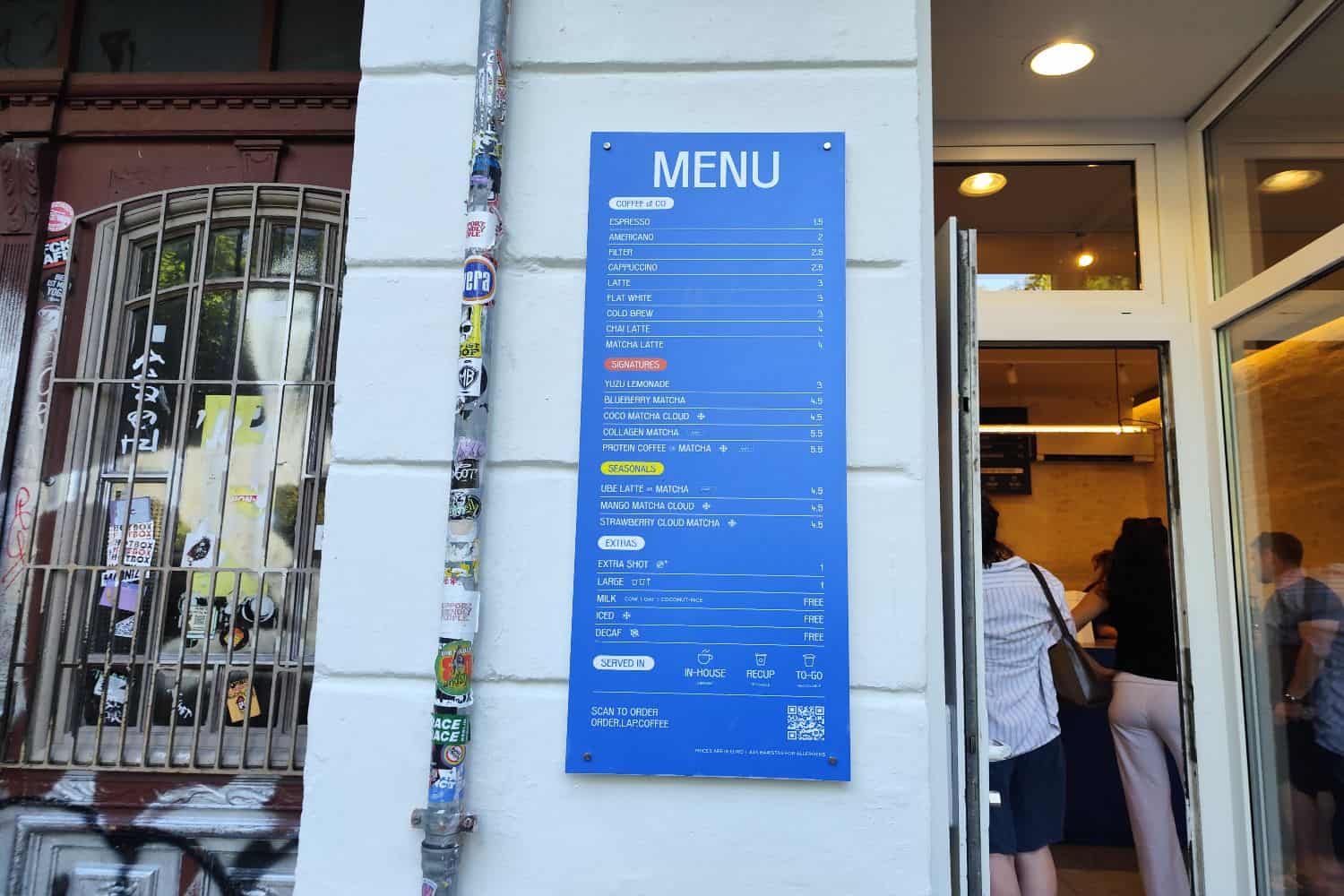
LAP prices represent the biggest draw for customers and the biggest point of contention for competitors.
Even the most expensive signature drink costs around 5 euros ($6.00), while standard offerings like filter coffee or latte macchiato cost 3 euros ($3.50). Oh, and non-dairy milk is included at no extra charge.
This runs completely counter to the general trend: coffee prices have risen enormously, not to mention business and living costs.
Virtually every coffeeshop near a LAP branch offers similar products for at least one euro ($1.15) more per cup. And if we’re talking about stylish coffee bars with espresso machines, baristas and high-quality coffee beans, the bill can quickly double.
The mini footprint and streamlined structures of a LAP branch alone cannot explain these price differences. So does that leave us with inferior raw materials? This is where the new coffee brand surprised me the most:
The coffee beans come from the Berlin coffee roastery 19grams. They were already selling specialty coffee when others were still saying “expresso.” 19grams has always promised direct trade coffee with clear information about its origin. I’ve always been a fan, but I still wonder how that’s supposed to work.
LAP uses flawless Brazilian coffee, which is ideal for fully automatic machines. But even comparatively inexpensive specialty Brazilian coffee costs way more than faceless mass-market beans. Unfortunately, neither 19grams nor LAP reveal anything about their bean deal. Fair enough.
The LAP Taste Test: Just Cheap coffee or Wow?
Since taste is known to be a matter of personal preference, I sent both an expert from my team and a regular coffee drinker to LAP. The mission: place your typical to-go order and tell us what you think of it. No need for detailed analysis or pretentious cupping notes.
The verdict was clear: “I could drink a whole bucket of this!” The cappuccino with oat milk and the americano could hardly taste more like a classic Brazilian coffee – sweetness, chocolate and a pleasant richness in abundance.
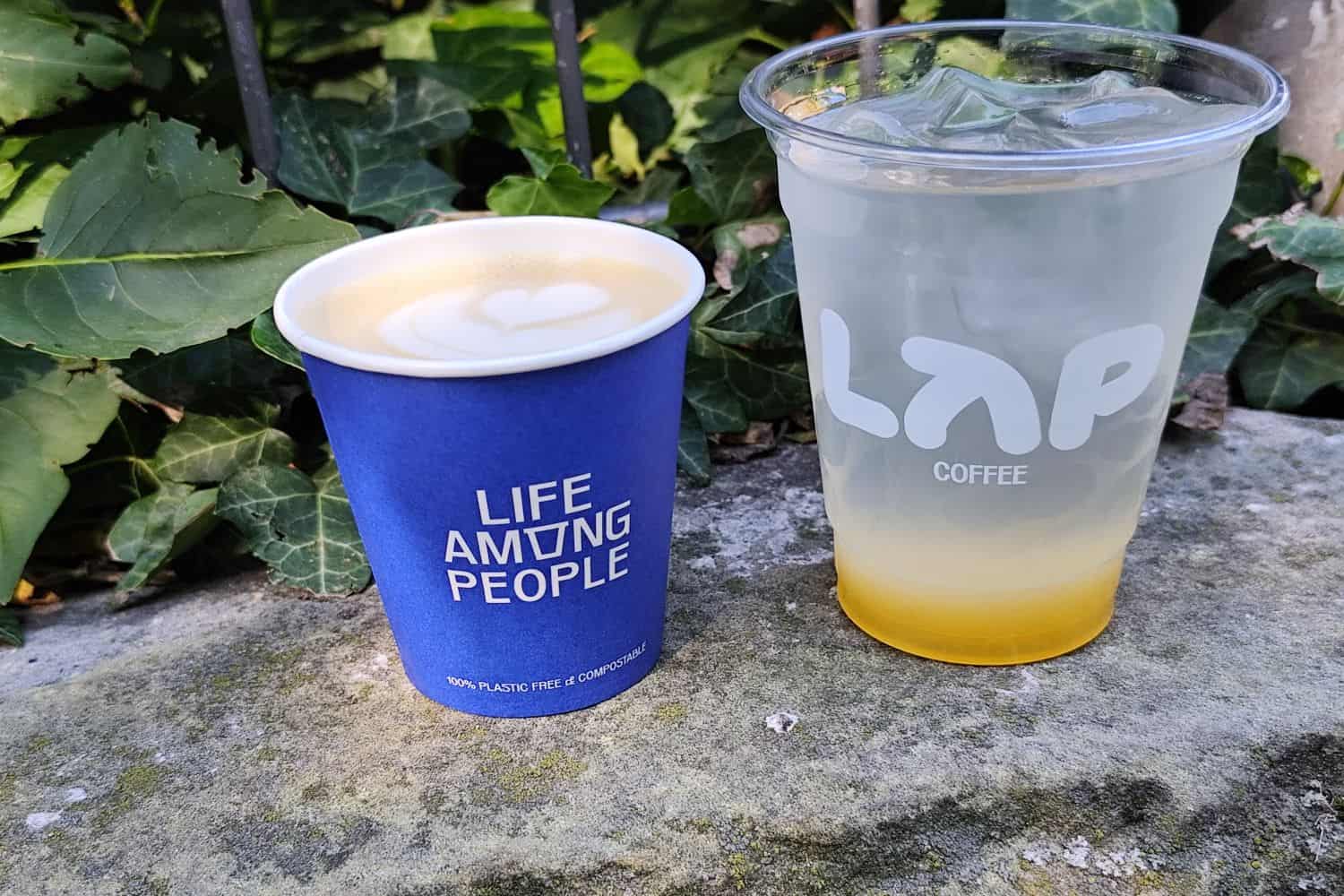
My expert could tell that this coffee did not come from an espresso machine. But that didn’t bother her. The machines are perfectly calibrated, the beans are perfectly matched and the flavor profile hits the sweet spot between quantity and quality.
After this quality assessment and on-site experience, it is clear to me that LAP Coffee is primarily targeting Starbucks and other big chains. And not only in terms of price, but above all in terms of taste:
At Starbucks, the coffee often tastes burnt or flat, and can sometimes come off as watery or sour. This is mainly because, despite all the standardization, the preparation process here depends heavily on the individual barista – and, of course, on the quality of the beans.
Ultimately, all Lap and Starbucks share the same concept. Essentially, it’s just a “fast food coffee” as my “average Joe” tester so aptly put it.
Growth at the Expense of Cafes?
So what about the independent cafés that feel threatened by LAP? My first counter-question is: How much of their total revenue comes from takeaway sales? After all, cafés are about sitting and chatting, about the experience and feeling good. LAP can’t offer any of that.
Second counter-question: What about the style-substance ratio in the shop? Many cafés put the best commercial espresso machines on the counter, train snobby baristas and then end up putting supermarket-quality beans in their expensive coffee grinders.
LAP has reversed this ratio and seems to pay more attention to the beans than to the equipment. That’s exactly the right approach! Don’t get me wrong: I love great roasters and cafés that put effort into preparing the perfect espresso by hand.
Still, why should I pay a premium just so that an Instagram-friendly coffee shop in Brooklyn can afford its Instagram-friendly antics?
LAP also only operates on main streets and in tourist spots and the busiest areas. Anyone who has survived in such locations as a really good café is unlikely to be displaced by LAP.
But if it affects a Starbucks branch that simply sells bad coffee at expensive prices, then in my opinion, that helps everyone.
Here, you can be sure that fairness, transparency and good coffee are nowhere to be found. The biggest brands are corporations that are only interested in maximizing profits.
Of course, it would be naive to see LAP as just a friendly start-up from the Berlin scene. Here, too, it’s all about money and success. But both the business model analysis and my on-site check raise the suspicion that the creators are shaking up the coffee market from the right end of the value chain. Only time will tell if this is true.
Blue and White Forecast for the Future: All LAP, or What?
In my opinion, the funniest thing about the story of LAP Coffee is that they’re doing nothing different from what many of you do in your own kitchens. They fill a fully automatic coffee machine with decent beans, press a button and everyone is delighted.
If it sounds like I’m not taking this whole thing seriously, it’s because I’m not. LAP is a new chain that’s giving the established chains a run for their money. Nothing more.
From now on, I’ll just get my flat white to go at LAP instead of another big brand. If I want to sit down, drink coffee and experience barista culture, I’ll go to a proper café. But not just any old café with a poor selection. LAP has raised the bar for everyone. Is that a bad thing?
I doubt that this coffee startup will be able to maintain its super-cheap menu in the long term. I mean, the price-performance ratio is simply too extreme. However, if some of the big players in the coffee lobby feel offended and things change for the better, I’m always on board.
Would you like to see LAP Coffee enter the North American market? Or are you a Starbucks mega fan? Let’s get the conversation started in the comments section!