



There’s a coffee so sublime that it once sold for over $10,000 per pound! Any guesses where it came from? None other than the misty slopes of Panama’s highlands.
But Panama coffee isn’t just about beans that break auction records. This exciting origin also boasts meticulous post-harvest techniques and processing innovation.
But what else makes this Central American coffee punch far above its weight? Read on to learn more.
Table of Contents
A Brief History of Panama Coffee
Relatively late to the party, Panama began commercial coffee cultivation in the 1890s. By this time, Brazil and Colombia were already powerhouses.
European immigrants from Sweden, Norway and Germany started it all. They established farms in the highlands of Chiriqui province, particularly around Boquete.
At first, they weren’t looking to grow coffee. But given Panama’s ideal terroir, they lucked out. The country’s unique geography, featuring a mountainous central spine squeezed between two oceans, proved perfect for the crop.
For most of the 20th century, Panama coffee flew under the radar. Producers focused heavily on quantity over quality, leading to low prices. And by the 1990s, many farmers had uprooted their trees and exports stopped altogether.
But in 2004, a lot from Hacienda La Esmeralda changed everything. It wowed judges and won the Best of Panama competition. It wasn’t just good, but exquisite; sweet and tea-like, with floral notes of jasmine and bergamot.
This Geisha variety (sometimes spelled Gesha), catapulted Panama coffee onto the international stage. It sold at auction for what was then an unheard-of $21 per pound. In 2019, another Geisha from Elida Estates broke auction records, selling at $1,029 per pound. Yet another from the same estate smashed all records, selling at $4,500 per pound in 2024.
Suddenly, it felt like the entire world was Panama coffee-obsessed. It was the coffee to get if you were looking for an exquisite taste experience.
This continues to be the case. The mother of all record-breaking Geishas from Hacienda La Esmeralda sold for a jaw-dropping $13,705 per pound this past August.
Panama Coffee Production Today
Today, Panama still produces tiny amounts of coffee compared to its neighbors, a mere 100,000 to 120,000 60-kilogram bags annually. Yet the country is still one of the most prestigious origins in the industry.
What’s its secret? Well, other countries measure success in volume, while Panama has doubled down on an obsessive pursuit of quality and innovation.
Traceability is another key factor, with producers pioneering the concept of microlots. Here, they separate harvests by specific plots, altitudes, processing methods and even time of harvest. This level of detail was unheard of before Panama normalized it.
However, there are significant climate change challenges. Rising temperatures are pushing ideal growing zones higher up mountain slopes. This has made it harder to grow the crop.
Labor is another issue. Panama relies on seasonal workers, particularly the indigenous Ngäbe-Buglé people. As younger generations seek opportunities elsewhere, skilled pickers are aging out. This has made harvests difficult and expensive.
To combat these problems, some producers are diversifying. Many have embraced shade-grown systems, qualifying for Organic, Fair Trade or Rainforest Alliance status.
Others experiment with novel processing methods like anaerobic coffee, extended fermentation and carbonic maceration to lock in target markets. Still more concentrate on coffee tourism, bringing in extra through on-site cupping sessions and farm stays.
Panama Coffee Growing Regions
So, where exactly does the almighty bean thrive in Panama? As expected, this small country doesn’t have many growing regions. Let’s take a look at the four main cultivation areas.
Boquete
When people think of Panama coffee, Boquete immediately comes to mind. No wonder, as this is where it all started.
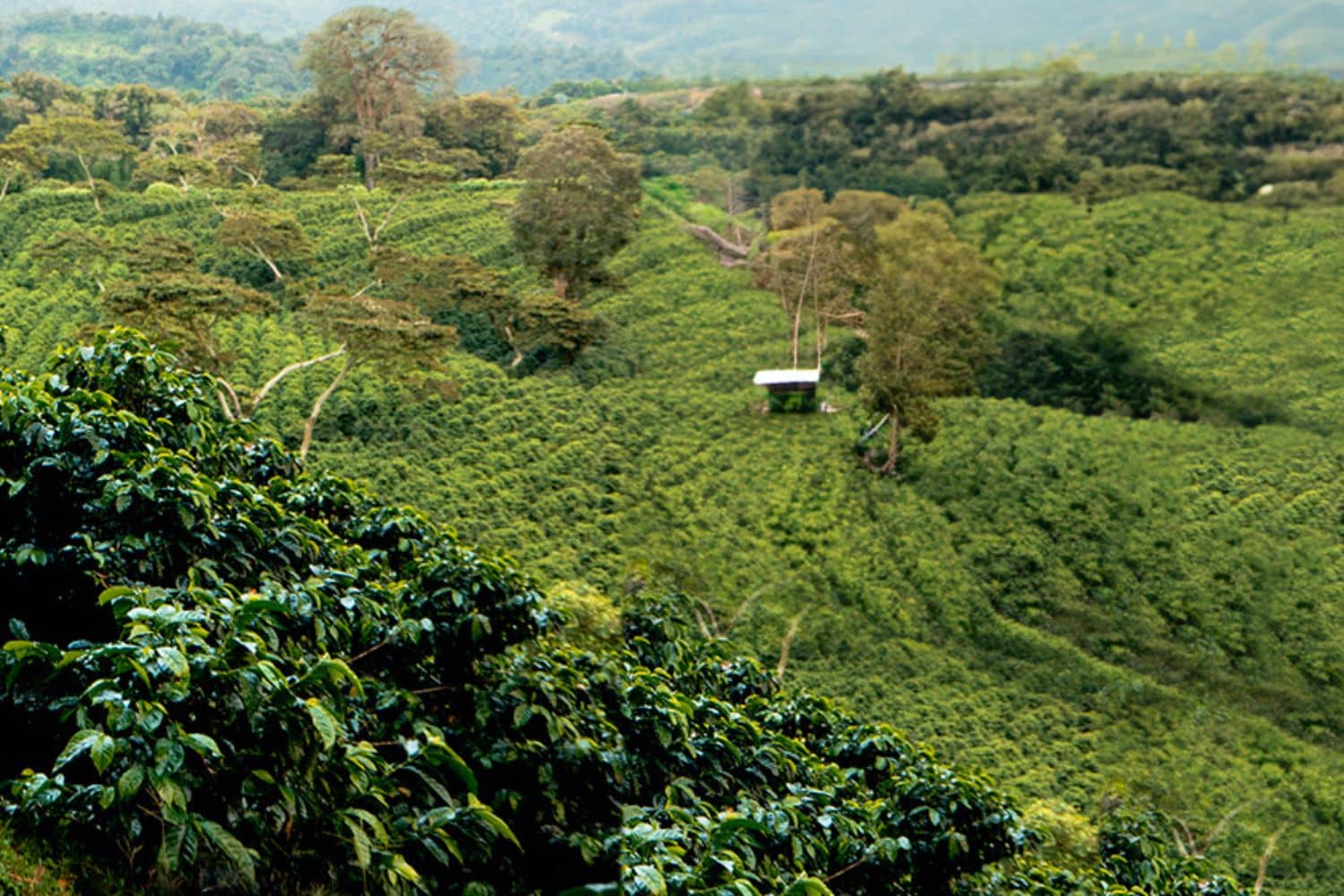
Nestled on the slopes of a dormant volcano (Panama’s highest peak Volcán Barú), Boquete enjoys high elevations of 1,200-1,800 meters above sea level (masl).
Boquete also benefits from a persistent mist that rolls in from the Pacific Ocean. This retains moisture and keeps temperatures moderately low at around 64-77 degrees Fahrenheit (18-25 degrees Celsius).
Coffee expertise is the name of the game here. Families like the Petersons (Hacienda La Esmeralda) and the Jansons (Jansons Coffee Farm) have been at it for decades. You also have investors like Joseph Brodsky of Ninety Plus who’ve come in and perfected their craft.
This institutional knowledge, combined with cutting-edge processing techniques, means Boquete consistently produces some of the world’s most expensive coffees.
Volcán
On the western side of Volcán Barú lies the Volcán region (often grouped with Cerro Punta). It has emerged from Boquete’s shadow to establish its own identity.
Volcán has even higher elevations, reaching 2,000 masl in some areas. The extra altitude means cooler temperatures, slower cherry maturation and complex flavor development in the beans.
The western slope gets slightly different rainfall patterns from the Caribbean side, and the volcanic soil here is equally rich. Also, this area enjoys more direct sunlight than Boquete’s misty environment, producing cherries with a higher sugar content.
If Boquete coffee embodies elegance, Volcán coffee embodies finesse. The coffees have more body and sweetness, with caramel, chocolate and nutty notes alongside the fruit undertones. The acidity is there, yes, but perhaps less “in your face” than with Boquete coffee.
Volcán is also famous for processing innovation. Farms like Finca Nuguo and Kotowa experiment extensively with natural, honey and fermentation processing. These new techniques bring out unique wild fruit and wine-like characteristics.
Farmers here also practice intercropping (growing coffee alongside native trees and other crops), which supports biodiversity.
Renacimiento
Renacimiento is less famous internationally, but it’s increasingly gaining respect among connoisseurs. Located near the Costa Rican border, this region represents the newer, scrappier side of Panama coffee.
Farms here sit at decent elevations of 1,100-1,700 masl, spanning a range of microclimates. But what really differentiates this region from others is the Atlantic weather system. It brings humid Caribbean air to bear on coffee trees, helping them thrive.
What also stands out for me about Panama coffee from Renacimiento is that it’s honest. These beans might not fetch record-breaking prices at auction, but still deliver exceptional flavor.
Renacimiento is also noteworthy for its social inclusion. Its grassroots coffee scene feels different from Boquete’s established estate-driven culture. As a consequence, a high percentage of small-scale and indigenous producers benefit directly from fair labor practices and decent coffee prices.
Bocas del Toro and Darién
While the highland regions get all the specialty coffee glory, there’s a quieter narrative happening at Panama’s lower elevations, and it involves a bean that coffee snobs often dismiss: Robusta.
These regions, encompassing Bocas del Toro and Darién, sit at lower elevations of 800 masl, perfect for Arabica’s hardier, disease-resistant counterpart. It primarily serves the domestic market and is the base for bold, punchy Latin American blends.
You certainly won’t see these beans winning Cup of Excellence competitions, but they play an important economic role. As global temperatures continue to rise (bad for Arabica), Robusta production will hedge against this problem.
Which Coffee Varieties Are Grown in Panama?
Geisha is the primary Arabica coffee variety in Panama. In Boquete it’s the dominant variety. But reducing this region to just Geisha doesn’t do it justice.
Farmers here and in Volcán, also grow Caturra, Catuai, Typica and increasingly, Pacamara. Some producers go even further, experimenting with rare varieties like SL28, Laurina and surprisingly, Ethiopian heirloom varieties.
In Renacimiento, you’ll find solid plantations of Catuai, Caturra, Typica and Bourbon, all higher-yielding and more disease-resistant.
Some forward-thinking producers are also working with Castillo, a rust-resistant Colombian variety. There’s still some Geisha, of course (you can’t escape it in Panama), but it’s not the dominant story.
The Best of Panama Competition
Started in 1996 by the Specialty Coffee Association of Panama (SCAP), this annual competition and auction has become a must-attend for industry professionals.
The Best of Panama competition features both Panamanian coffee cuppers and international green coffee buyers as judges. As such, the evaluation process is rigorous and fair.
Judges give invaluable feedback that helps producers understand what the global market is looking for in terms of flavors, processing methods and quality.
Importantly, this constant push for quality means that even coffees that don’t win still win.
What Does Panamanian Coffee Taste Like?
In a nutshell, Panama coffee is sweet, bright, complex and clean.
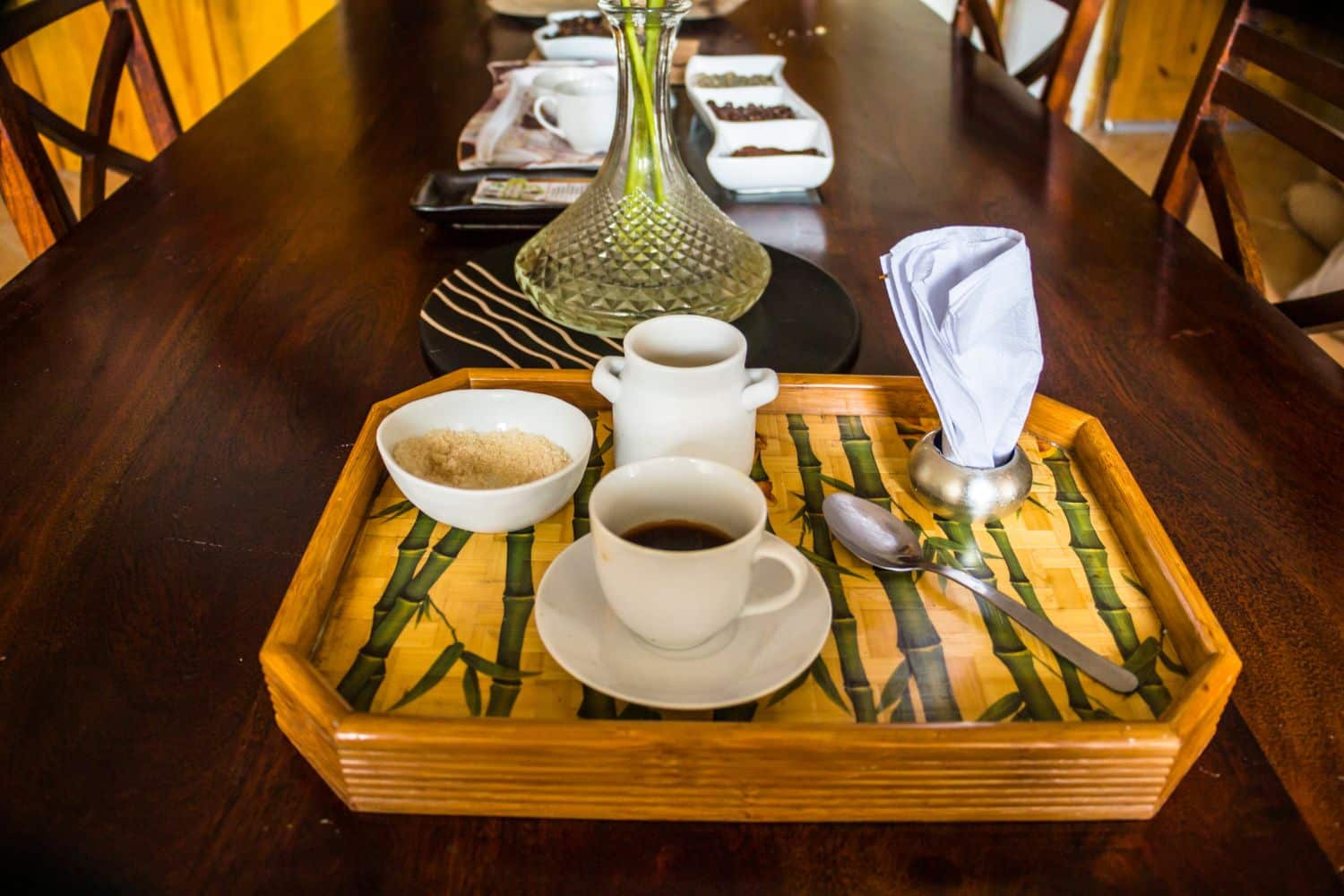
The celebrated Geisha boasts a bright acidity, tea-like body and intense fruity-floral aromatics. Undertones range from bergamot, stone fruit and citrus, to jasmine and lily. Like all other origins, regional flavor differences abound.
Boquete coffees are famous for their incredible clarity and brightness. Volcán varieties like Typica show lemon and floral notes with a sweet aftertaste, while Caturra is famous for clear lemony and acidic notes.
Renacimiento coffees, on the other hand, are more balanced, with a mellow acidity, good body and delicious notes of milk chocolate and brown sugar.
Overall, expect a vibrant cup, with layers of flavor that unfold beautifully – subtle yet unforgettable.
How to Buy Panama Coffee Beans
Finding authentic Panama coffee is easier than you might think. Key signs of authenticity on the packaging include clear information on the following:
Coffee variety (Geisha, Typica, Caturra)
Processing method (washed, honey, natural)
Growing region (Boquete, Volcán)
Estate name (Hacienda La Esmeralda, Hacienda La Esperanza)
Start with specialty roasters who source single-origin coffee beans directly from Panamanian estates or visit your local specialty roaster for guidance.
For premium Geisha varieties, expect to pay significantly more. This isn’t a bargain coffee, but its exceptional quality justifies the investment.
Lastly, opt for whole beans rather than pre-ground, and look out for recent roast dates on the packaging label.
How to Brew Panama Coffee
Panama coffee, especially Geisha, deserves careful brewing to showcase its delicate flavors. Pour-over methods like Hario V60 or Chemex work best. These offer precise control over extraction while preserving the coffee’s and subtle floral-fruity notes.
To begin:
Grind whole beans on a medium grind setting.
Use water just off the boil at around 200 degrees Fahrenheit (93 degrees Celsius) to brew. A gooseneck kettle would be handy here, to help you get the temperatures right.
Aim for a coffee-to-water ratio of approximately 1:15 (1 gram of coffee to 15 milliliters of water).
Allow the coffee to bloom for 30 seconds before continuing your pour in a slow, steady stream, over 2.5-4 minutes.
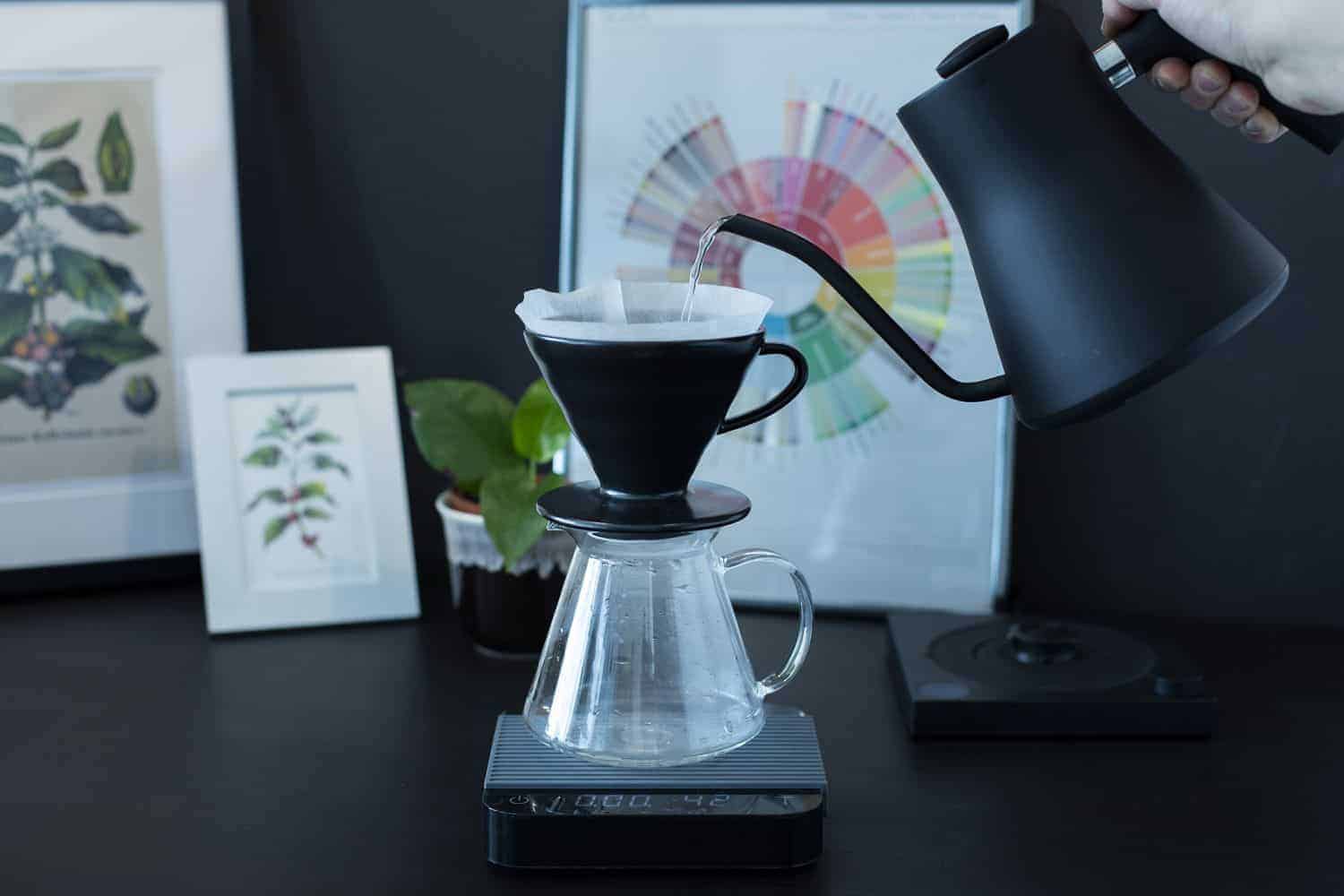
Beyond pour-over, Panama coffee works beautifully with a French press and Aeropress. The former captures rich oils and full-bodied flavors, while the latter extracts complex flavors with minimal bitterness.
Enjoy this coffee untainted (no milk, no sugar) to fully appreciate its exceptional character.
Final Thoughts
Panama’s coffee industry is essentially a masterclass in finding your niche and owning it. It’s not trying to compete on volume; it can’t.
Instead, Panama coffee producers have positioned themselves as perfectors of premium, experimental, quality beans that break auction records and push flavor boundaries. It’s a high-wire act for sure, especially with the current climate and labor challenges.
But if any origin has proven it can adapt creatively, it’s Panama. The country that almost abandoned coffee thirty years ago is now teaching the world what’s possible when you refuse to compromise on quality.
Have you ever tried Panamanian coffee? Was it everything you imagined it to be, and more? Drop a comment below, and let’s get to talking about this exciting origin!
Panama Coffee FAQ
Yes. Panama produces some of the world’s finest specialty coffee, especially of the Geisha variety.
Panama coffee is expensive due to its exceptional quality and limited production quantities. This high demand drives prices up.
Hacienda La Esmeralda’s Geisha is widely considered the pinnacle of Panamanian coffee. It launched Panama’s coffee fame in 2004 and consistently wins top awards.