



When most people think of island coffee, Hawaiian, Jamaican and Cuban coffee immediately come to mind.
But did you know that Puerto Rican coffee is just as good? This American territory has been growing incredible beans since the 1700s. And for a while there, Puerto Rico coffee was the coffee to drink.
So, why don’t we hear more about these beans today? I think it’s high time to talk about why this North American coffee matters.
Table of Contents
A Brief History of Puerto Rican Coffee Production
Coffee landed in Puerto Rico around 1736, brought over by Spanish settlers from Martinique. These settlers saw real potential for growing high quality Arabica coffee on the island’s misty mountain slopes.
And they were right. The central highlands turned out to be perfect. The high altitude, mineral-rich volcanic soils, steady rainfall and moderate temperatures suited coffee cultivation to a tee.
By the mid-1800s, coffee became one of Puerto Rico’s top exports, peaking at over 13.6 million kilograms annually. European markets, especially Spain and France, couldn’t get enough of it. At one point in the late 1800s, coffee overtook sugar to become the island’s main export.
Then, disaster struck. Hurricane San Ciriaco hit in 1899, destroying huge sections of the island’s coffee plantations. Right after that, the U.S. took control of Puerto Rico and pushed sugar production instead. The results were inevitable – the coffee industry shrank to almost nothing.
Throughout the 1900s, Puerto Rican coffee continued to struggle. Competition from more productive South and Central American coffee countries increased. Worse, global coffee prices dropped and many farmers couldn’t make it work financially.
By the 1960s and ’70s, production had fallen way off. The island that used to export tons of coffee was now either drinking whatever little it produced or importing beans to meet demand.
By 2000, Puerto Rico’s coffee industry was barely hanging on. Only a handful of estates were still operating at any significant scale.
The Puerto Rican Coffee Industry Today
Today, Puerto Rico’s coffee production stands at roughly 1.4 million kilograms annually. Locals consume most of it, exporting only 60,000-120,000 kilograms.
The Department of Agriculture oversees the industry, and it takes quality seriously. There’s also the Puerto Rico Coffee Roasters Association, which helps coordinate efforts.
Most coffee farmers are smallholders, with hilly, mountainside farms no bigger than 10-50 acres. They organize themselves into co-ops or sell independently. A few large estates like Hacienda San Pedro, Hacienda Lealtad and Hacienda Los Eucaliptos dedicate themselves to large-scale specialty coffee production.
What makes Puerto Rico coffee stand out is its high-altitude mountain terroir. The stable, moderate temperatures, consistent rainfall and high humidity (thanks to ocean breezes) are perfect for coffee cultivation.
As a result, like Jamaican Blue Mountain coffee beans, these coffees have a distinct, balanced sweetness with absolutely no harshness.
The other thing to note is that almost all the coffee here is shade-grown, making it biodiverse and environmentally friendly. Quality over quantity is the whole strategy for now.
Challenges and Revival Efforts
Since 2000, Puerto Rican coffee has been in recovery mode. But there are serious challenges that hamper these efforts.
First, Puerto Rico faces serious coffee and climate change threats. Hurricanes Maria in 2017 and Fiona in 2022 devastated coffee farms. As it takes years for coffee plants to mature and produce again, recovery is slow and expensive.
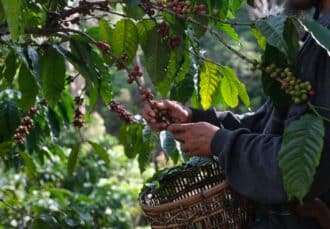
Labor is another issue. Puerto Rican coffee harvesting is selectively done by hand. With younger generations migrating to the capital San Juan (or mainland America), there aren’t enough able workers for harvest season.
Then there’s economics. Coffee production costs in Puerto Rico are high due to the rugged terrain and labor shortages. Meanwhile, farmers are competing with cheaper Latin American countries. Thus, it’s tough to make the numbers work, even with premium pricing.
Land use is shrinking, too. As older farmers retire, their land often gets sold for development rather than staying in coffee production.
Still, there are positives.
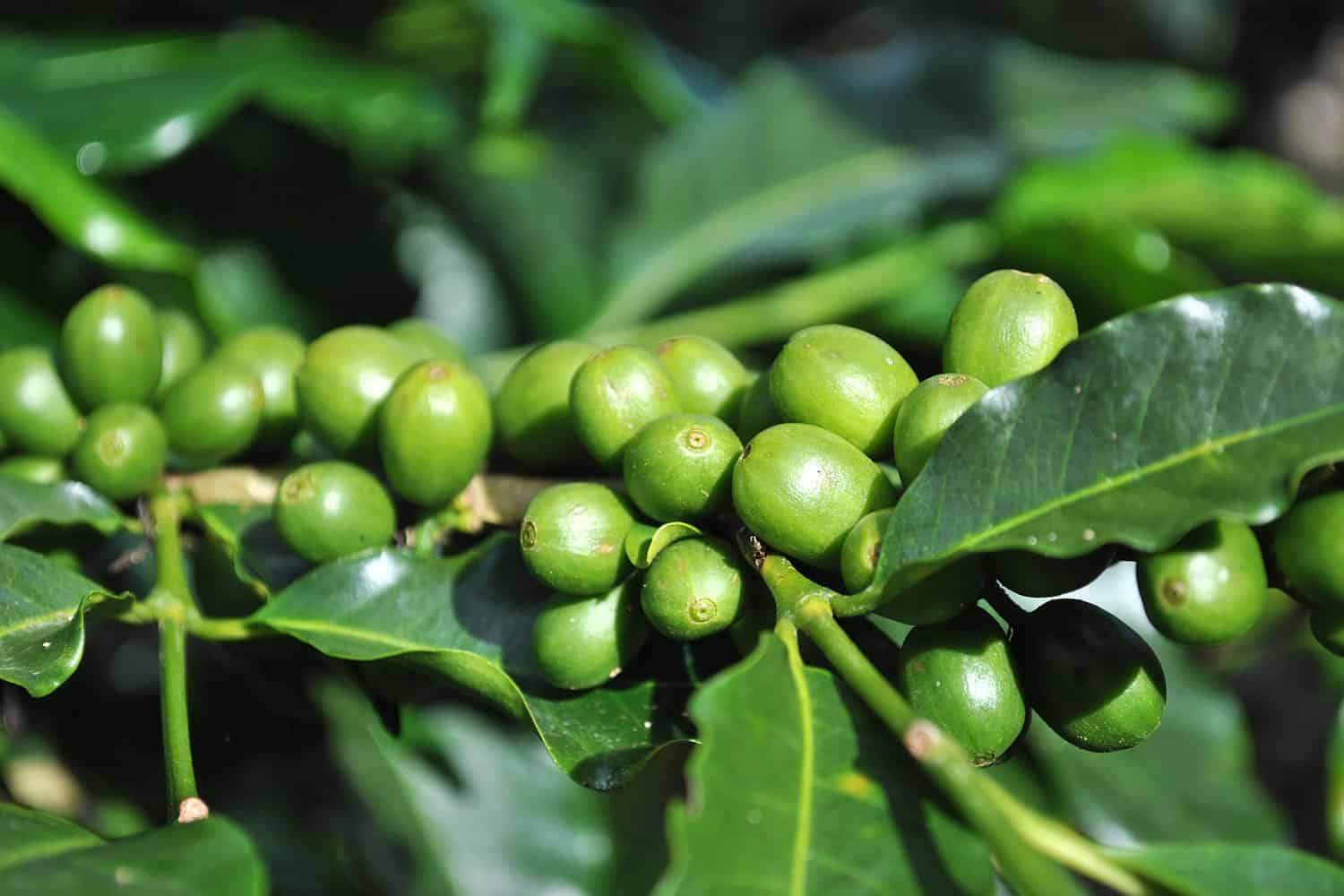
The USDA has pumped in $15 million into the Cafe Futuro project. This initiative incentivizes farmers to adopt climate-smart coffee practices.
Likewise, post-hurricane recovery government funds in the form of grants and low-interest loans are invaluable. Coffee farmers use these monies to replant devastated crops and rebuild processing and storage facilities.
Agrotourism is also becoming a thing. Coffee farms offer tours, tastings and farm-stays, creating new revenue streams.
Various local coffee organizations like PROCAFE are also doing their part. They’re pushing the “buy local” angle hard, building pride around Puerto Rican coffee. Some farmers have even targeted specialty certifications like Organic, Fair Trade and Rainforest Alliance to command higher prices.
It’s a fight, but people are ready and willing.
Coffee Varieties in Puerto Rico
The Arabica varieties Typica, Bourbon and Caturra dominate Puerto Rico’s coffee scene.
Typica is what the Spanish brought over in the 1700s. It produces excellent cup quality – sweet, clean and balanced. On the downside, it’s finicky to grow, being low-yielding and more susceptible to disease.
Bourbon came later, in the 1800s. It offers more complexity and a bit more body and sweetness than Typica. Yields are better too, which helps farmers economically.
Caturra showed up in the mid-1900s as a natural mutation of Bourbon. It grows shorter, making it easier to harvest. It also produces more cherries per plant and has a brighter, cleaner flavor profile.
Specialty coffee farmers in Yauco tend towards Yauco Selecto AA beans. These beans are famous for their smooth and sweet “island coffee” profile and robust full body, a rare combination.
Many farmers also plant Catuai, rust-resistant Catimor and a host of local varieties.
Where Does Coffee Grow in Puerto Rico?
Unlike other origin countries, Puerto Rico doesn’t have entire provinces growing coffee. Instead, it has municipalities or regions.
However, these municipalities all have one thing in common: a mountain microclimate. This terroir is cool enough to allow slow cherry maturation, wet enough to keep plants healthy and features well-drained soils so roots don’t rot.
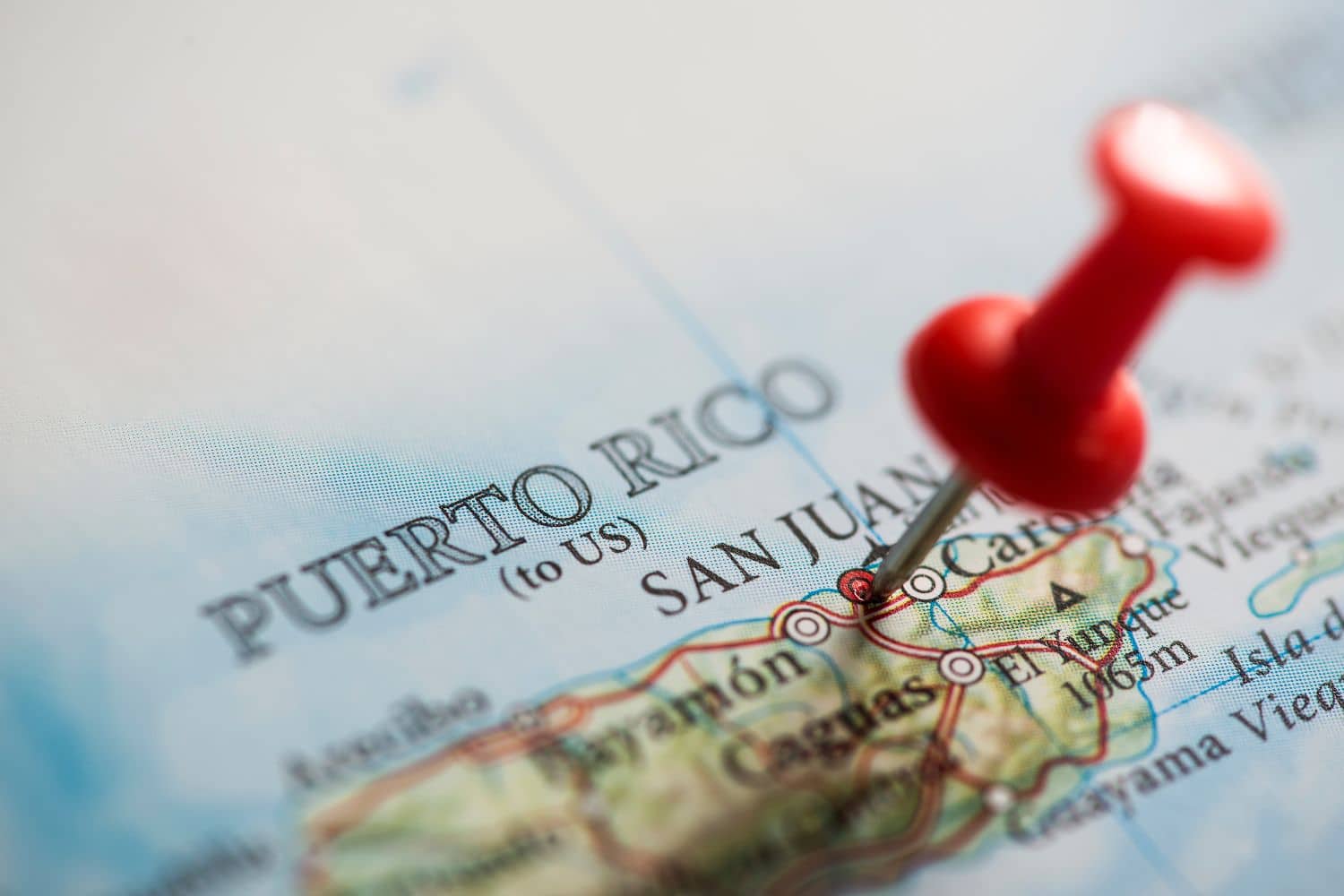
Yauco
Yauco, dubbed the “Bordeaux of Puerto Rico Coffee,” lies in the southwest mountain regions. It features high elevations of 800-1,200 meters above sea level (masl), high Caribbean-like humidity, fertile soils and cool temperatures.
Yauco coffee, especially Yauco Selecto AA beans, are the preferred variety here. Typica, Bourbon, Caturra and Catimor also do well.
Adjuntas
Known as La Ciudad del Gigante Dormido (City of the Sleeping Giant), Adjuntas sits high in the Cordillera Central mountain range. Some farms sit as high as 915 masl.
As this region is cooler and rainier, it’s ideal for Bourbon (which loves higher elevations). Typica, Caturra and Catuai also thrive here.
Coffee from this region tends to be brighter and more complex, with floral and citrus hints.
Lares
Lares, in the central-western mountains north of Adjuntas, has a similar altitude range of 500-900 masl. It also benefits from fertile soils and consistent humidity.
Primarily, farmers here plant Caturra because it can handle the denser planting on these steeper slopes.
Coffee from Lares has a bit more body, and sometimes shows floral aromatics.
Utuado
Utuado is one of the oldest regions in the central range, lying at 400-800 masl. Its high altitude, rich volcanic soils and ample rainfall are perfect for Typica, Bourbon, Frontón and Limani varieties.
Coffee from here is incredibly creamy and boasts distinct chocolate and nut flavors.
Maricao and Las Marías
These neighboring municipalities in the west-central mountains enjoy high elevations of 300-900 masl. The high altitude, consistent rainfall and rich volcanic soils produce well-rounded cups with a medium body. However, some brews show unique spice hints of cinnamon and clove.
Bourbon, Typica and rust-resistant Catimor are the main varieties here. Farmers also favor the local Limaní, Obatá and Frontón varieties.
Puerto Rican Coffee Culture
For decades, Puerto Rico was among the finest coffee producers in the world. Its beans were popular in European courts, commanding premium prices.
Today, local coffee production is a shadow of the past. But the surprising thing is, this decline has made local coffee even more treasured. When Puerto Ricans buy café de aquí (coffee from here), they do so with a strong sense of pride.
While mainland Americans often treat coffee as fuel, Puerto Ricans view it as an essential pause in the day. The phrase you’ll hear constantly is vamos a tomar un cafecito or let’s have a little coffee.
The cafetería (coffee window) is a beloved institution from which you can order your cafecito and chat with whoever’s around. No sitting required and definitely no laptops allowed – just people, coffee and conversation.
Offering coffee to guests at home is a must. Refusing coffee when offered? Practically an insult. Even if you’ve just had three cups, you accept the fourth with a smile.
Puerto Rican coffee is traditionally brewed in a colador (metal pour-over filter) or greca (stovetop espresso maker). The resulting brew is intense. Like with Cuban coffee, it’s almost always served sweet, as cafe con azúcar.
What Does Puerto Rican Coffee Taste Like?
When coffee experts talk about Puerto Rican coffee, certain flavor descriptors come up again and again. These beans are medium to full-bodied with a luxurious, almost velvety mouthfeel. They’re similar in many ways to Kona coffee.
Another characteristic is their low acidity. Unlike bright, zingy East African beans, Puerto Rican coffee is gentler and more rounded.
Rich chocolate, nutty and vanilla notes are prominent. Some coffees, especially from the rugged Utuado region, show fruity sweetness, aromatic florals and even light spice notes.
How to Buy Coffee From Puerto Rico
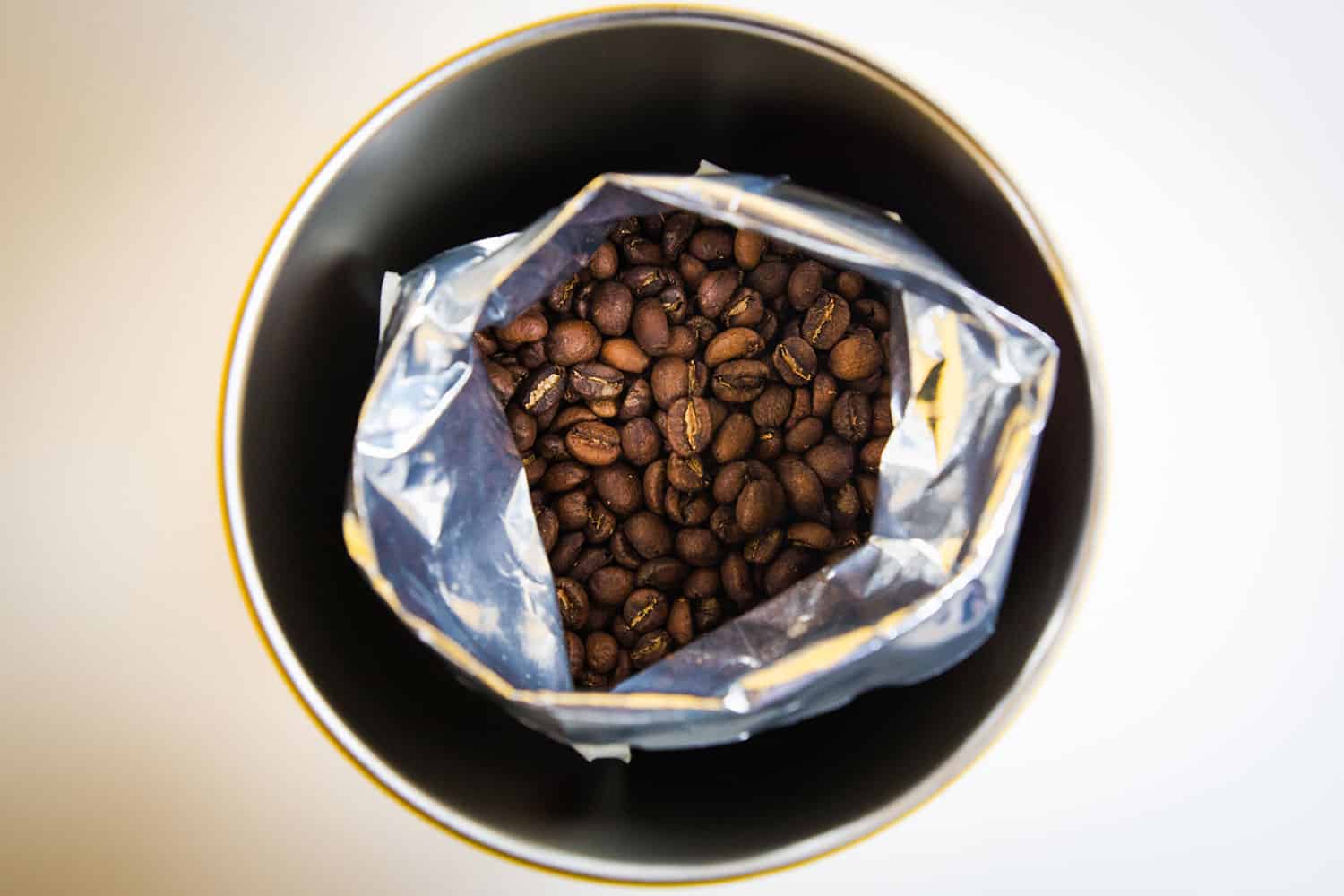
Authentic Puerto Rican coffee can be surprisingly tricky to find. Online specialty roasters that focus on estate and regional single origin coffee beans are your best bet. However, remember to check their sourcing information. You’ll have peace of mind knowing you’re getting ethical, transparent beans, straight from Puerto Rican farms.
If you prefer to buy physically instead of online, you’ll find authentic brands in local markets. Try markets in New York, Florida and Chicago; cities with large Puerto Rican communities. This is often your best mainland source for the brands Puerto Ricans actually drink (Café Yaucono, Café Crema, Café Rico and Café Alto Grande Premium).
When buying, also look for specific estate or regional origin information. Well-known single-estate producers include Hacienda San Pedro, Finca Cialitos or Hacienda Pomarrosa.
Some Puerto Rican coffees carry certification from local organizations. While not universal, these add credibility. PROCAFE and local branches of organizations USDA and CQI are the most reputable ones.
Lastly, don’t forget to check the price. Authentic Puerto Rico coffee retails at no less than $15-30 per pound.
Final Thoughts: What Does the Future Hold for Puerto Rican Coffee?
After exploring the history, culture, flavors and sourcing challenges of Puerto Rico coffee, one question remains: is it worth the effort to track down these beans?
The answer is an unequivocal yes. Let me tell you why.
In a coffee world that often celebrates extremes (the brightest acidity, the boldest body, the most exotic tasting notes), Puerto Rican coffee stands apart by refusing to shout.
Instead, these beans offer something rare: the perfect flavor equilibrium. They’re smooth without being bland and complex without being overwhelming. Indeed, these coffees reveal that balance is also a true hallmark of quality.
Although the future of Puerto Rican coffee is uncertain, a new generation of entrepreneurs is emerging. They combine traditional farming wisdom with modern marketing savvy. Crucially, most of them favor transparent direct-trade coffee models.
With this new trend, I’m confident that this coffee won’t disappear (Puerto Ricans love it too much to let that happen). My hope is that it becomes even more premium, attracting new devotees to its balanced brilliance.
If you’re curious about Puerto Rican coffee, don’t wait. The beans you buy today might be harder to find or significantly more expensive in five or ten years. Treat yourself to some before it’s too late!
FAQs
Puerto Rican coffee has a full velvety body and low acidity. It also boasts sweet, balanced flavor notes of chocolate, nuts and caramel. The island’s volcanic soil, high-altitude growing conditions and centuries of expertise create beans that rank balance over boldness.
Puerto Rican style coffee refers to the traditional brewing method, using a colador (metal pour-over filter) or greca (stovetop espresso maker). This coffee’s brewed strong, often with added sugar.
Café Yaucono is the most popular coffee brand in Puerto Rico. Other beloved local brands include Café Crema, Café Rico and Café Alto Grande.