


Anyone wondering why coffee is so expensive should treat themselves to a coffee roastery visit and watch the professionals at work. Just as labor-intensive as the cultivation, harvesting, and processing of coffee beans is their transformation from raw green coffee to the perfect roast.
In theory, all you have to do is place green beans over a fire or heat source and wait until they crack and turn brown. However, in practice, coffee roasting is a much more complicated process.
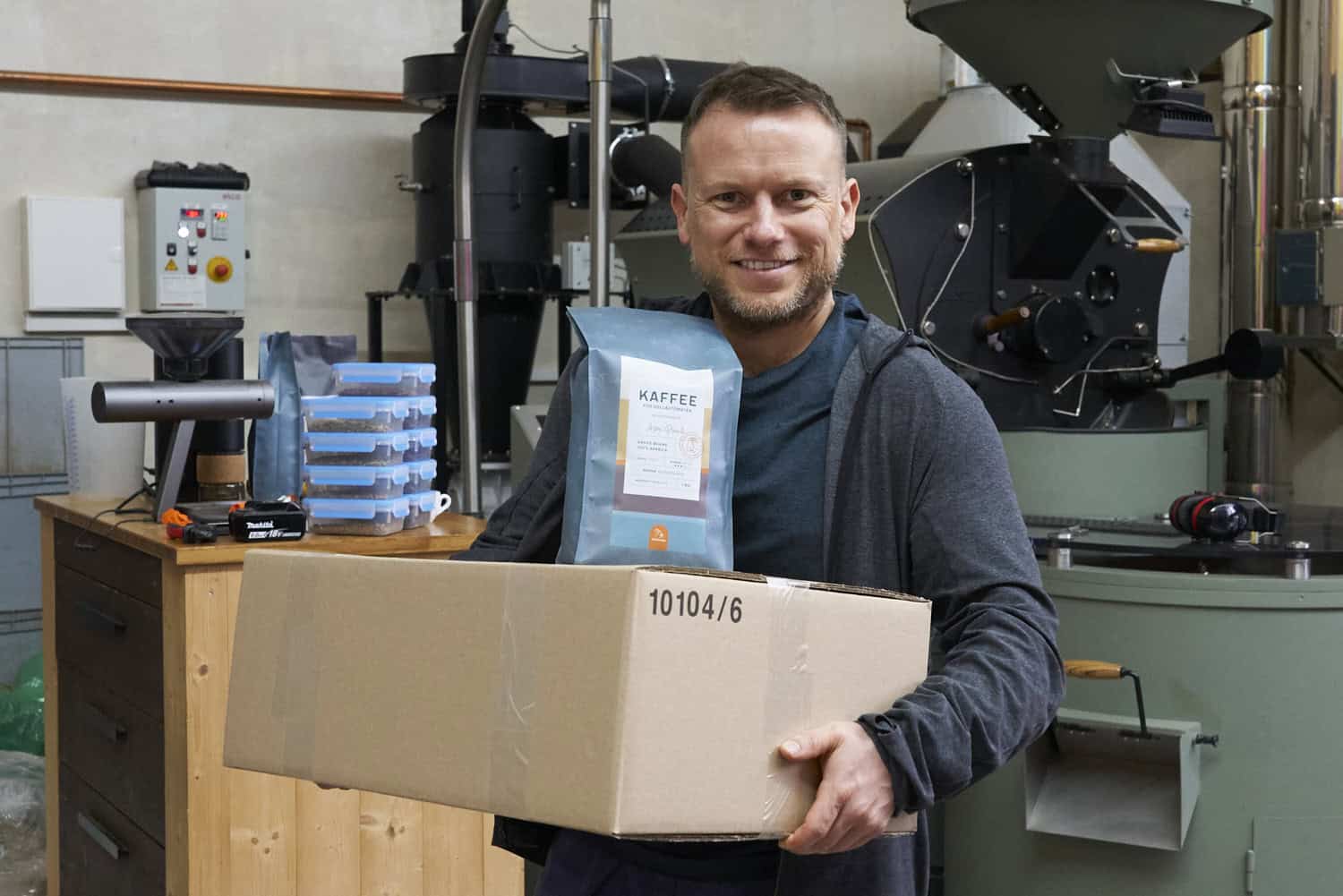
Team Coffeeness saw this firsthand just recently. We visited our partners, Shared Roasting in Brooklyn and Backyard Coffee in Frankfurt, and spoke with the teams about how they’ve developed our Coffeeness Espresso Blend.
We discussed current challenges, such as increasing coffee prices, as well as your feedback and suggestions regarding our signature roast. Last but not least, we once again talked about how coffee roasting works and how you can tell if a bag of coffee beans has been roasted to perfection.
In this roasting coffee guide, you’ll also find a few tips for home roasting – and discover whether it’s even possible.
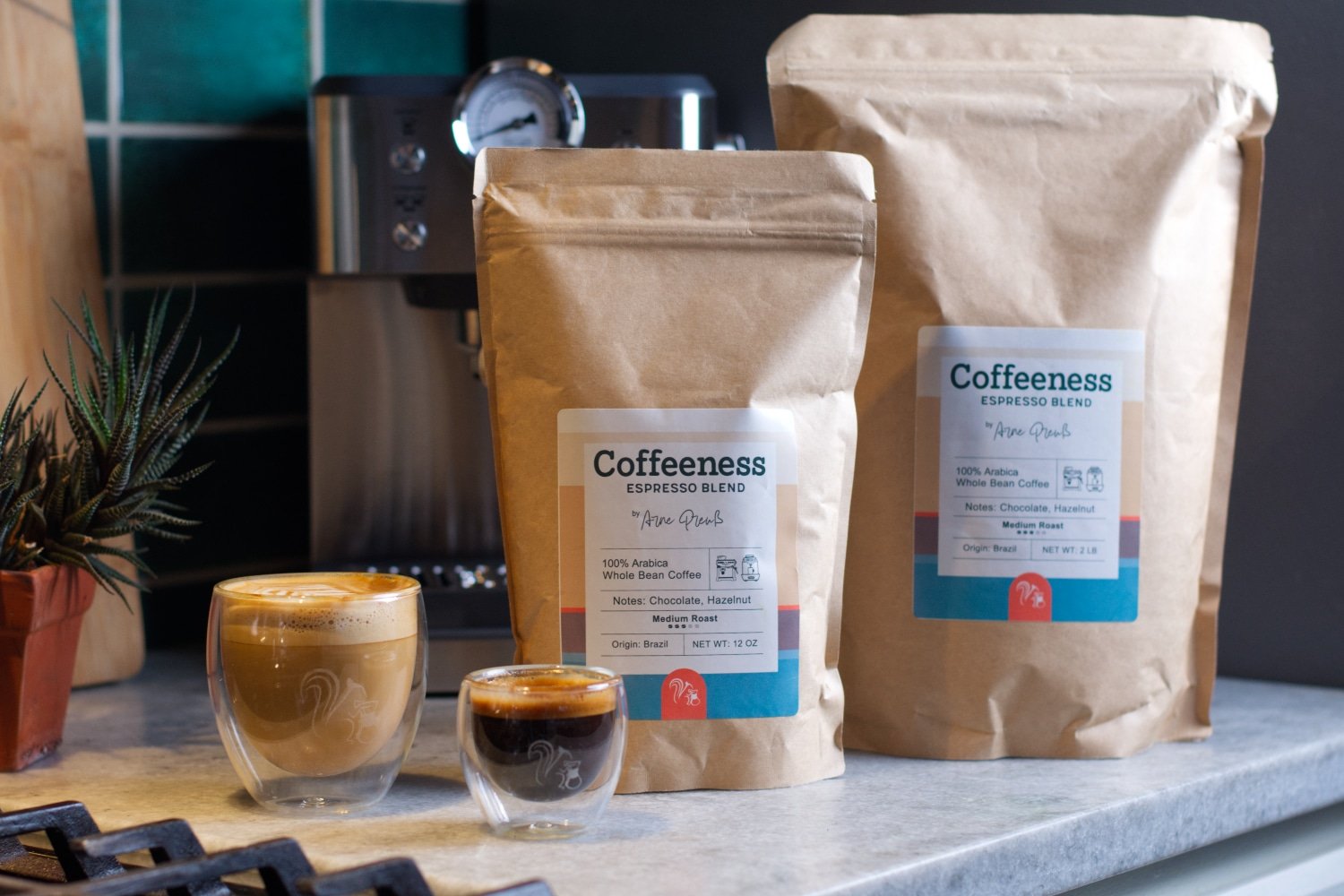
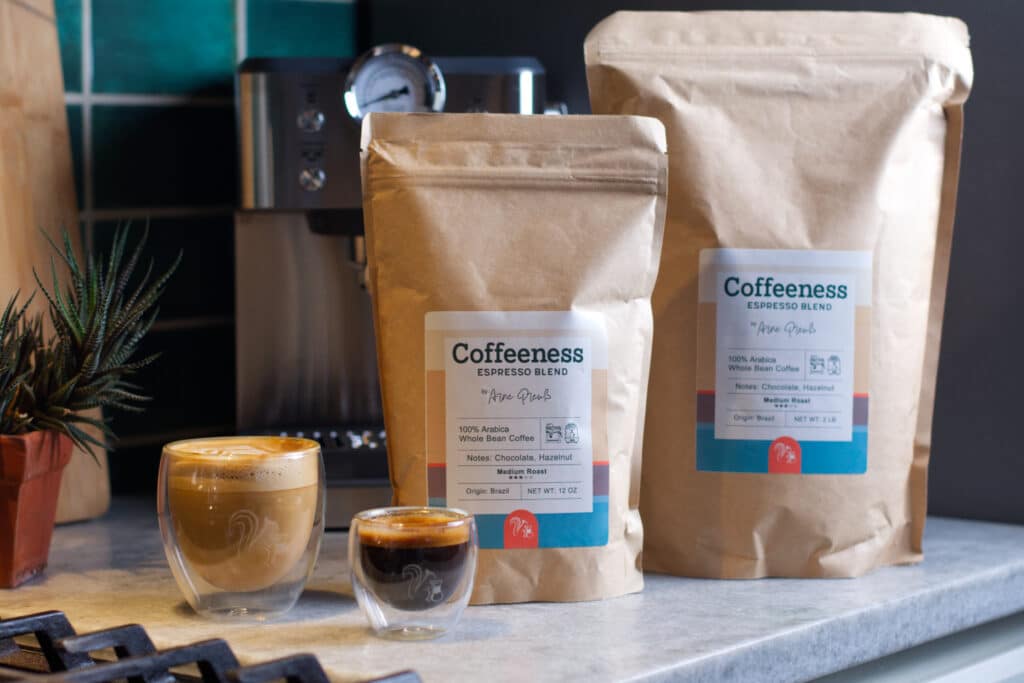
Coffeeness Medium Roast Espresso
Well-balanced with chocolate & hazelnut notes
Freshly roasted in Brooklyn
Very low acidity
Table of Contents
Why Is Coffee Roasting So Complicated?
The main difference between artisanal outfits like Shared Roasting and supermarket coffee lies in the approach:
Supermarket coffee is supposed to always taste the same, which is why the roasting process is designed to ensure that the result is always consistent.
Small-scale roasters evaluate the qualities and characteristics of each batch of beans and only then decide which roast profile will be most suitable.
Simply put: In the industry, it’s already decided in advance whether a bag of coffee beans will be used for espresso or drip coffee. That’s not the case at reputable roasteries.
This is due to the unique nature of coffee beans. In fact, every coffee variety, and every new harvest presents a puzzle that the roaster must decipher anew each time:
Each coffee bean has a unique balance of aromas, amino acids, proteins and other compounds; it has a specific moisture content and therefore different requirements for the ideal roasting process.
Each bean reacts differently to the temperature, roasting time and other factors in the roasting drum.
We don’t yet know exactly what happens inside the bean during roasting.
Therefore, a roast profile that worked perfectly once can’t be precisely replicated with similar coffee beans, nor can it be fully standardized.
Roasting Coffee: The Expert’s Opinion
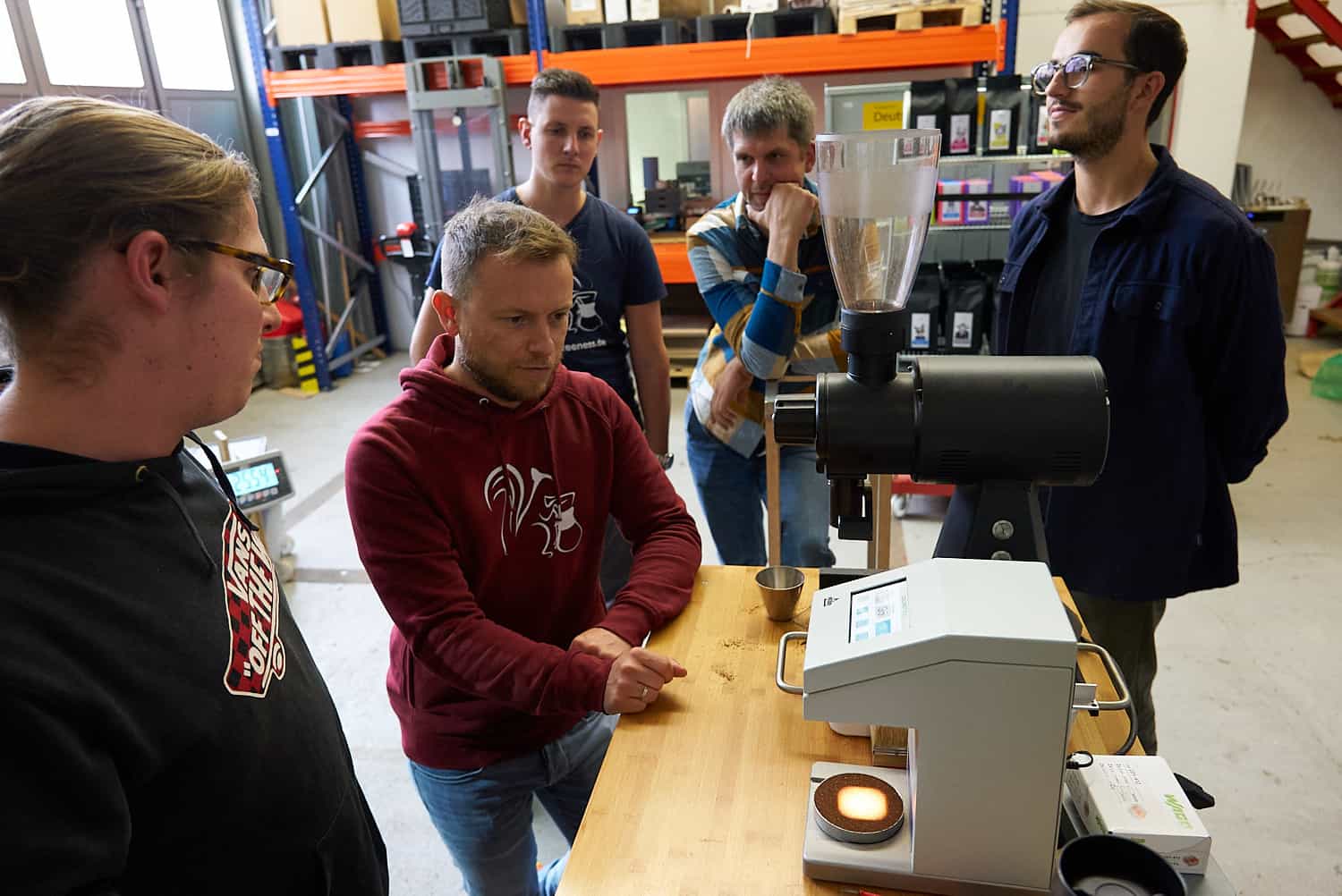
Wolfram from Backyard Coffee in Frankfurt summed it up perfectly in one of our workshops:
“From a chemical standpoint, we have no idea what our coffee has to offer. So we take a trial-and-error approach when roasting it.”
To make matters even more complicated, coffee beans – even in their raw form – trigger a constant butterfly effect on their journey from the plantation to your cup:
As soon as there is a change in the ambient temperature, or as soon as the beans come into contact with any environmental factor whatsoever, the basic conditions for a perfect roast immediately change.
The reason supermarket coffee is still drinkable is that standardized roasting processes play to the lowest common denominator, making it easier to maintain a standard flavor profile.
The origin, variety and processing method of each bean also give rise to recurring factors that help determine the final result in advance.
If you want to try your hand at home roasting, these general guidelines are more than enough. When it comes to professional roasting as a multi-billion-dollar industry, I fully support Wolfram and Backyard Coffee’s roasting philosophy:
“Roasting should always be about bringing out the best in any given bean.”
In other words, if we only stick to standard practices and cookie-cutter methods, we’ll never discover the full sensory potential of a lovingly cultivated and processed specialty coffee.
How Does Coffee Develop Its Flavor During Roasting?
Even though we don’t know the exact flavors a coffee bean contains or their specific composition, we can categorize these components. We also know how a flavor profile behaves during the roasting process:
Enzymatic notes: These flavor compounds are naturally present in the coffee cherry or coffee bean itself. They break down as the roasting time increases. These include floral, fruity and herbal notes.
Caramelization: When the natural sugars in coffee beans caramelize, we achieve pleasing notes of caramel, chocolate and nuts. These flavors result from the so-called Maillard reaction, about which we know the least in terms of timing and chemistry throughout the entire roasting process.
Dry distillation: If coffee beans are roasted for too long or at too high a temperature, the cell fibers burn. This produces spicy, resinous and burnt notes. A little spiciness is desirable, but too much results in undrinkable, burnt roasts.

Coffee’s distinctive flavor is also due to acids, bitter compounds and oils, which are carefully developed and controlled during the roasting process:
Acidity decreases as the roast level increases.
Oils continue to build up during roasting.
Shortly after the Maillard reaction reaches its peak, the level of bitter compounds rises sharply.
The roaster must precisely balance these two groups – namely, notes and basic components – to the second during the roasting process, even though the aromatic components are the hardest to control.
Once again, here’s the golden rule: a true professional doesn’t strive to make a specific coffee chocolatey and particularly low in acidity.
Instead, they let the coffee tell them what roast level and profile bring out its best flavor – regardless of whether it has more or less acidity.
To ensure that our coffee always tastes just right, roasters increase the likelihood of achieving a specific flavor by carefully selecting the coffee variety and origin.
Coffeeness Beans From Brazil
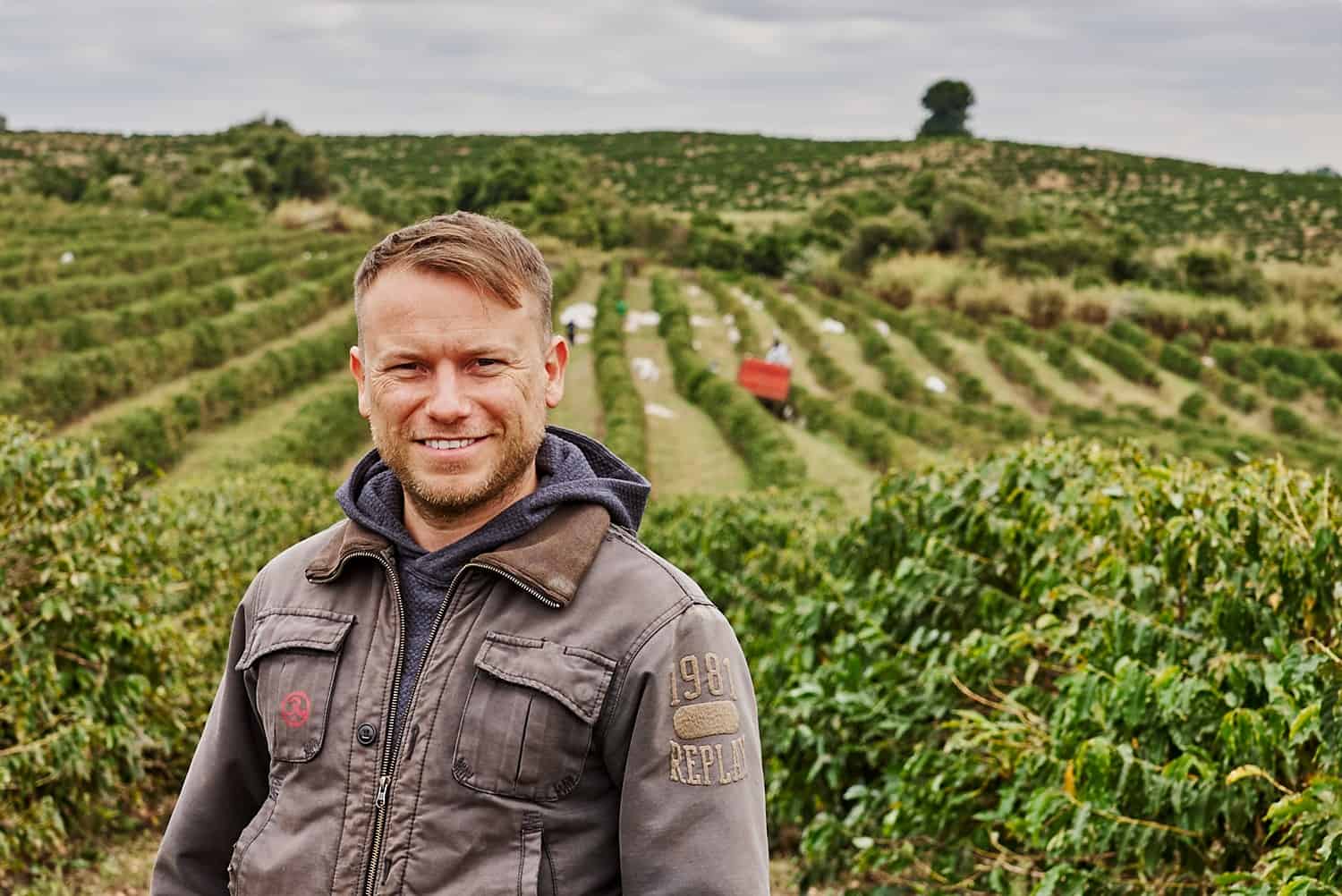
Our Coffeeness beans come from Brazil, a country known for sweet, approachable specialty coffee beans. This is due both to the local climate and the native varieties. Last but not least, the processing method plays a key role.
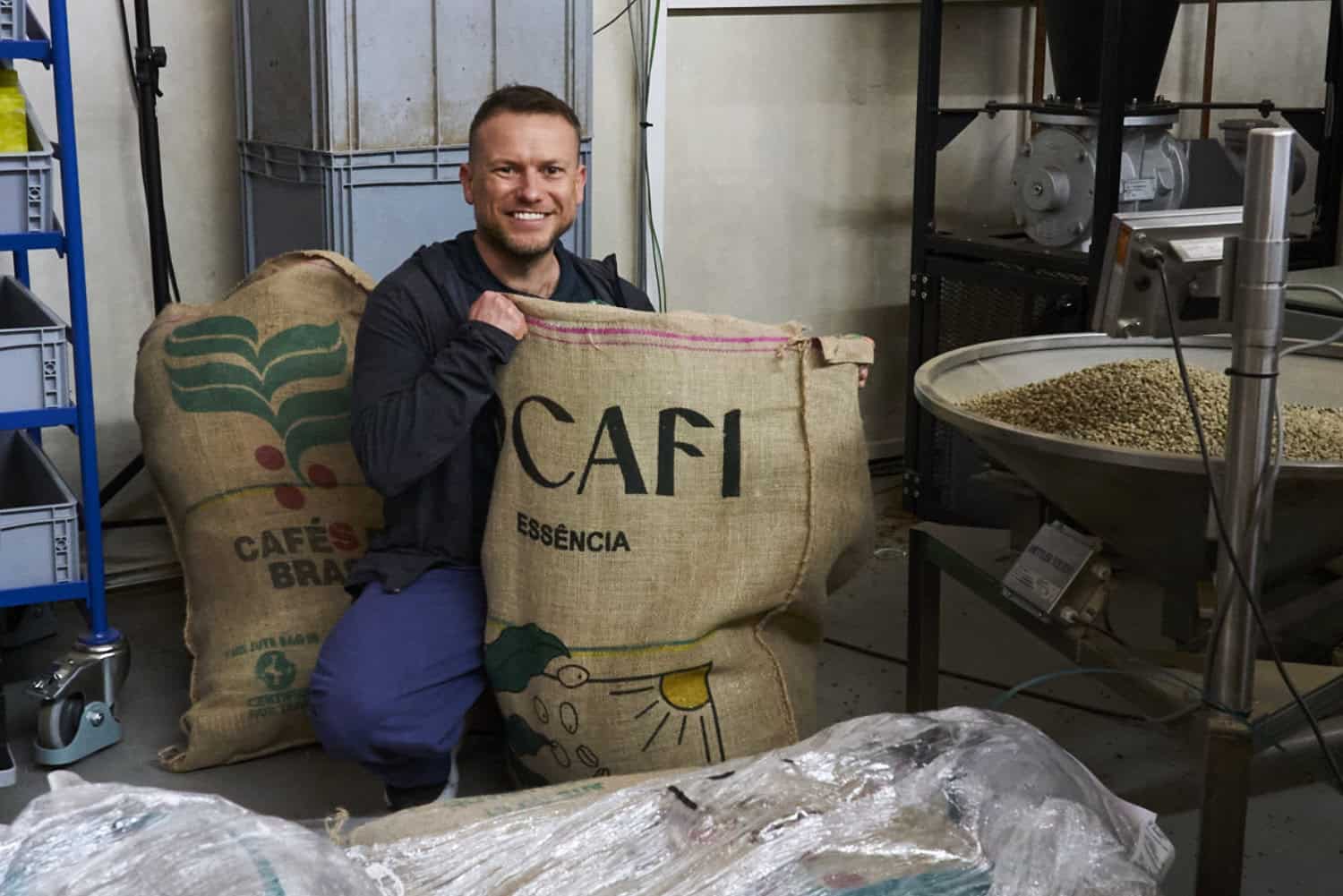
Of course, we have to verify whether these assumptions are correct after every coffee harvest or bean shipment from Ocafi. That’s why we regularly stop by Backyard in Germany and Shared Roasting in the U.S. to sample plenty of coffee together with the roasting team.
Cracking, Popping and Patience: What Happens During the Roasting Process?
One of the most important functional and technical aids in coffee roasting is the so-called roast curve. It serves as a way to visualize the roasting process, a computer-based monitoring and control system for the roaster and a documentation and calibration aid for future roasts.
In very simple terms, it looks like this:
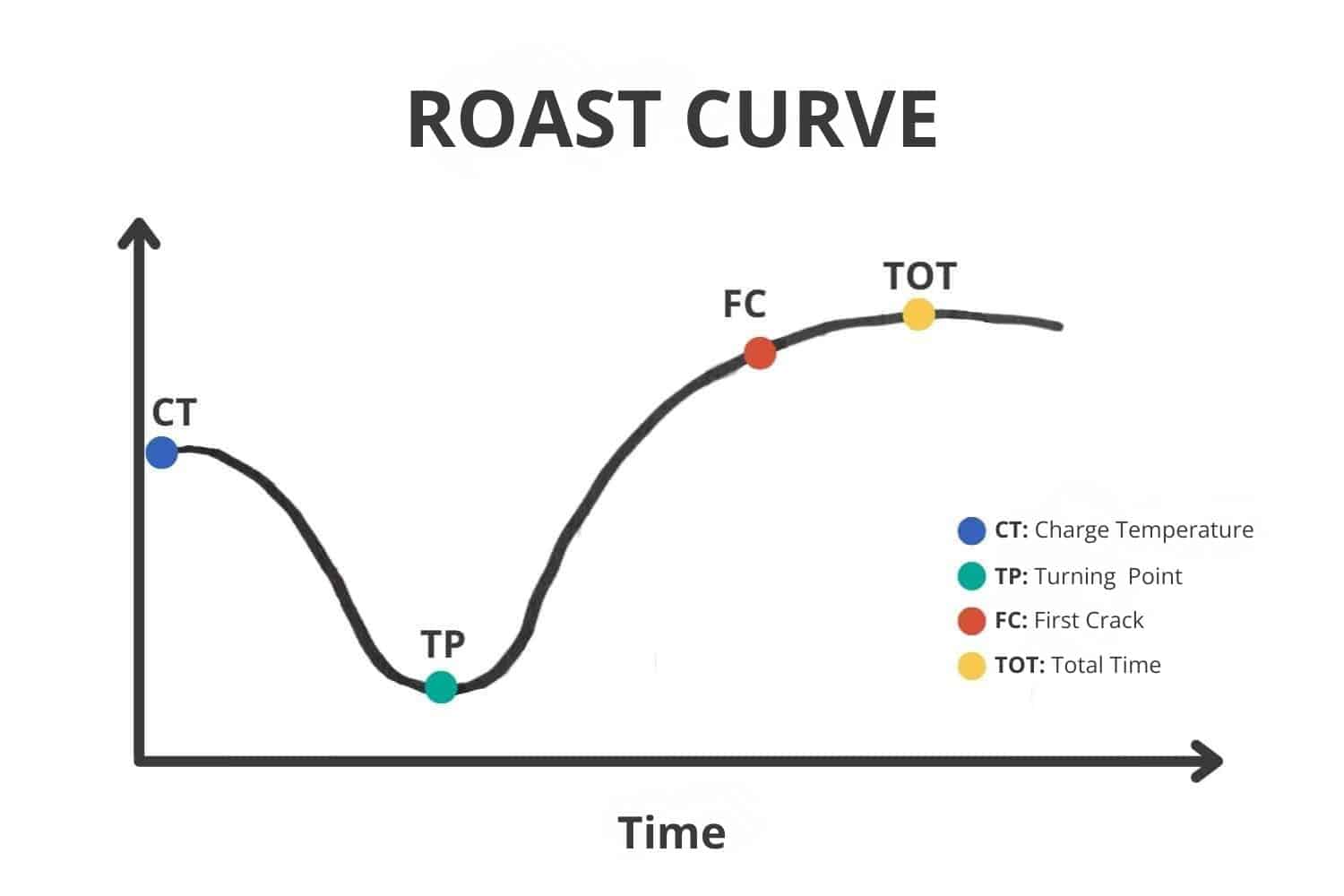
The initial temperature inside the roaster drum (charge temperature) determines the intensity and uniformity of the roast. It’s basically the same as preheating an oven. Only more complicated.
When green coffee beans are added to the drum, the temperature drops dramatically at first. Once everything has stabilized, the turning point marks the start of a slow, steady rise in temperature, and thus the actual roasting process.
The first crack refers to the moment when the water inside the bean suddenly evaporates, the bean bursts open with an audible crack and the Maillard reaction is at its peak. In that split second, the roast flavor, acidity, sugars and other elements are in balance. The roaster must now use their expertise to bring the process to a perfect conclusion. This is rather like making popcorn – it even makes a similar sound.
The roasting process ends at the calculated total time. To ensure success, the roasted coffee beans must be immediately removed from the drum to cool. Otherwise, they will continue to roast and may even reach the second crack – the point at which the cell walls begin to burn.
These four points and the corresponding curve cannot be identified right away. For example, in order to time the first crack precisely, it needs to be calculated in advance at the turning point. After all, you can’t just stop everything, check it and then carry on roasting.
Once the roaster has found the perfect curve for a specific batch of beans, they can’t simply apply it in exactly the same way to the next batch. After all, the temperature curve might need to be more gradual or steeper, and the timeline points will be different.
However, optimal roast profiles ideally serve as a reference point. That way, you don’t have to start completely from scratch when working with new coffee beans that have similar characteristics.
The beans are sample-roasted according to this profile, tasted and evaluated. The green coffee is then subjected to adjusted parameters for the next roast. If necessary, sample roasting is repeated several times.
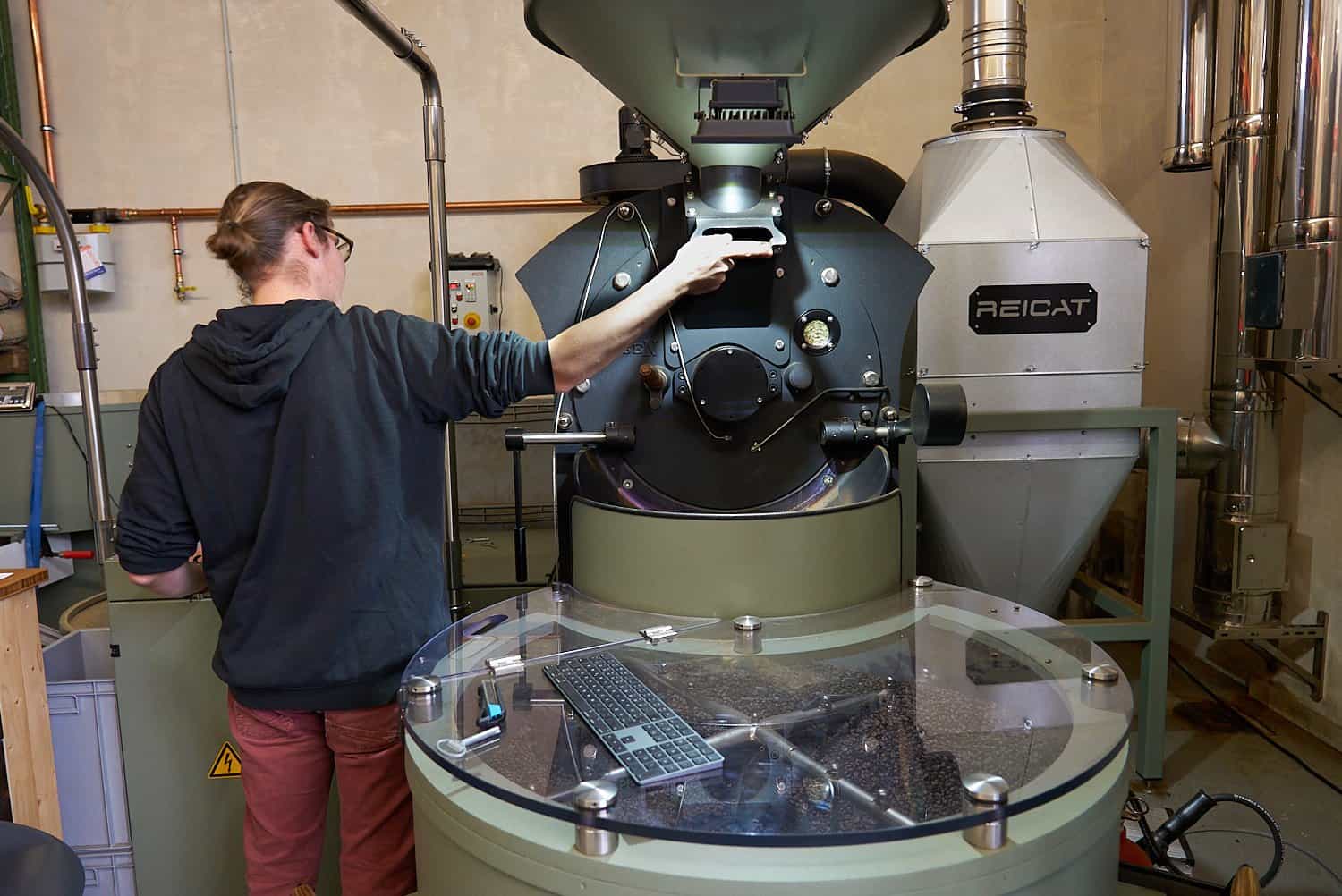
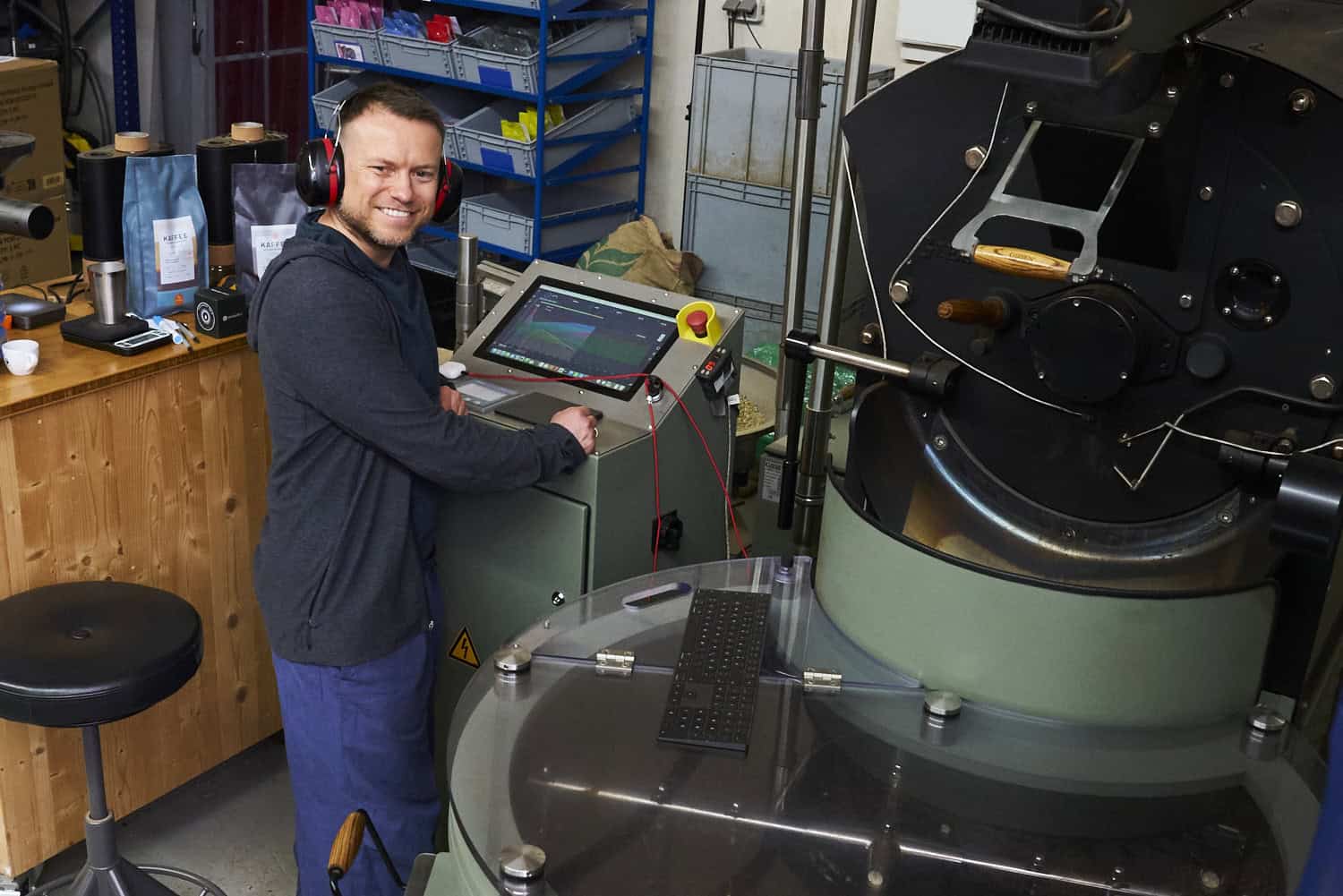
The more thoroughly the roastery documents its roast curves and tests, and the more experience the head roaster has, the faster the process moves from trial and error to the perfect cup of coffee.
Meanwhile, a mediocre roastery tends to rely on roast profiles that have worked well for a particular coffee in the past. It then simply applies these profiles to new beans with a similar origin, processing method and identical variety – perhaps with minor adjustments.
A roastery like this always follows a cookie-cutter approach; for example, first crack plus one minute.
I don’t necessarily have a strong opinion on this because I know the approach can work. But thanks to the skilled folks roasting my beans, I now have a deeper understanding of what it takes to achieve true coffee roasting perfection.
Roasting Your Own Coffee
If you’ve read my article on roasting coffee at home, you’ll know that it’s perfectly doable. In fact, plenty of folks have taken up coffee roasting as a hobby and even bought a home coffee roaster.
As it happens, there are quite a few decent home roasting machines on the market, and plenty of DIY tips on how to roast coffee beans without special equipment.
Even if professionals don’t think much of frying pans, ovens, popcorn machines or even bread makers, I don’t see any reason not to give them a try. Just don’t start out with premium specialty coffee. After all, high-quality coffee beans are best left to professional drum roasters.
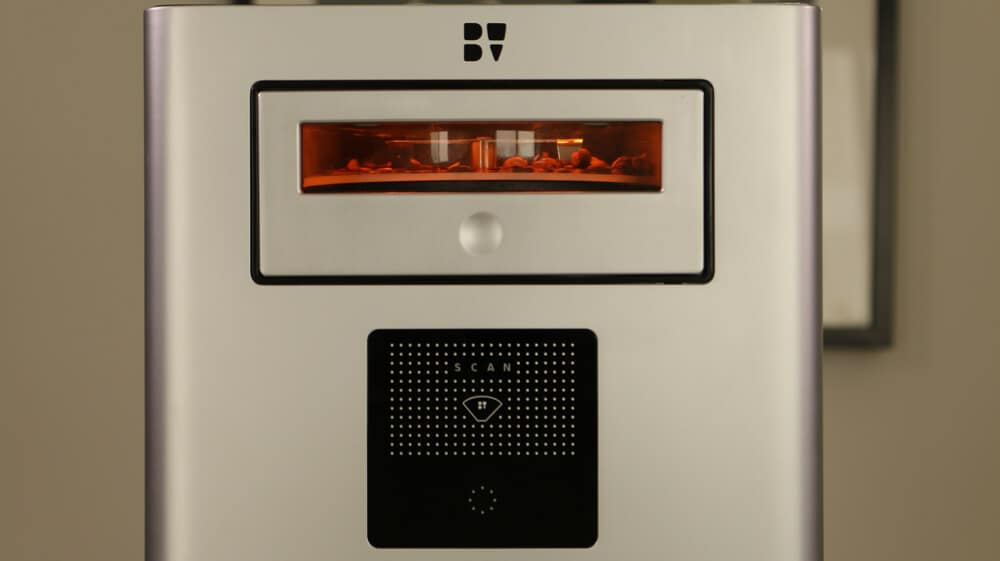
Instead, I’d buy cheaper direct-trade green beans that you already know will work better when lightly roasted than when roasted very dark. Maybe start with fully washed Ethiopian beans, for instance.
Through your home roasting experiments using an oven or popcorn machine, you’ll definitely learn why one should train to become a master roaster. Still, with a bit of luck and some skill, you might end up with reasonably decent results.
Want to Learn How to Roast Coffee? Take a Course, Attend a Seminar, Read a Book – Or Just Buy It From a Pro?
If you’re interested in professional coffee roasting, there are many places in the U.S. where you can take a roasting course. Not just in big cities, but also at small specialty coffee roasteries.
Some seminars are aimed exclusively at professionals and come with a corresponding price tag. Others are “introductory sessions,” where no one expects you to go out and buy an expensive drum roaster afterward.
After my team and I had the opportunity to attend a similar workshop at Backyard Coffee, I realized that every coffee lover should learn about this key aspect of the coffee production process.
Of course, you can also make it easier on yourselves by taking online courses or watching introductory videos on how to become a coffee roaster. I’d love to hear your recommendations for good resources or channels.
Reading books is also a good idea, and I’d suggest following them up with some experiments using an oven and a popcorn machine. In my view, the only important thing is that we use these experiences to further develop our understanding of quality.
Even if I didn’t have my own coffee roasted by professionals, this detailed insight has still given me even more respect for good coffee.
Have you tried roasting coffee? Do you have any tips for doing it at home? Share them with us in the comments section!
FAQ’s
Roasting coffee involves heating raw, green coffee beans in a special coffee roaster. The temperature and time varies, depending on the desired result. As the raw beans are roasted, they undergo chemical changes, resulting in a “cooked” product.
There are many ways for beginners to roast coffee at home. Popular methods include a skillet, popcorn machine or dedicated home coffee roaster.