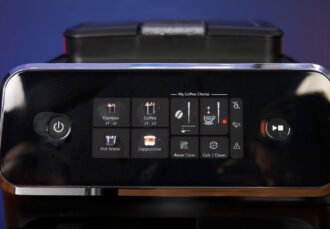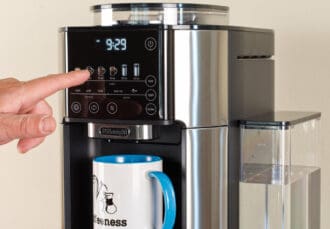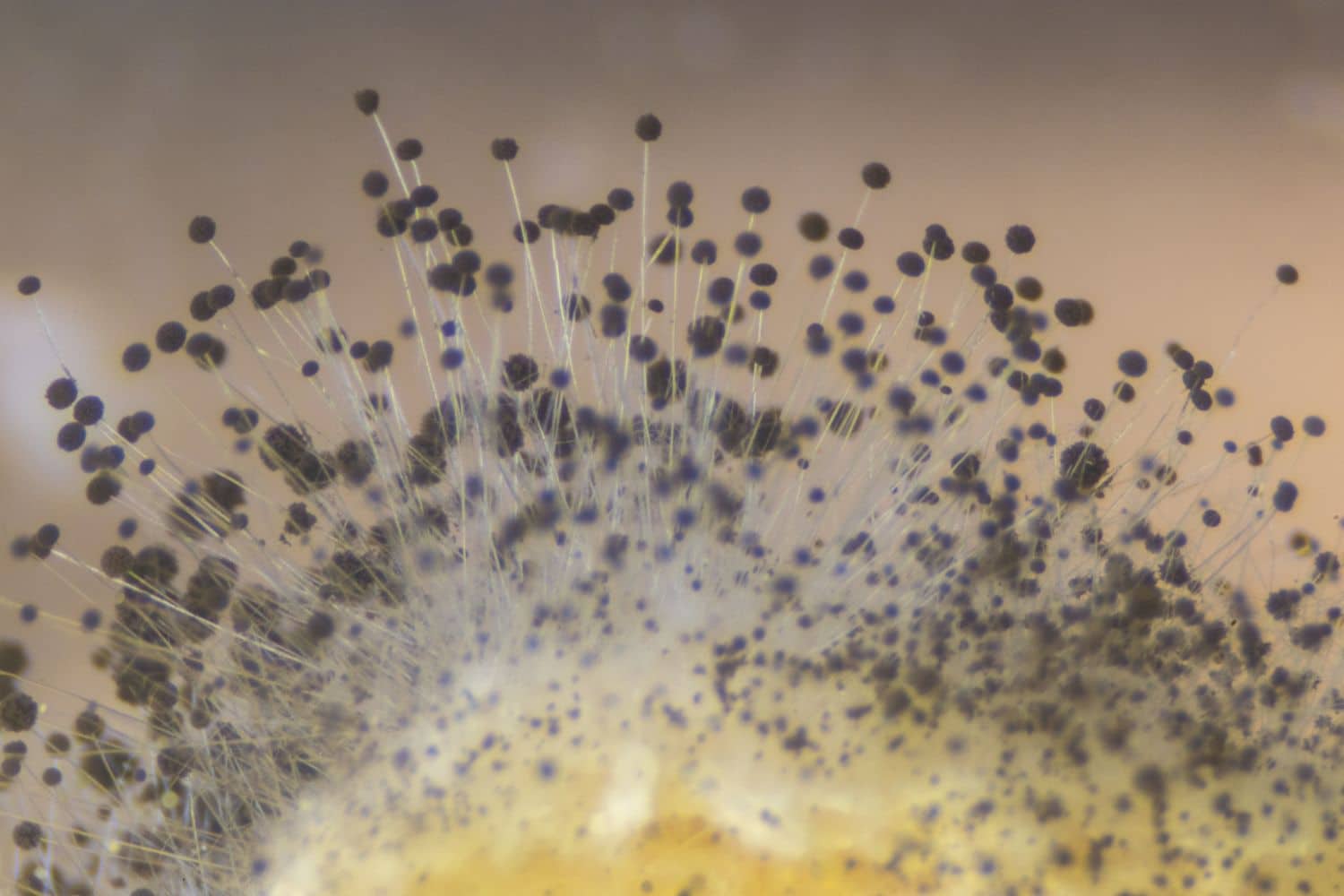



For years, I’ve been complaining: a fully automatic coffee machine with a built-in brew unit is impossible to clean properly! A Jura or Krups machine will be cooked by the end of the warranty period at the latest! Caution! Danger! Coffee machine mold alert!
Coffee is prone to mold. Especially when it comes into contact with water in warm places. And there are plenty of opportunities for that to happen in a fully automatic coffee machine. The brew unit is where all the action happens, so you’d expect it to be the prime moldy coffee maker suspect.
But is this actually the case?
I put two fully automatic coffee machines with built-in brewing units through a year-long field test. And yes, they’re surprisingly clean.
Still, the media is full of stories about moldy fully automatic coffee machines, and new threats to taste, health and mental well-being are constantly being identified in cappuccinos and espressos made at the touch of a button.
What’s going on here? Who or what is actually getting moldy? What role does the brew unit really play in hygiene? And what about people? Let’s find out!
Table of Contents
Moldy Coffee Maker Myth? How a Long-Term Test Leads to New Perspectives
Fully automatic coffee machines offer many points of entry for germs: Through the water tank, milk system, coffee beans and so on. Nevertheless, we like to pretend that the machine itself is to blame. After all, we can’t take it apart down to the last screw and have no idea what’s actually going on in there anyway.
I openly admit that I went into my Jura A1 and Krups Evidence endurance test with that same outlook. I mean, these two fully automatic machines are quintessential examples of the black-box approach.

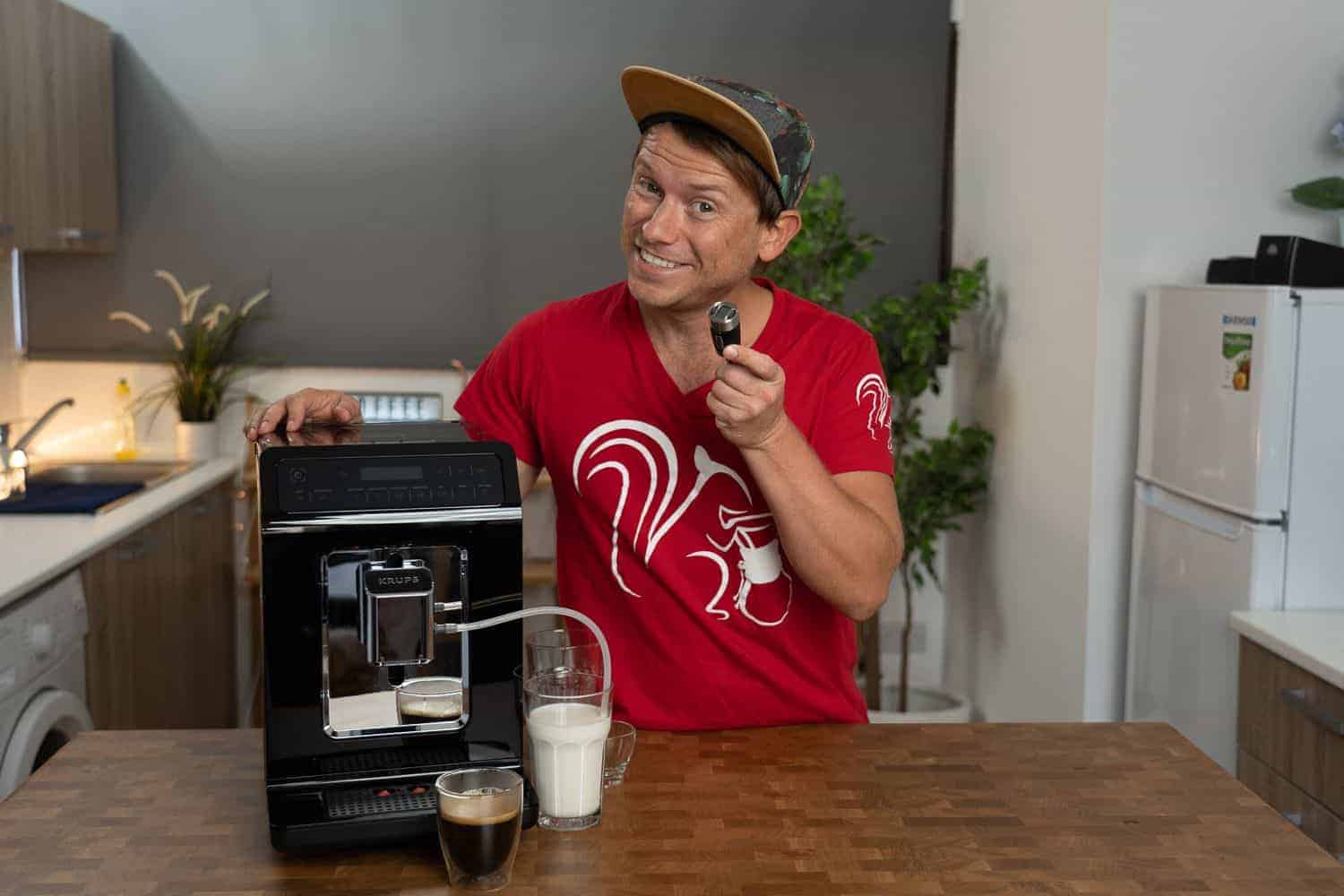
You can’t even remove the brew group – the heart of the automatic brewing process, which comes into the most contact with espresso beans and water. Given its design, there’s bound to be residue left behind that can grow mold, even if manufacturers claim their machines are virtually self-cleaning.
While it’s our fault if a removable brew unit gets moldy, we can confidently blame these two fixed brew group manufacturers if things get nasty in there.
Is the Brew Unit Really the Issue?
The problem with a fixed brew group lies less in the component itself than in the area around it. When coffee grounds are transported from the grinder to the brew unit, things can go wrong. The same is true when these grounds are pressed into a puck. And if all the damp coffee grounds don’t fall into the waste container after brewing, it’s even worse.
However, automatic rinsing programs and cleaning tablets only take care of the direct path through the brew group; they don’t come close to the places outside.
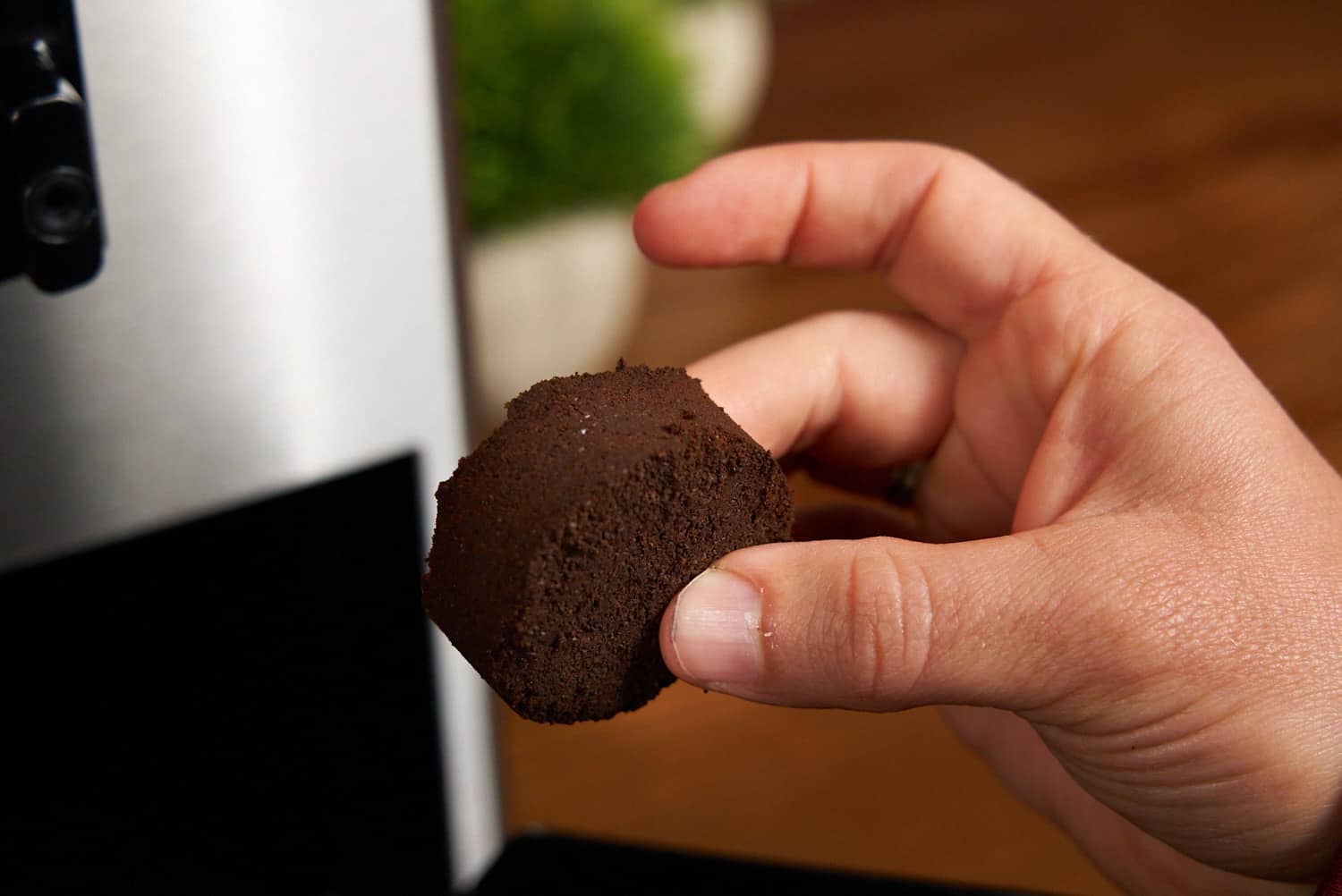
To do that, you’ll need to be able to take it out, grab a brush or cloth and manually eliminate the risk of mold. Based on my test, however, I see it a little differently: the device isn’t the problem. It’s how you use it.
Jura, Krups & the “Self-Cleaning” Brew Unit
All brew units in the best Jura coffee machines now have special 3D brewing technology that supposedly helps produce better coffee than the competition. That may be true, because the espresso is absolutely first class.
Krups fully automatic coffee machines feature metal brewing groups designed to tamp the coffee more effectively and optimize the brewing temperature. That may well be true, though with most models, I’m more impressed by the milk foam.
In both cases it’s clear that these brewing units only work so well because we aren’t able to pluck them out and break them. This kind of precision technology requires full integration into the machine.
It’s also intended to ensure that no coffee goes awry, coffee that could mold somewhere inside the machine. As long as you run the cleaning programs regularly and according to the operating instructions, it’s all gravy.
Jura even has its hygiene standards certified by TÜV Rheinland. Krups says nothing in this regard, but gives you a two-year repair warranty. However, I couldn’t find any information as to whether this also applies to the removal of moldy coffee residue.
How I Designed My Coffee Machine Mold Test
When selecting suitable fully automatic coffee machines for my long-term coffee maker mold test, I took a pragmatic approach. I chose two models that I could take apart until they were beyond repair without feeling guilty – and with even less concern about voiding the warranty.
The Jura A1, a fully automatic coffee machine without a milk frother, is quite nice. However, it’s simply too expensive compared to similar models like the Melitta Caffeo Solo. The Krups Evidence, on the other hand, is just okay and is easily outperformed by its brand siblings.

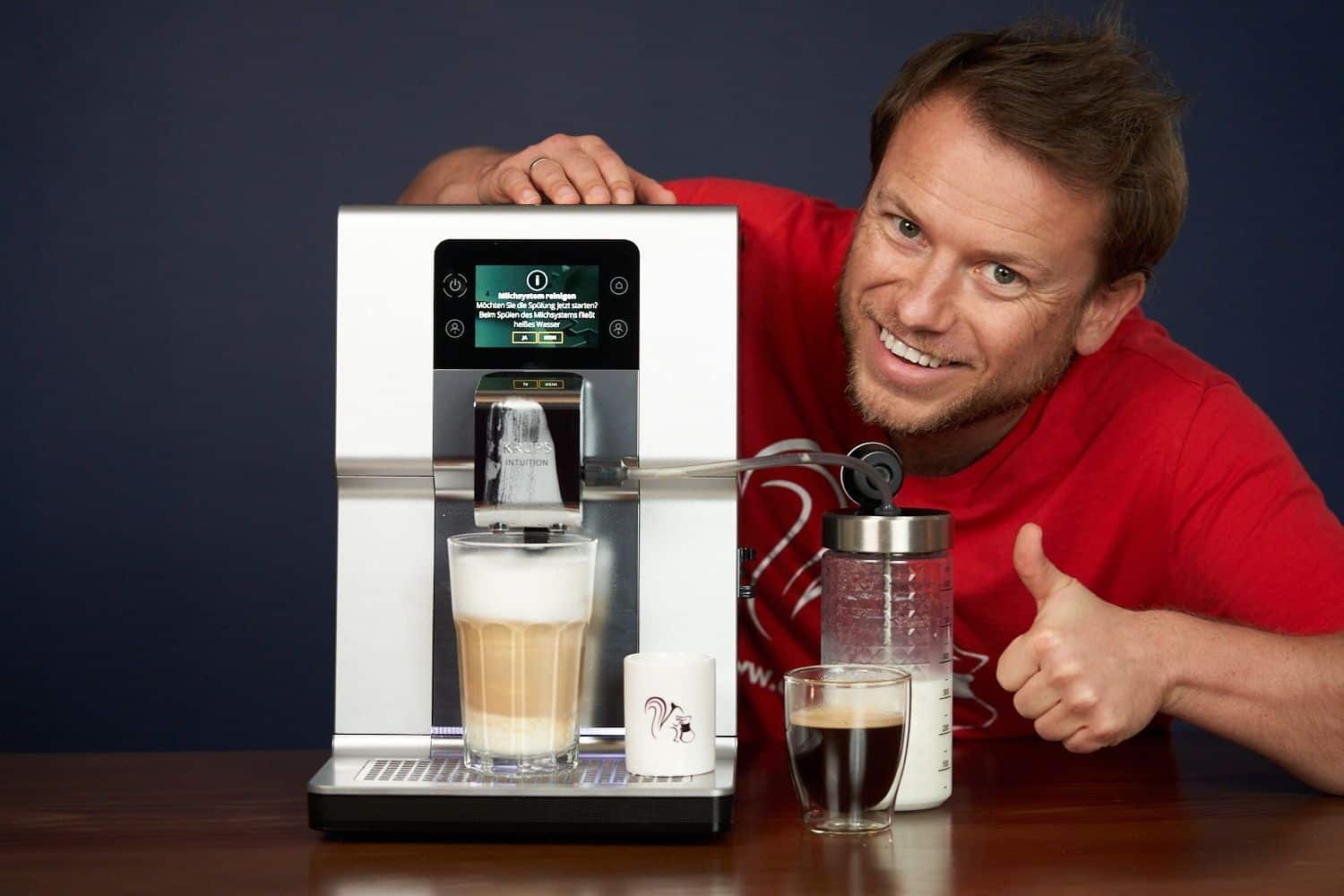
At first, I planned to use both fully automatic coffee machines every day for a year. But that wasn’t logistically feasible – life got in the way. So I decided to make 1,000 cups of coffee and 1,000 shots of espresso from each machine.
That might not sound like much, but at 2.7 cups per day, it’s pretty much exactly the target consumption level for which the two machines are designed. Namely, singles and small households.
I rinsed the machines properly after each cup and followed all the instructions in the user manual and on the machines’ control panels when cleaning them.
They were descaled regularly, and the waste container, water tank and other parts were (of course) also properly cleaned with dish soap.
For the final inspection, I removed both the brew group and the grinder, taking care not to move the components too much. After all, I wanted to see how much coffee was hanging out in there and whether or not there was mold growing.
Coffee Machine Mold Test Results
As I said earlier, I was expecting more coffee. A lot more. And I was expecting more moisture, too.
Instead, both fully automatic coffee machines had only the usual residue right next to the grinder burrs. The Krups machine also had a few (bone-dry) crumbs on some plastic parts, which obviously ended up there due to static charge.
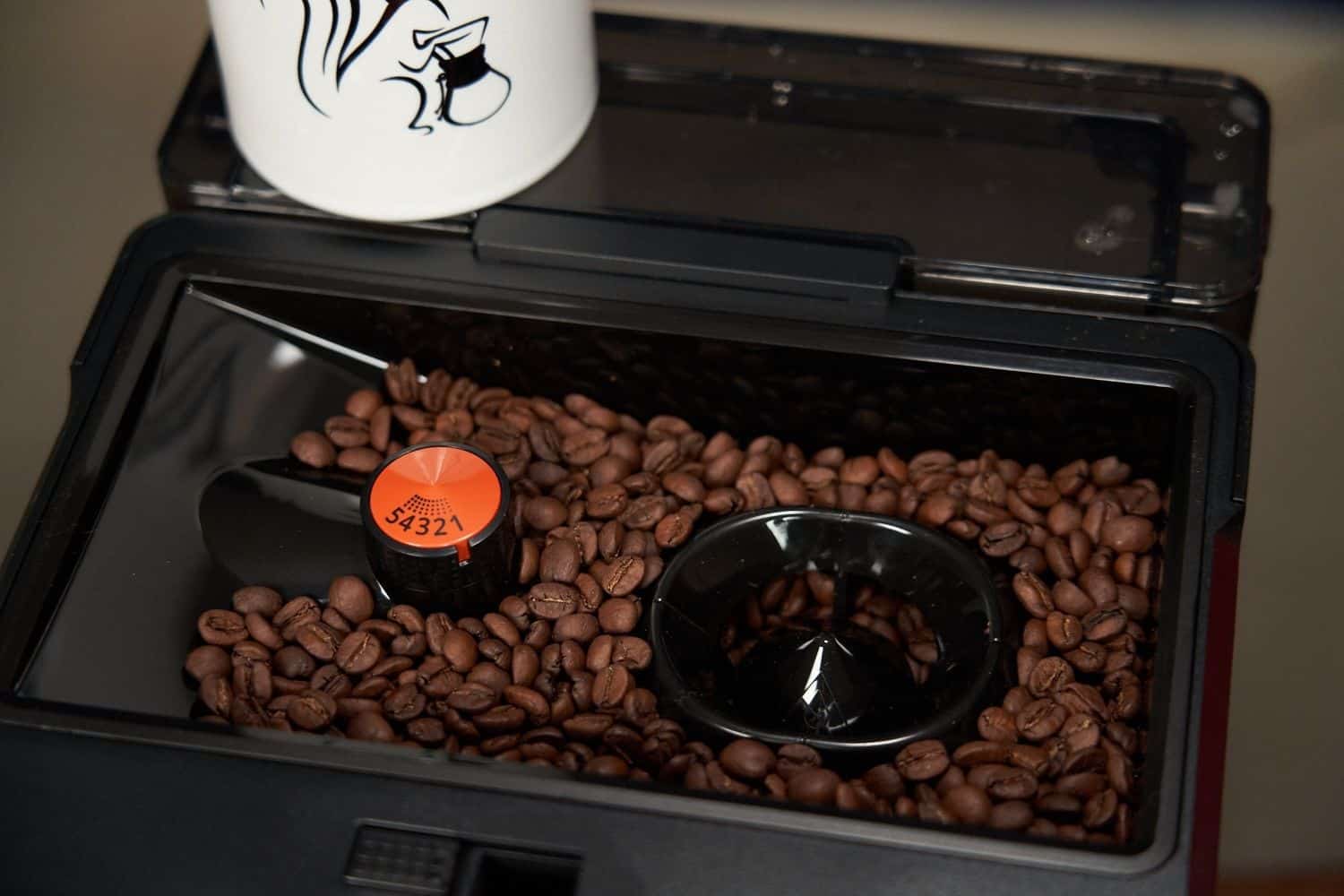
Die-hard Jura fans, of course, expected nothing less. And they’ll probably throw some of my old guides and reviews right back in my face. I’ll gladly let you have your fun. Heck, even leasing a fully automatic coffee machine seems less unhygienic now.
But what does that actually mean for maintaining fully automatic machines?
Prevent Mold Instead of Removing It
Despite my “groundbreaking” findings, you shouldn’t be blinded by my year-long endurance test. I mean, there are two obvious caveats to bear in mind:
I only used the fully automatic coffee machines for a year. And there was residue. So you’d have to extrapolate that over a longer period or for more frequent use.
Even in machines with excellent build quality, seals can wear out or parts can break. With a built-in brewing unit, you won’t necessarily notice this right away.
From a design perspective, the two fixed-group manufacturers may do more to prevent mold growth or health hazards than, say, Gaggia or DeLonghi. Nevertheless, you’re ultimately responsible for regular cleaning and maintenance.
Personally, I’d take my Jura coffee machine to a service center every few years to have it checked out.
A Note on Removable Brew Groups
Dedicated fans of removable brewing units might now be wondering whether they’ve been going to too much trouble all this time and should just leave the thing in place from now on. After all, automatic cleaning seems to work great at preventing bacterial growth.
You shouldn’t fall into this trap. That’s because fully automatic machines with a removable brewing unit, like the Philips 2300 LatteGo, are designed differently.
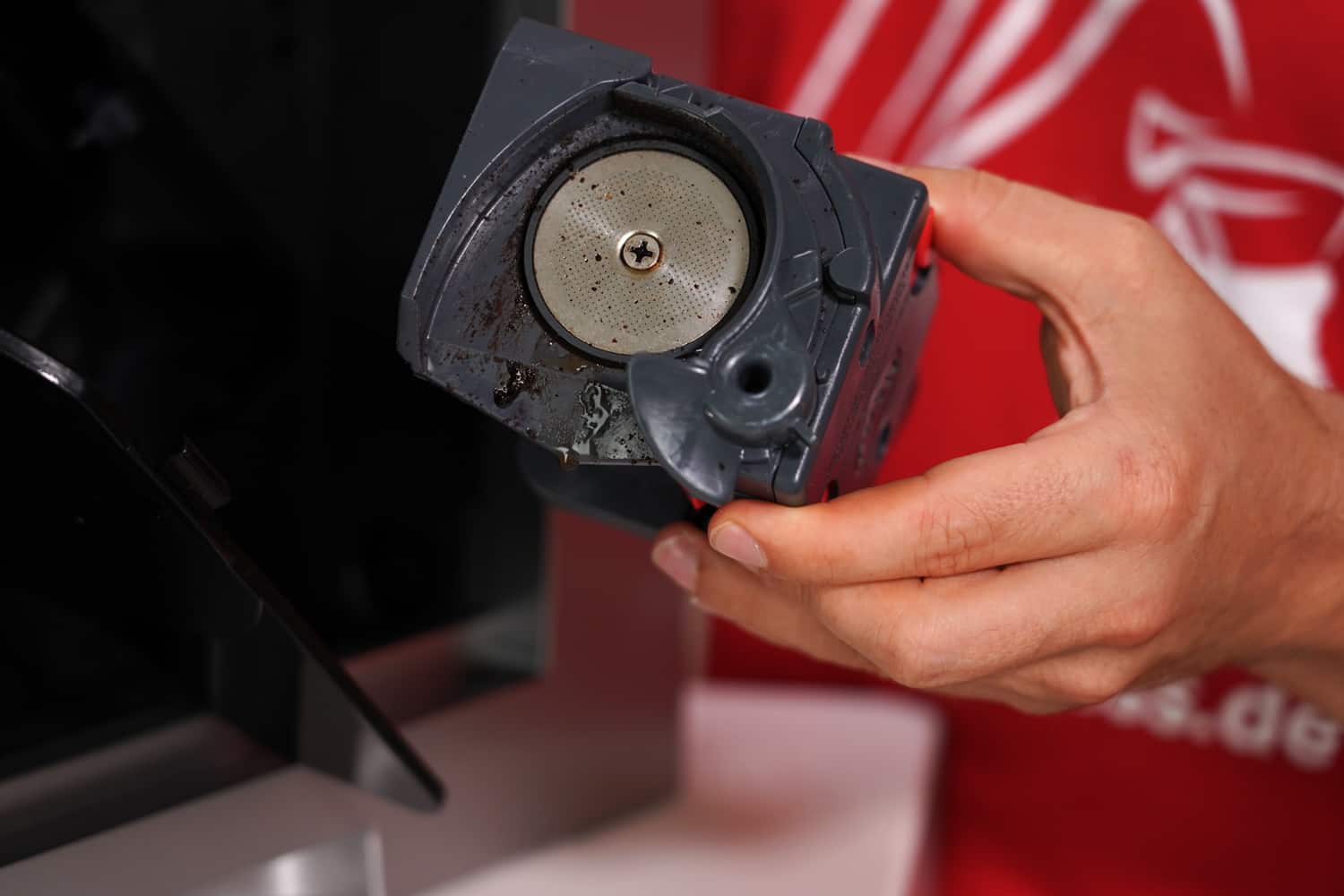
If we take apart a DeLonghi espresso machine, a Philips espresso machine or a model from any other premium brand, we always find coffee residue behind the brewing unit. Sometimes more, sometimes less. So simply pressing the “clean” button is definitely not enough here. You’ll have to get your hands dirty one way or another.
Issues With Fully Automatic Coffee Machines: What About Mold Growth?
I have to give credit to those TV news segments and articles with titles like “Coffee Machines: Mold Havens” or “Is Your Coffee Maker Bad for You?” They really do manage to ruin the joy of making coffee with a machine.
I absolutely love stock photos of moldy coffee in a pretty cup, and I love even more the serious-looking “experts” who peer into a totally filthy fully automatic coffee machine.
If it were up to them, we’d only make coffee by hand using a filter. Or better yet, from a coffee capsule. Or best of all, we’d switch to tea!
Any barista – or fully automatic espresso machine owner – should ask themselves one question when reading articles like this: how on earth did you manage to get your coffee maker so dirty?!
To really get to the bottom of this question, I asked a biofilm expert who works with water, germs and microorganisms on a daily basis and develops sensors for them. I consider two of his tips to be particularly important:
Mold is just as much a part of everyday life as bacteria, limescale or germs. The spores are in the air, on every surface in your kitchen, on the outside of your coffee machine, on your coffee beans, in your nose and, in a way, even in the finished espresso.
For mold to become active – that is, to form the visible mycelium – it needs moisture, a nutrient source and time. Depending on the type of mold spore, this mycelium appears as yellow, orange or red mold.
And as we already know, damp coffee grounds left sitting around somewhere are the perfect breeding ground for mold.
The biggest problem – or rather, the main source of mold – is unroasted beans. However, studies have shown that brewing reduces the mold spores to levels that are barely detectable or undetectable altogether.
There’s no set timeframe for when spores reach a concentration and level of activity that can cause illness or exacerbate existing conditions. However, it’s safe to say that we’re talking about days, not hours.
Furthermore, mold doesn’t thrive in very high temperatures. And it can be found everywhere – except in water. That is the domain of bacteria.
What do we do with this knowledge? You guessed it …
Conclusion: The Best Secret Tips for Preventing Coffee Machine Mold
In order to prevent moldy coffee machines, we have to do little more than make it difficult for the spores to grow. This works best with … Here it comes … regular and thorough cleaning.
If the machine asks to be rinsed, we should rinse it. If we empty the waste container or refill the water tank, we should clean it too. And before we add fresh coffee beans, we should first wipe out the hopper.
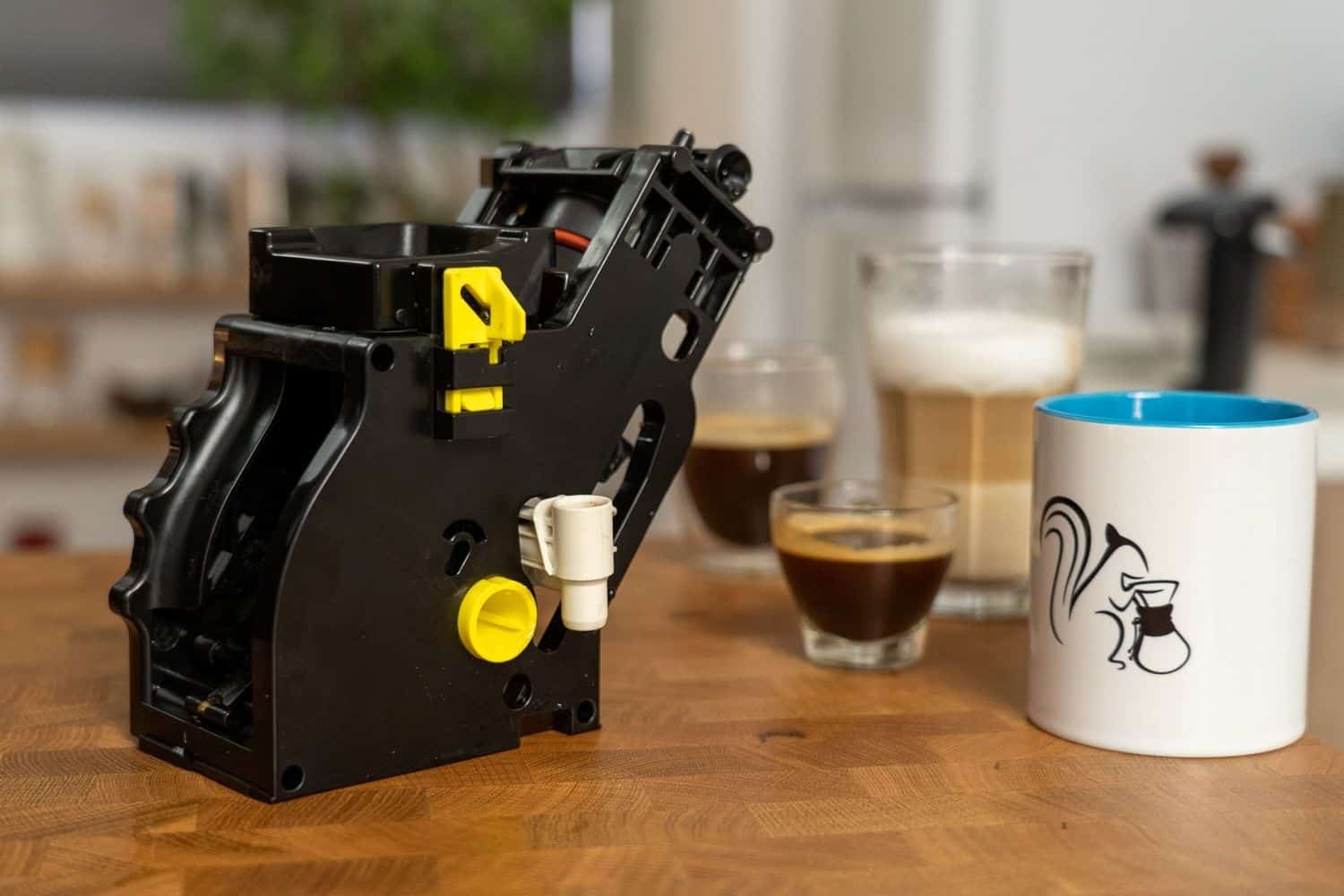
As for the brew unit, we should treat it exactly as the manufacturer intended. If it can be removed, we should take it out and clean it thoroughly; both inside and around the edges. Ideally, we should do this after every day of use. If it’s permanently installed, we should run the required cleaning cycles without cutting any corners.
If we’re going on vacation, we should let the machine dry fully and remove any coffee. And before we turn it back on, we should rinse everything again.
As an added bonus, this also helps prevent the growth and spread of other germs floating around your kitchen.
Does all this sound like a dry and boring conclusion from a year-long endurance test? Indeed it does! But one Coffeeness reader put it perfectly: “Ultimately, the problem with mold – as is so often the case – is the person standing in front of the machine.” Amen.
Your opinion? Any anti-mold tips or tricks you’d like to share? Feel free to leave a comment!
FAQs
You can use a coffee maker that had mold in it as long as you clean it thoroughly. Consider running a couple of brew cycles with water and white vinegar to eliminate mold residue.
Prolonged mold exposure from a coffee maker can lead to a slew of symptoms, including upset stomach, headache and nausea.
To effectively kill mold in a coffee machine, run at least two brew cycles with a 50/50 mix of water and white vinegar.
Unfortunately, mold doesn’t go away when it dries out. Instead, it becomes dormant until moisture is reintroduced.