



If you’ve never heard of Pink Bourbon coffee, you’re in for a real treat! And if you have? You already know why we’re here. After all, this coffee isn’t your average bag of beans.
A rare Colombian variety, it’s quickly becoming one of the world’s most sought-after beans.
So, what sets Pink Bourbon coffee apart? Let’s get into it.
Table of Contents
Overview: What Is Pink Bourbon Coffee?
Pink Bourbon is not a trendy fad.This Arabica variety is one of the most exciting things to happen to coffee in recent years.
What makes Pink Bourbon different is its origin story. Once thought to be a mutation of Red and Yellow Bourbon, testing has shown that it’s more closely related to, of all things, Ethiopian landraces (more on this later).
Unlike commercially-grown beans, Pink Bourbon coffee boasts a unique flavor profile. It’s sweet and fruity-floral with a lingering, silky finish. This coffee makes even experienced cuppers do a double-take!
What Are the Origins of Pink Bourbon Coffee?
Knowledge of Pink Bourbon first came to light in the high-altitude mountains of Colombia. Somewhere between 2010 and 2014, Rodrigo Sanchez Valencia and his team identified Pink Bourbon cherries on their farm. Little did they know that they had stumbled upon one of the rarest coffees in the world.
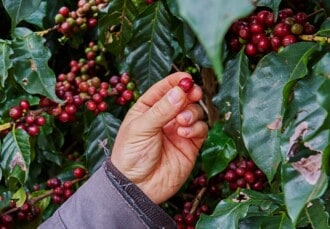
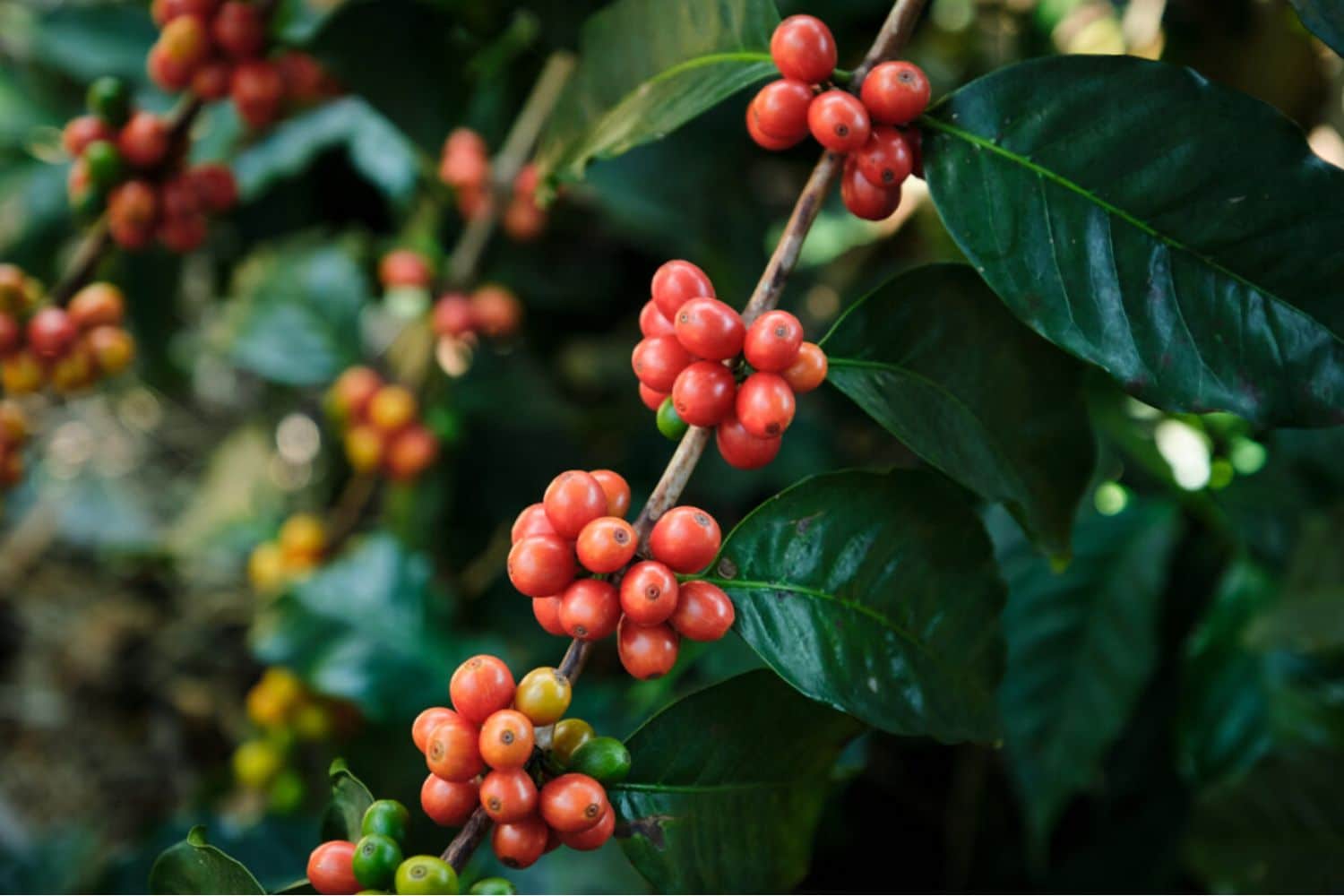
At first, Colombian growers didn’t understand what they had on their hands. They noticed that some coffee cherries ripened not red, not yellow, but a distinctive salmon-pink. Many assumed it was unripe Red Bourbon, or a distinct Orange Bourbon.
It took careful observation over multiple harvests to understand that these cherries were pink at full ripeness. This was a distinct characteristic of the plant itself.
In 2017, DNA Analytica ran genetic tests, which revealed that Pink Bourbon coffee was closer to wild Ethiopian coffee varieties than true Bourbons. And a few years later, in 2023, researcher Christophe Montagnon of RD2 Vision confirmed the finding definitively.
All this suggested that a piece of Ethiopia was somehow thriving in the middle of the Andes! And that, frankly, makes Pink Bourbon coffee even more extraordinary.
Where Does Pink Bourbon Grow?
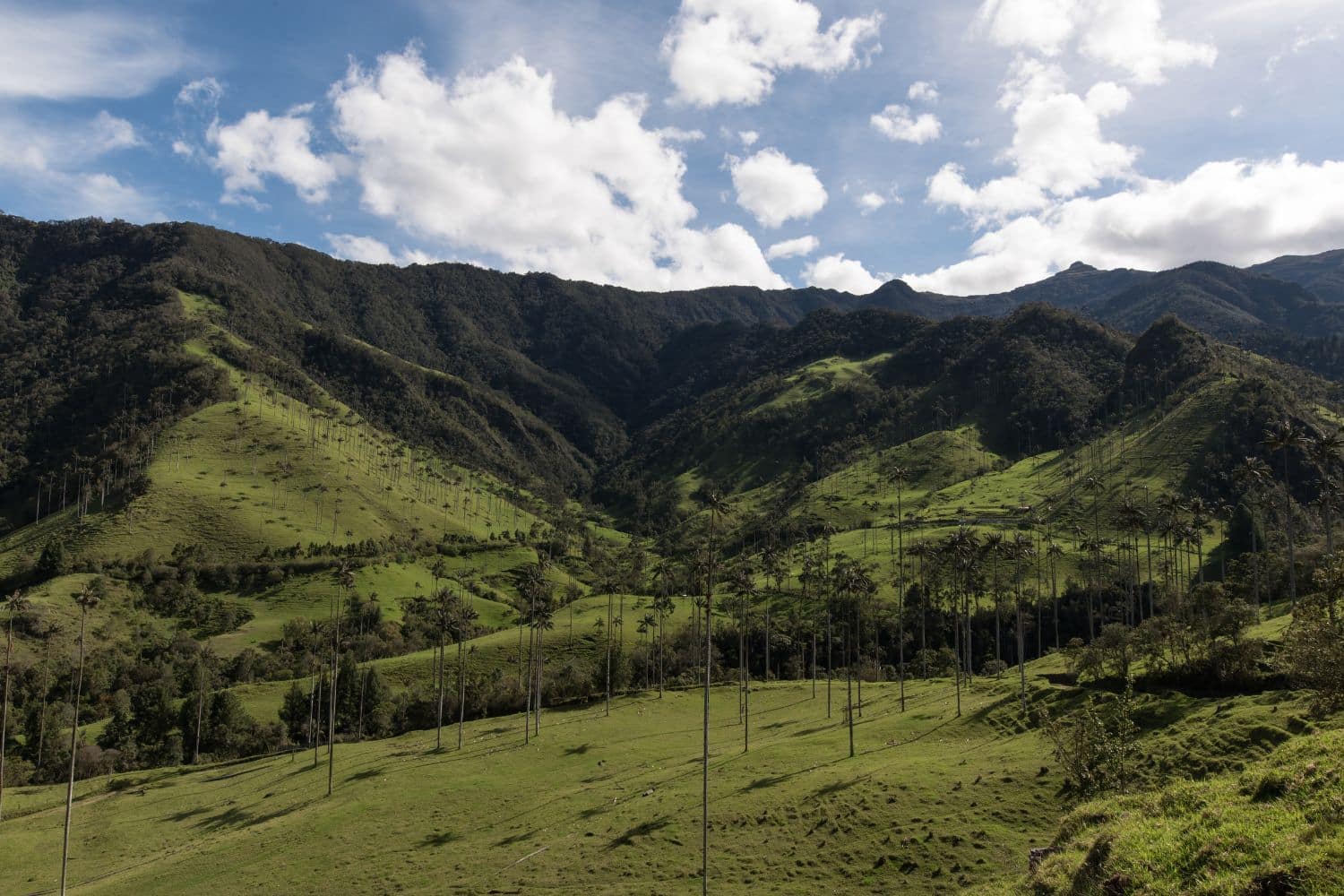
The Colombian department of Huila remains the undisputed ground zero of Pink Bourbon production. At elevations of 1,500-2,200 meters above sea level (masl), it enjoys rich volcanic soils, consistent rainfall and a moderate climate.
Nariño, in southern Colombia, also produces Pink Bourbon coffee. Its steep mountain slopes and high-altitude farms (1,800-2,200 masl) benefit from warm days and cool nights. These temperature swings help lock in the coffee’s characteristic balance of sweetness and acidity.
Cauca, in southwestern Colombia, is another powerhouse for this specialty coffee. Its high-altitude farms spanning 1,600-2,100 masl, enjoy mild temperatures and consistent cloud cover. These conditions slow cherry ripening, leading to greater sweetness and flavor complexity.
Over the years, Tolima has also become a serious Pink Bourbon hub. The remote mountainous terrain, lush forests and natural water sources make for unique growing conditions.
Beyond Colombia, some specialty farms in Ecuador and Costa Rica are having a go at cultivating Pink Bourbon. They recognize its exceptional cup profile, which, in some instances, rivals that of the finest Panamanian Geishas.
But for now, the Colombian highlands remain this coffee’s true home.
What Conditions Does Pink Bourbon Need to Thrive?
Growing Pink Bourbon coffee is no easy feat. It not only needs higher elevations to thrive, but also a moderate climate, 70-80% humidity levels and 2-3 dry months to flower.
What’s more, this coffee ripens unevenly. As such, farmers must selectively hand-pick all cherries at harvest, sometimes more than once.
Shade-growing Pink Bourbon coffee is highly recommended. Trees and other forest plants keep temperatures low and stable. Needless to say, they also help fix beneficial nitrogen in the soil.
Although growing this South American coffee is labor intensive and almost always results in low yields, it’s worth it in the end. Few coffees reward you with such a unique flavor profile and high cup quality.
How Is Pink Bourbon Coffee Processed?
Processing Pink Bourbon coffee is where growers can either get it right, or horribly, horribly wrong. Colombian producers know this, and thus process Pink Bourbon meticulously.
Washed Processing
Washed processing is the most widely used method in Colombia, as it best showcases this coffee’s bright acidity, delicate florals and delicious fruit notes. It also guarantees exceptional clarity in the final cup.
Once at the washing station, growers hand-sort cherries, discarding less dense or unripe ones. They then pass the cherries through an eco-pulper to remove the outer fruit.
Next, the beans (with the sticky mucilage layer still on) enter fermentation tanks for 12-72 hours. After this, growers rinse them clean, before drying them on raised mesh beds. This, they do until bean moisture levels reach 10-12%.
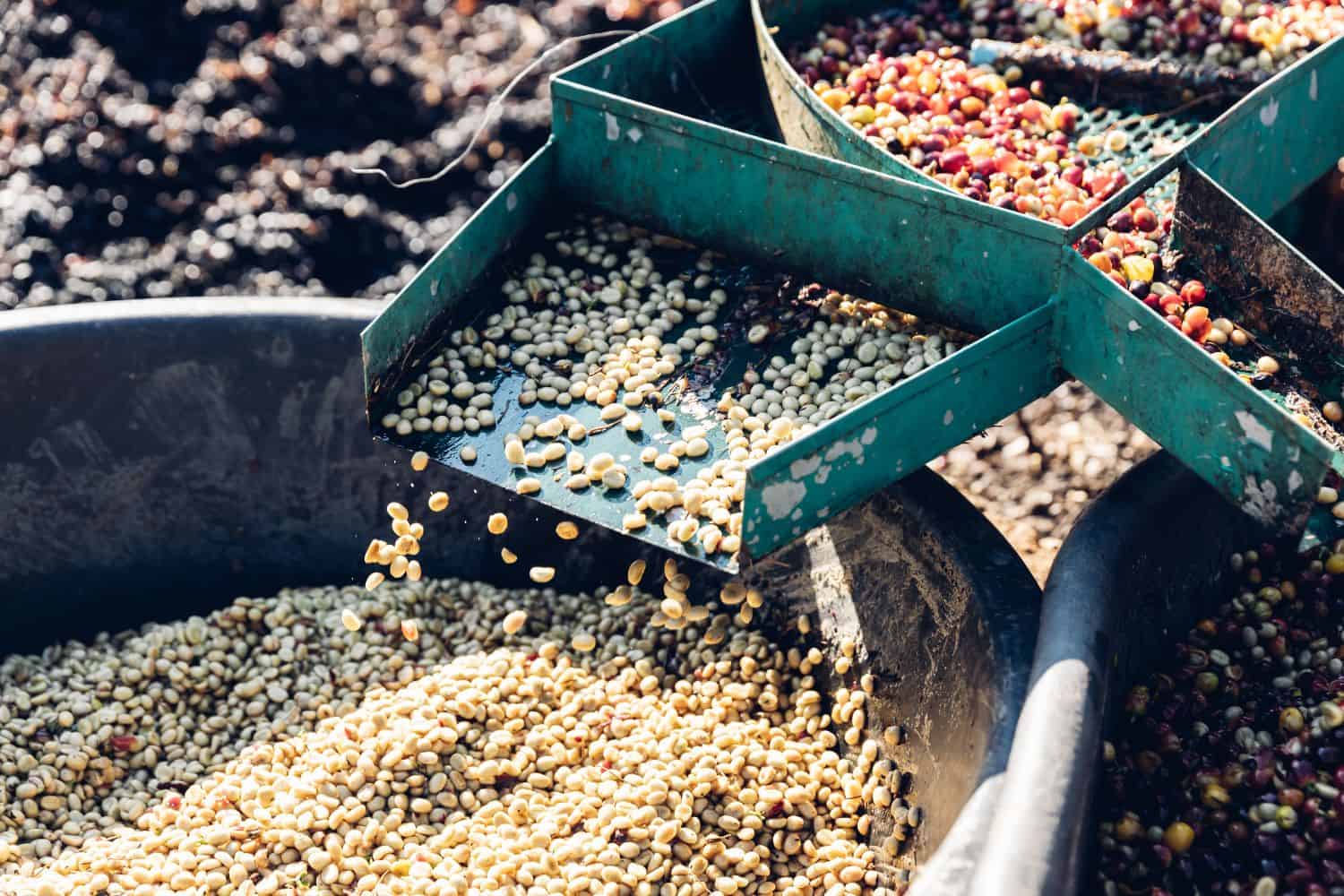
Some Colombian producers push this coffee processing step to the limit. At Finca Los Angeles in Pitalito, Huila for instance, they depulp cherries after a prolonged 48-hour fermentation. Then, they put the beans through a second fermentation lasting 12-72 hours.
This double-fermentation has become a hallmark of Colombian coffee.
Honey Processing
Honey processing sits deliberately between the washed and natural process. With Pink Bourbon coffee, it’s leading to some exciting flavor profiles.
Here, growers depulp coffee cherries to remove most (not all) of the outer fruit. A layer of sticky mucilage remains on the beans to enhance sweetness.
As these beans sun-dry, the sugars from the mucilage infuse them with a rich, velvety-smooth body. The amount of mucilage left on the bean determines the honey’s “color.” Yellow honey retains the least, black honey the most.
Producers innovate throughout this process. One standout example is the Honey Lactic process used at Finca Villa Betulia in Huila. Here, they introduce an experimental lactic process, which gives the beans a sweet, almost funky flavor profile. Pronounced notes of peach, apricot, hazelnut and spicy cinnamon-clove also come through.
Natural Processing
In the natural process, the whole cherry (skin, pulp, mucilage and all), goes straight onto raised drying beds. Here, they sun-dry for 15-30 days. Workers then hand-turn these cherries regularly to prevent uneven drying and mold buildup.
Throughout this period, a slow natural fermentation occurs. Sugars and organic acids from the pulp and mucilage penetrate the bean, transforming its chemical composition.
For Pink Bourbon coffee in particular, the natural process amplifies every flavor note, especially the fruity and sweet ones. But in the wrong hands, natural processing can tip this coffee into fermented funk. When done right, however, a natural-processed Pink Bourbon is one of the most exquisite coffees you can sip.
Experimental Processing
Colombia’s most innovative producers, particularly in Huila and Nariño, have also been embracing experimental processing. These techniques treat Pink Bourbon coffee less like a crop and more like a fine wine. Anaerobic fermentation (where cherries or depulped beans ferment in sealed, oxygen-free tanks) is one of the most practiced methods.
As an anaerobic coffee, Pink Bourbon tastes wildly different. It somehow tastes like a passion fruit kombucha. Others taste more like spiced wine and yet others, tropical candy!
What’s the Best Way to Roast Pink Bourbon Coffee?
Pink Bourbon is not a forgiving bean, whether you’re growing, processing or roasting. It needs precision, patience and a deep respect for the quality it brings to the table.
Before you even charge your drum, you’ll need to understand your role as a roaster. With Pink Bourbon coffee, this means bringing the floral aromatics, tropical fruit notes, silky body and bright acidity to the fore. Pink Bourbon shines most with light-to-medium coffee roast profiles.
A true light roast (New England, Cinnamon, Blonde and Nordic), maximizes its brightness, florality and fruit clarity. Go a little further with a medium-light roast (City+, City), and you’ll add body and a silky, lingering finish. The sweet spot for most specialty roasters is right in the medium-light zone.
What you absolutely don’t want with this coffee is a medium-dark or dark roast profile.
As roasting progresses past the Second Crack, flavors become dominantly smoky and bitter. Everything unique about Pink Bourbon disappears at this point, and there’s no coming back from it.
Pink Bourbon Through the Various Roasting Phases
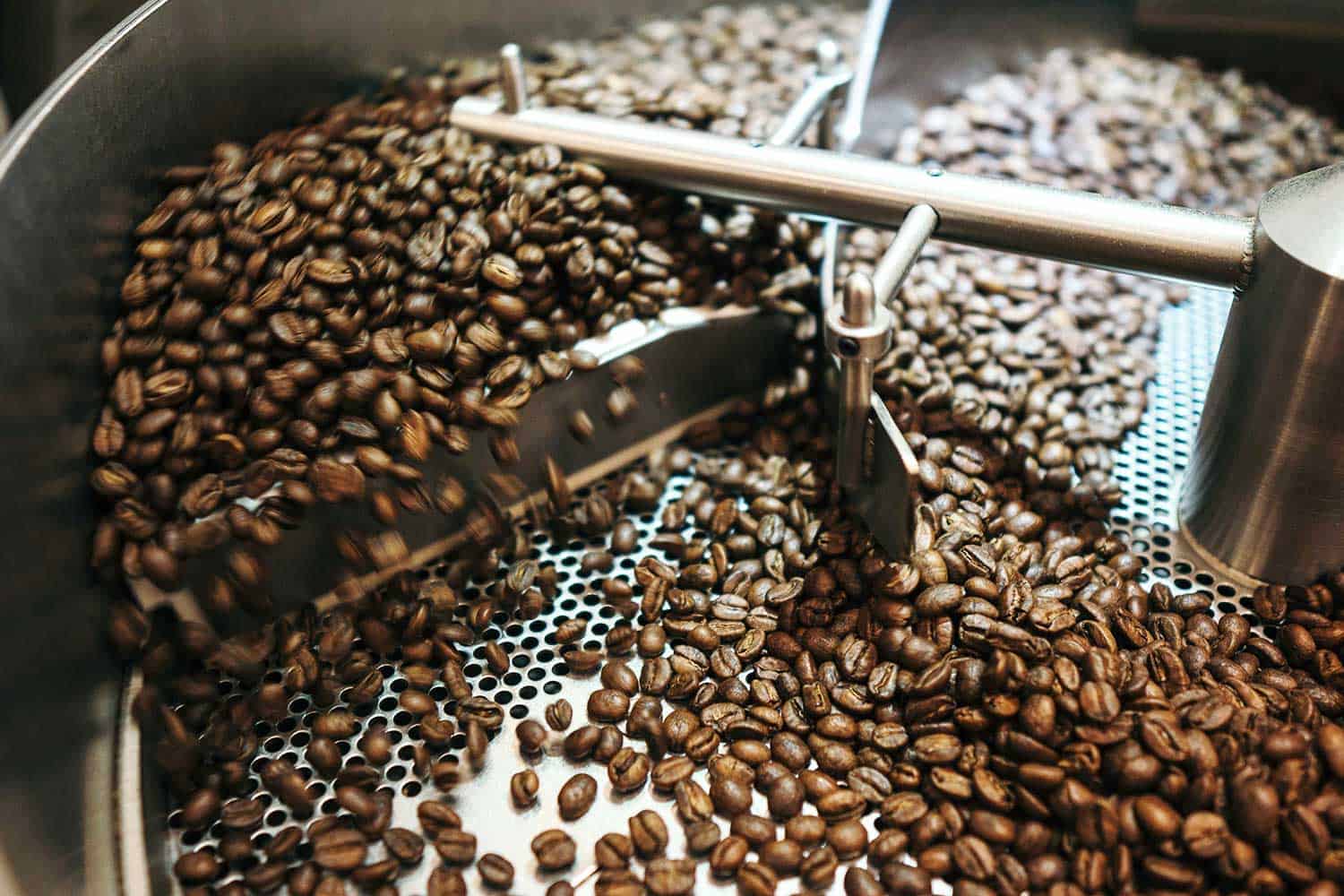
As this coffee roasts, here’s what you can expect:
Drying Phase: A slow, steady burn here builds the heat levels Pink Bourbon needs for even development.
Maillard or Browning Phase: Keep the Rate of Rise (RoR) here steady and declining; a flat or rising RoR is a warning sign.
First Crack: For well-developed Pink Bourbon light roasts, target 8-9 minutes, a total roast time of 10-12 minutes and end temperature of 400 Fahrenheit (204 Celsius).
Development Phase: 30-45 seconds at most after the First Crack. Any more introduces roasty notes and any less leaves your Pink Bourbon coffee tasting grassy.
Not all Pink Bourbons roast the same way. Washed beans are denser and need more energy early in the roast. They reward a slightly longer Maillard phase too, to develop sweetness before the First Crack.
Natural Pink Bourbons, by contrast, have already undergone significant sugar development during processing. They need slightly less heat in the early stages, but benefit from a conservative development time to avoid funky or jammy notes.
Honey-processed beans sit somewhere in between. Use a moderate profile and let the bean tell you what it needs. After roasting, air-cool your beans within 2-3 minutes and store them in airtight coffee containers. Then, allow them to degas and rest (5-7 days for filter coffee or 7-14 days for espresso).
You’re now ready to brew your Pink Bourbon coffee, preferably as a pour-over or Aeropress.
What Does Pink Bourbon Taste Like?
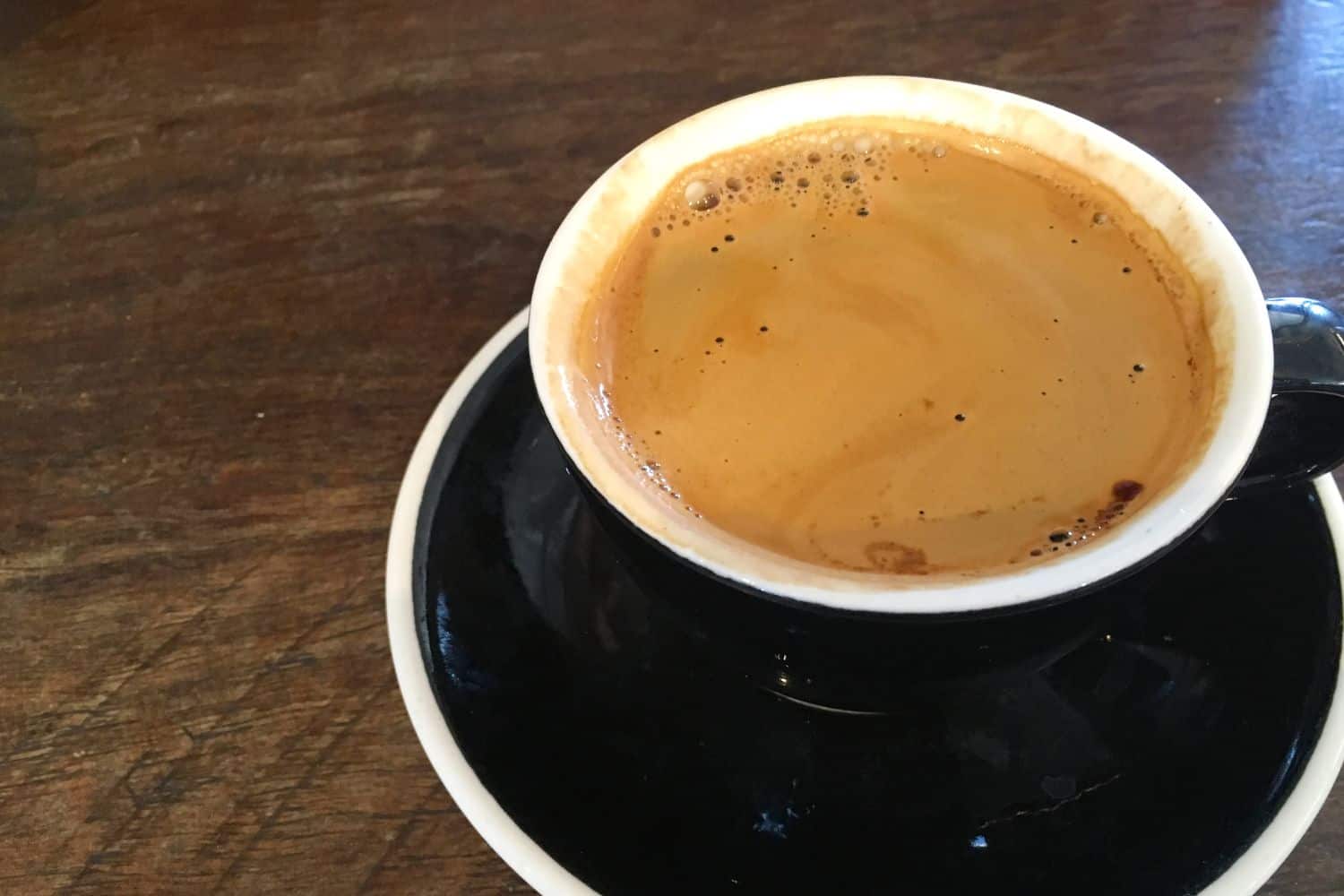
Overall, this coffee has a distinct honeyed sweetness, bright acidity and lingering silky finish. It also shows aromatic floral and tropical fruit notes (peach, passion fruit, jasmine and red berries). To me, it’s very much like a good Central American coffee.
Within Colombia, the tasting notes change, depending on where the coffee grew.
Huila Pink Bourbon is the most vibrant, with floral, citrus and tropical fruit undertones. Similarly, Nariño Pink Bourbon exhibits a crisp acidity and citrus, stone fruit and panela undertones.
In contrast, Cauca Pink Bourbon has more of a balanced body and caramel undertones. Tolima coffees are also subtle, turning the vibrant tropical fruit notes down a notch.
Processing also has an impact on taste. Washed Pink Bourbons have the same honeyed sweetness and tropical fruit notes as honey or natural-processed ones. However, they show a brighter acidity, lighter body and have less of a silky finish.
Where Can I Buy Pink Bourbon Coffee?
Pink Bourbon’s rise to fame has been meteoric. Its debut at the 2023 World Barista Championships (two finalists used it in their routines), thrust it into the international limelight. With that came an inevitable problem: opportunists. Not everyone selling “Pink Bourbon coffee” is offering the real deal.
Still, many outstanding specialty roasters across North America source Pink Bourbon with integrity and transparency. Importantly, they’ve formed genuine and long-lasting direct-trade coffee relationships with Colombian producers.
Some of them include:
Intelligentsia (Chicago)
Black & White Coffee (Raleigh, NC)
Vibrant Coffee (Philadelphia)
Bird Rock Coffee (San Diego)
Columbia River Coffee (Portland, OR)
Parlor Coffee (New York)
Stereo Coffee (Toronto)
Philippines & Sebastian (Calgary)
Expect to pay $20-$30 per 12-ounce bag of Pink Bourbon coffee. Any prices below this likely aren’t authentic.
Other indicators to look out for include:
Traceability: Specific farm, municipality or growing region (Huila, Nariño, Tolima, Cauca).
Growing Details: Producer’s name, harvest year and growing altitude.
Processing Method: Washed, natural, honey or anaerobic.
Specialty Coffee Association (SCA) Score: 85+ points only
Final Thoughts: Is Pink Bourbon Here to Stay?
I genuinely think that Pink Bourbon coffee is not a passing fad. It’s ancient in its genetics and exceptional in its cup. As such, I see it being a long-term favorite of coffee enthusiasts.
That said, real challenges loom. Climate change poses a serious threat to its traditional high-altitude growing regions. What’s more, this coffee’s genetic instability, low yields and labor-intensive cultivation make it vulnerable.
But, all’s not lost.
If the specialty coffee community rallies by supporting farmers, paying fair prices and demanding genuine traceability for every lot, Pink Bourbon will more than survive.
In fact, I see this coffee defining what extraordinary coffee looks like for generations to come.
Ready to taste the difference for yourself? Use our buying guide above to get yourself a genuine bag of Pink Bourbon coffee. I guarantee you, it’s a one-of-kind taste experience!