


In every serious home barista’s journey, there comes a point at which the price of coffee equipment no longer matters. The focus shifts to increased performance, better taste, improved design – at any cost.
Interestingly, this usually applies more to the coffee maker or espresso machine than to the coffee or espresso grinder. Still, the Eureka Mignon in particular proves what I’ve already said in my guide to the best burr coffee grinders:
If you skimp on the grinder, you might as well forget about the exclusive coffee beans and the expensive espresso machine. Because even if its price tag seems high, the price-performance ratio of a Mignon is top notch.
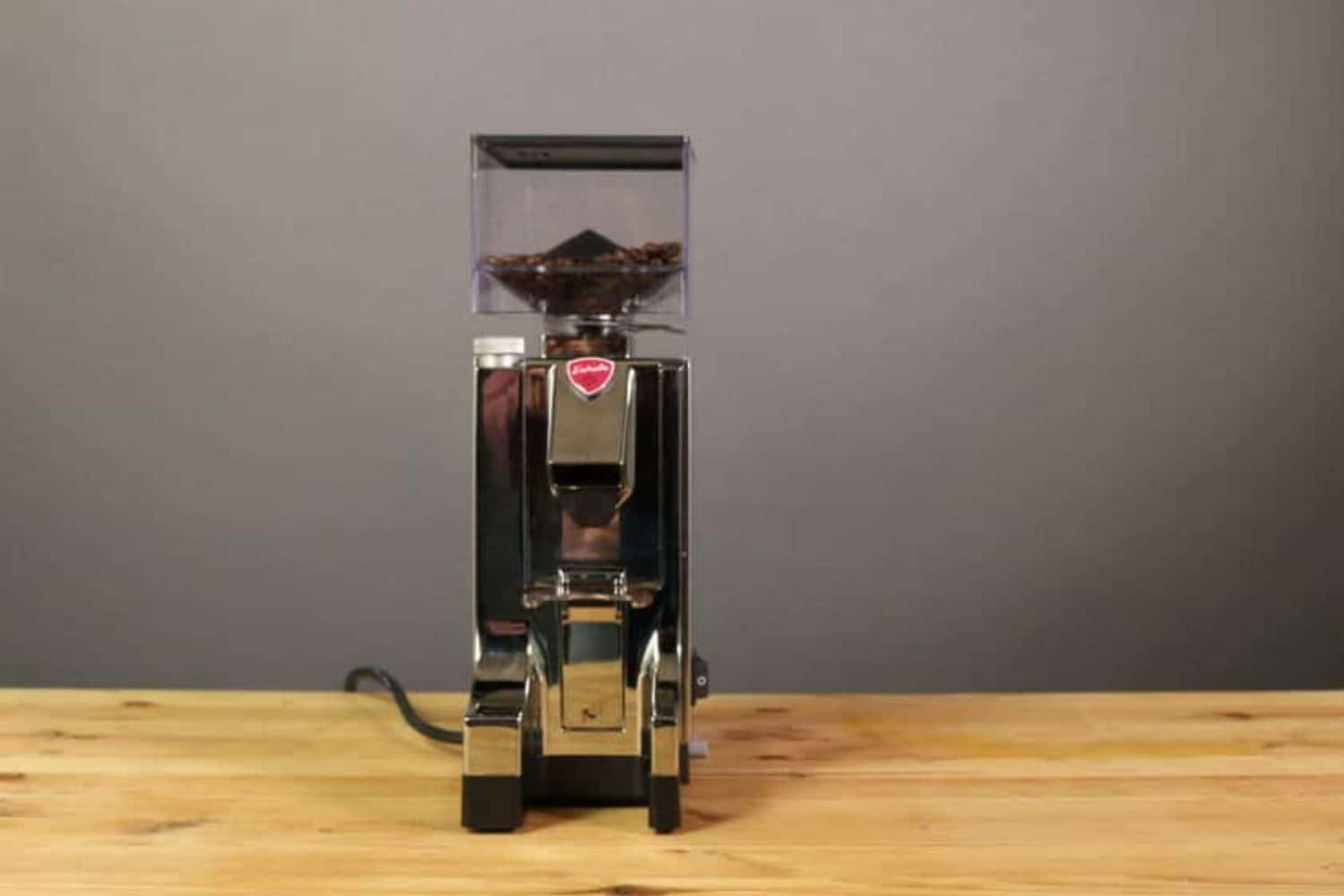
I originally tested the Eureka Mignon MCI with chrome finish, but it has since been retired and replaced. However, my evaluation can be easily transferred to newer models like the Eureka Mignon Specialità.
Which is the best Eureka Mignon grinder and what do you have to pay attention to for perfect grinding results? Keep reading my guide to find out!
Table of Contents
Models in comparison: Which Is the Best Eureka Mignon Grinder?
For many, the name Eureka conjures up images of some of the best espresso grinders around. However, the Italian company from Florence also produces hand grinders, filter coffee grinders and espresso machines.
None of these devices are aimed at beginners, even if experienced baristas may see it a little differently. For them, any of the Eureka Mignon models offers the minimum standard you should expect from an espresso grinder.
Still, you have to shell out a good chunk of money for one of these beauties – far more than you would for an entry-level espresso grinder. Fortunately, you receive excellent quality in return:
High-quality flat burrs with stepless adjustments
Superb design with many colors available, depending on the model
Lots of stainless steel construction and minimal plastic
Clever anti-static technology
Premium construction for maximum durability
Easy to clean
Compact footprint
Fast grinding speed
Super-consistent results
Minimal heat transfer
If most of those points fail to quicken your pulse a little, it’s probably because a Eureka Mignon is not (yet) an option for you. It’s kind of like comparing the simple DeLonghi Dedica with the more advanced Rancilio Silvia espresso machine:
So, if you don’t understand why this component or that performance highlight is so important for espresso preparation, you don’t need to spend the extra money.
Eureka Mignon Espresso Grinders vs Coffee Grinders
Neither the motor power nor the revolutions per minute are decisive in determining whether a grinder is more suitable for espresso or drip coffee. Heck, you could even say that not even the grind setting plays the most important role in this regard.
In my opinion, the distinction is simply based on the design of the collection mechanism:
If the grinder is operated by a contact switch and has a portafilter fork, it’s an espresso grinder. If it has a large collection container and can grind a lot of coffee at once, it is more suitable for filter coffee.
We can see this very clearly at Eureka, which offers both an espresso and a filter coffee collection as part of its Mignon series. I won’t go into detail about the filter coffee grinders here, but I’ll mention the available models:
Eureka Mignon Filtro Silent
Eureka Mignon Crono
Eureka Brew Pro
Eureka Mignon Zero Brew
Eureka Mignon Libra Brew
For the sake of completeness, it should be noted that all Eureka grinders are theoretically capable of performing for other preparation methods and can be better adapted with optional accessories. However, their design, usability, etc., is geared toward their main advertised function.
What Sets Eureka Mignon Espresso Grinders Apart?
The name of a Eureka grinder always attempts to reflect its particular feature. For example, the Eureka Mignon Silenzio was the first to feature the new “Silent Technology,” while the Specialita was considered the ultimate companion for preparing specialty coffee.
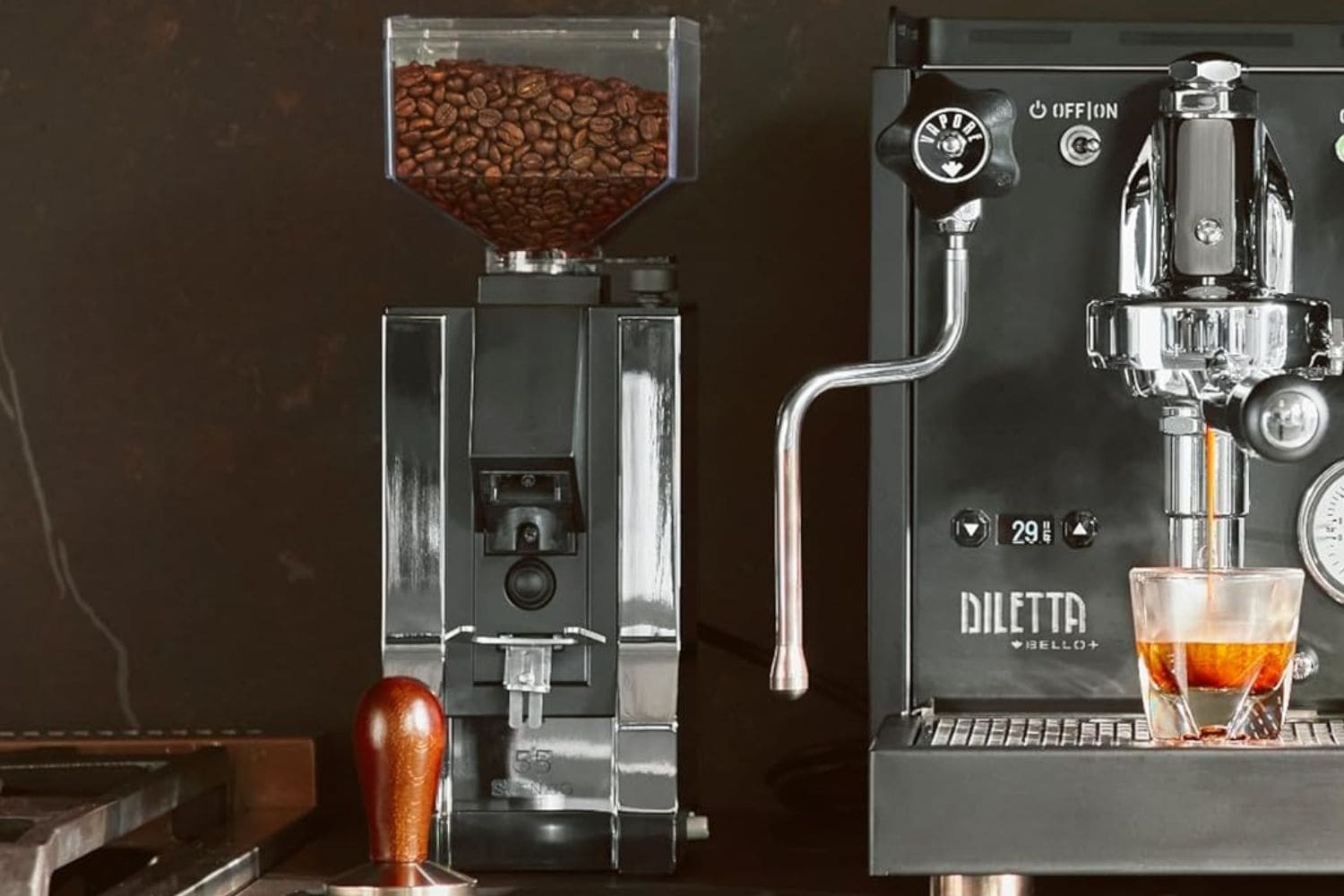
However, you should always pay attention to other things, because the newest upgrades always have four key advantages:
Larger burrs: Faster grinding and increased particle uniformity
Silent technology: Better insulation and quieter operation
Touchscreen display
Programmable dosing plus manual grinding
However, this does not mean that a Eureka Mignon Silenzio with smaller burrs produces subpar coffee grounds. My experience with the MCI, which, incidentally, is most comparable to the Eureka Mignon Classico, shows that it can be even better, even more convenient and even faster in operation. We will see what that means later.
Eureka Mignon Espresso Grinders: Comparison Table
For my taste, the current Mignon espresso grinder range is too cluttered. It would be super easy to incorporate certain special features into all devices.
Many grinders that are floating around on the internet are no longer officially available. For example, my MCI as well as the Eureka Mignon Puristico, Eureka Mignon XL and the Eureka Mignon Magnifico.
I know that it hardly matters how new or old the version is. As long as it meets a few basic requirements, you may be able to get a bargain. Let’s take a quick look at a comparison table:
| Model | Burr Size | Grinding Speed (Espresso) | Display | Notes |
|---|---|---|---|---|
| Eureka Mignon Notte | 50mm | 1.9-2.5 g/s | No | Manual dosing, anti clump ACE system |
| Eureka Mignon Zero | 55mm | 1.8-2.5 g/s | No | Manual dosing, anti clump ACE system, silent technology, single doser |
| Eureka Mignon Zero 65 AP | 65mm | 0.8-1.2 g/s | No | Manual dosing, anti clump ACE system, silent technology, single doser |
| Eureka Mignon Silenzio 55 | 55mm | 1.8-2.5 g/s | No | Manual / timed dosing, anti clump ACE system, silent technology |
| Eureka Mignon Perfetto | 50mm | 1.0-1.6 g/s | Yes | Manual / timed dosing, programmable, anti clump ACE system, silent technology |
| Eureka Mignon Turbo | 65mm | 2.2-3.0 g/s | Yes | Manual / timed dosing, programmable, anti clump ACE system, silent technology |
| Eureka Mignon Specialita | 55mm | 1.8-2.5 g/s | Yes | Manual / timed dosing, programmable, anti clump ACE system, silent technology |
| Eureka Mignon Specialita Smart | 55mm | 1.9-2.5 g/s | Yes | Manual / timed dosing, programmable, smart tech, anti clump ACE system, silent technology |
| Eureka Mignon Libra | 55mm | 1.8-2.5 g/s | Yes | Manual / timed dosing, programmable, grind by weight, anti clump ACE system, silent technology |
Eureka Mignon Price: Is It Worth the Money?
The price for a Mignon Zero model with 55mm burrs, simple timer function and higher volume is currently around $350.00. For a Mignon Libra you pay around $750.00. The other models are usually somewhere in the middle.
I don’t have to tell you that this is a lot of money. Especially when we look at coffee grinders like the programmable Breville Smart Grinder Pro for only $199.95 and the KitchenAid Burr Coffee Grinder for $199.95.
The true greatness of a Eureka Mignon Silenzio, Specialita or Perfetto only really becomes apparent when you try it out.
When it comes to truly consistent grinding and complete control over the results, the asking price for a Mignon is actually fairly low. Trust me, you can spend a whole lot more. In addition, a Mignon shines from top to bottom with first-class build quality, terrific durability and an absolutely timeless stainless steel design.
Specialita, Silenzio & Co: Which Mignon Espresso Grinder Should You Buy?
Hardliners will have you believe that a coffee grinder should cost at least as much as the espresso machine you’ll be using it with. That’s a lofty and exaggerated claim in my opinion. Still, it does shine a light on the importance of having a capable espresso grinder as part of your setup.
All in all, the price-performance ratio may be on the high side, but it is still excellent. Which Eureka Mignon grinder you choose makes little difference in terms of performance and functionality.
Personally, I would currently recommend the Specilità, but the Eureka Mignon Silenzio 55 is just as good. Then again, the Eureka Mignon Libra includes a grind-by-weight feature which is pretty awesome to have. Oh, and if you want the best value Eureka espresso grinder, consider either the Eureka Mignon Zero or Eureka Mignon Notte. In particular, the latter model is a screamin’ deal at around $300.00.
Using a Eureka Mignon Grinder: Tips for the Perfect Espresso
A grinder is a grinder is a grinder – even when it’s loaded with additional functions. In the end, it’s about turning coffee beans into coffee grounds for your espresso machine. That is why one user manual is sufficient for all Mignon versions.
The only differences are in the adjustment wheel for the grind size, the possible position of the portafilter fork, and the presence of a display. Does that change the basic function of a grinder? Absolutely not. Here are my tips!
Adjusting the Grind Setting
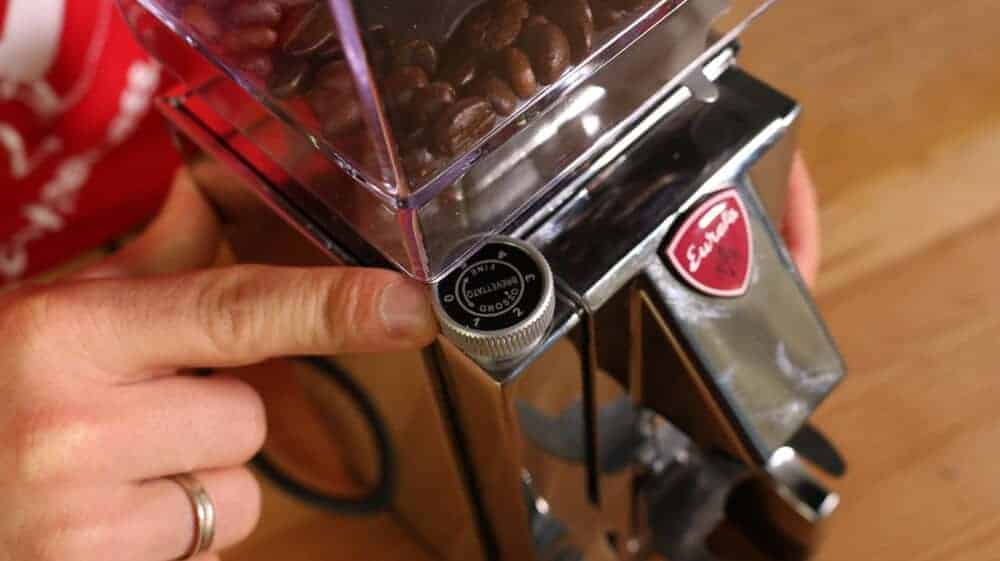
I have absolutely no idea why Eureka doesn’t use its “Easy Setting” feature on all coffee grinders, but only includes it on the Perfetto and Libra. It’s just a more sensible labeling of the grind adjustment dial.
You’ll find this useful, because the MCI, Silenzio and all the others only offer a very rough five-step guide, which is of little help when it comes to the stepless grind setting. As soon as you change beans or take the grinder apart for cleaning, the guessing game starts all over again. Still, the grinder itself is so finely calibrated that you can find the optimal setting for any coffee, provided you have the patience.
My tip: Be sure to use (very) cheap or old beans as you’re dialing in. Otherwise you risk wasting a lot of good coffee.
Whether or not you have the Easy Setting, to dial in your Mignon grinder, you basically proceed as with any grinder:
For espresso, start at the finest setting, grind coffee into the portafilter and pull a shot. Maintaining the same dose, keep pulling shots, making small grind changes each time until you’re happy with the extraction time, yield and taste.
For pour over, drip and French press, start in the middle and move the setting coarser or finer in small increments after taste testing.
To find the right grind again, you can either go by feel or put a dot on the knob with a marker. Oh, and remember that even a tiny movement of the dial can cause a substantial change in grind size.
Volume
The high-quality materials and construction of a Eureka Mignon grinder is apparent when it’s in operation. During my testing I found the Mignon MCI to be surprisingly quiet. Still, my measurements and those of other reviewers differ quite a bit here.
I measured 73 decibels for my Eureka Mignon MCI, while other reviewers measured between 78 and just over 80 decibels for the newer models with Silent Technology.
However, I don’t see this as a contradiction, because the measured volume says nothing about how the grinder sounds. Here, Eureka has gone one better with the Mignon Silenzio and Mignon Perfetto, following on from the MCI.
The noise is (still) more pleasant overall, although you shouldn’t expect it to be whisper-quiet.
Eureka Mignon Dosing
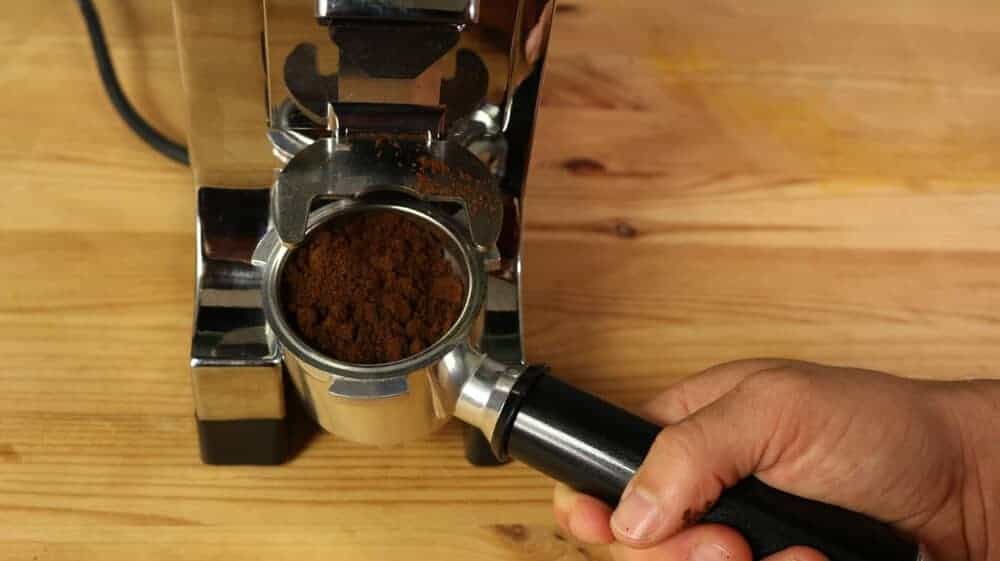
With the majority of Eureka Mignon models, you can grind your coffee in manual mode or using a timer function. The models with a display also offer programmable, time-based doses for single or double shots.
The key component is the contact button above the fork, which you activate with the portafilter. How this works in manual mode is self-explanatory: place the portafilter on the fork, press the contact button and remove the portafilter from the fork after the desired grinding time.
For the timer function and its programming, you make adjustments using the “potentiometer” dial on the side. By pressing various button combinations on the display, you can implement even more programming tricks. Be sure to consult the operating instructions for this.
Even if time-based dosing is always better than manual dosing, you shouldn’t rely on it initially. Not even with a Mignon.
A good coffee scale is a must-have for adjusting the amount of coffee dispensed and then checking it again. Although deviations are minimal thanks to low dead space and high grinding consistency, even the Mignon does not grind with 100 percent accuracy.
Coffee always sticks somewhere; not all coffee beans behave the same way. Even with the Mignon Libra, which already has a built-in scale, the manufacturer recommends checking the quantity or weight again with an external scale. This is not an admission of poor technology, but rather the nature of coffee preparation.
I recommend starting with a 1:2 brew ratio for espresso. So, if your dose is 18 grams of ground coffee, you should expect a 36-gram shot of espresso with an extraction time of 25-30 seconds.
The Eureka Mignon in Action: My Experience
While beginners pay attention to grind settings, design and perhaps a reviewer’s verdict, professionals always look at the dead space, anti-static technology and retention.
Basically, it’s a question of whether the coffee grinder is constructed in such a way that all the coffee ends up in the portafilter, or some gets stuck along the way.
This can be due to both the design and the material. Where a lot of plastic is used, there is an increased risk of static charge, which causes coffee to stick to the inside walls of the grinder. An ill-designed connection between the burrs and the chute creates dead space.
The problem with this is that you’re not only wasting a lot of coffee, but your programming is also useless. This is because every time you grind, some coffee sticks to the grinder, sometimes more, sometimes less.
In this respect, you have practically nothing to fear from Eureka. More thorough reviewers than myself have determined that the deviations are almost negligible in everyday use, meaning that practically the same amount of coffee always ends up in the portafilter.
In addition, I have gained the following experience from years using the Eureka Mignon:
The coffee grounds arrive in the portafilter somewhat clumpy, but the temperature increase is kept within reasonable limits. You don’t need to worry about any loss of aroma.
Particle uniformity is first class. The flat burrs clearly demonstrate why they are the better alternative to conical burrs for many grinder enthusiasts.
Even with a professional 58mm portafilter, it can sometimes be difficult to catch all of the coffee grounds. The chute tends to spill a little too much, which some users even try to get around by making their own funnel designs. I wouldn’t go that far, but you should be prepared for this.
My complaints are surprisingly few and surprisingly mundane. That’s exactly what speaks for this family of grinders. It simply does its job and appeals to both advanced users and ambitious beginners.
Cleaning: Easy Peasy!
The compact and well-thought-out design of a Eureka Mignon also pays off when it comes to cleaning. You can take it apart down to the burrs and quickly see why it doesn’t need any special anti-static technology – the grinder remains exceptionally clean even after frequent use.
However, this does not change the fact that you have to clean the thing regularly. To do this, remove the bean hopper, loosen three screws and you’ll have direct access to the vertically mounted burrs. Then, you can simply use a vacuum cleaner.
If you want to take things even further, you can loosen more screws and remove both burrs completely.
This is usually only necessary if you have been grinding oily coffee beans for a long period of time, want to install replacement parts or want to store the Eureka. However, you must always be prepared to recalibrate the grinder after cleaning.
If you don’t want to start over every time, there are special grinder cleaning tablets that attract and hold coffee oils. Personally, I’d go with Grindz, which are pretty much the industry-standard grinder tablets.
Conclusion on the Best Eureka Mignon Grinder
I think the most important thing to know about the Eureka Mignon coffee grinder – regardless of the model – is this: if you care about every detail of coffee or espresso preparation, it will meet all your needs. If you’re just getting into coffee, you don’t need it (yet).
In my opinion, the Eureka Mignon MCI is a total classic, and I use it as a yardstick when I’m testing other espresso grinders.. Every newer variant definitely meets this requirement.
But if you just want simple filter coffee, a grinder like the Baratza Encore, which is also in my kitchen, is ideal. Plus, if you’re just getting started with espresso, consider the aforementioned Breville Smart Grinder Pro or the Fellow Opus.
You will have to accept compromises in terms of particle uniformity, operation, settings and even cleaning. But freshly ground coffee is always better than pre-ground coffee.
What’s the best Eureka Mignon grinder in your opinion? Share your thoughts with the Coffeeness community in the comments section!
Best Eureka Mignon Grinder FAQ
Eureka offers coffee and espresso grinders of all types and designs. I recommend all espresso models from the Mignon class. They set the standard for superb grinding results in an attractive, compact format.
Good coffee grinders process coffee beans quickly, evenly and with minimal heat transfer. The most important factors when choosing a grinder are the available grind settings and minimal coffee loss due to static electricity or an inefficient design (dead space).
With proper care and maintenance, coffee grinders can last practically forever. However, burrs eventually wear out and need to be replaced.