


When it comes to supplying coffee at work every day, it’s not just about quality but also quantity, so a commercial super automatic coffee machine has to be up to the task. We need a wide variety of coffee drinks, cutting-edge technology, high volume and much more.
Appliance-grade models from my guide to the best fully automatic espresso machines definitely don’t make the cut here. Instead, you should opt for a professional super automatic coffee machine that’ll cut the mustard.
In the B2B segment in particular, you should plan your requirements realistically, compare offers, calculate the (ongoing) investment costs and consider many factors. With all that in mind, I’ve put together this commercial super automatic espresso machine guide. Let’s get right into it!
Coffeeness Medium Roast Espresso
Well-balanced with chocolate & hazelnut notes
Freshly roasted in Brooklyn
Very low acidity
Table of Contents
Commercial Super Automatic Espresso Machines: The Most Important Questions
Before we examine the details of coffee supply in commercial settings, I should address the most important questions regarding needs, requirements and the best cost-benefit ratio.
Which Type of Company: Drinks for Coffee Breaks or Sales?
When we talk about professional coffee supply in companies, there are two basic categories:
Coffee for employees
Coffee for customers
This distinction has nothing to do with performance, coffee quality or coffee variety per se, but rather focuses on important features of suitable fully automatic coffee machines:
Appearance & design: Functional and results-oriented or sleek and stylish
Functions & features: Basics vs wide selection
Operation: Self-service or served by employees
Reimbursement: Incentive, payment system, etc.
Maintenance & service: Maintenance by employees or service providers
You must define these five elements for a wide variety of company types. These include:
Large offices with many employees / departments
Catering businesses
Hotels & guest houses
Businesses such as bakeries, kiosks, gas stations
The fundamental question always remains the same: is coffee an internal expense, or should customers or guests pay for it (indirectly)?
For coffee as an employee incentive, you need machines that deliver a manageable variety of good-quality coffee. For coffee for sale or for guests, you need excellent quality drinks and machines, a large selection of beverages, fast preparation, etc.
What Is the Daily Capacity?
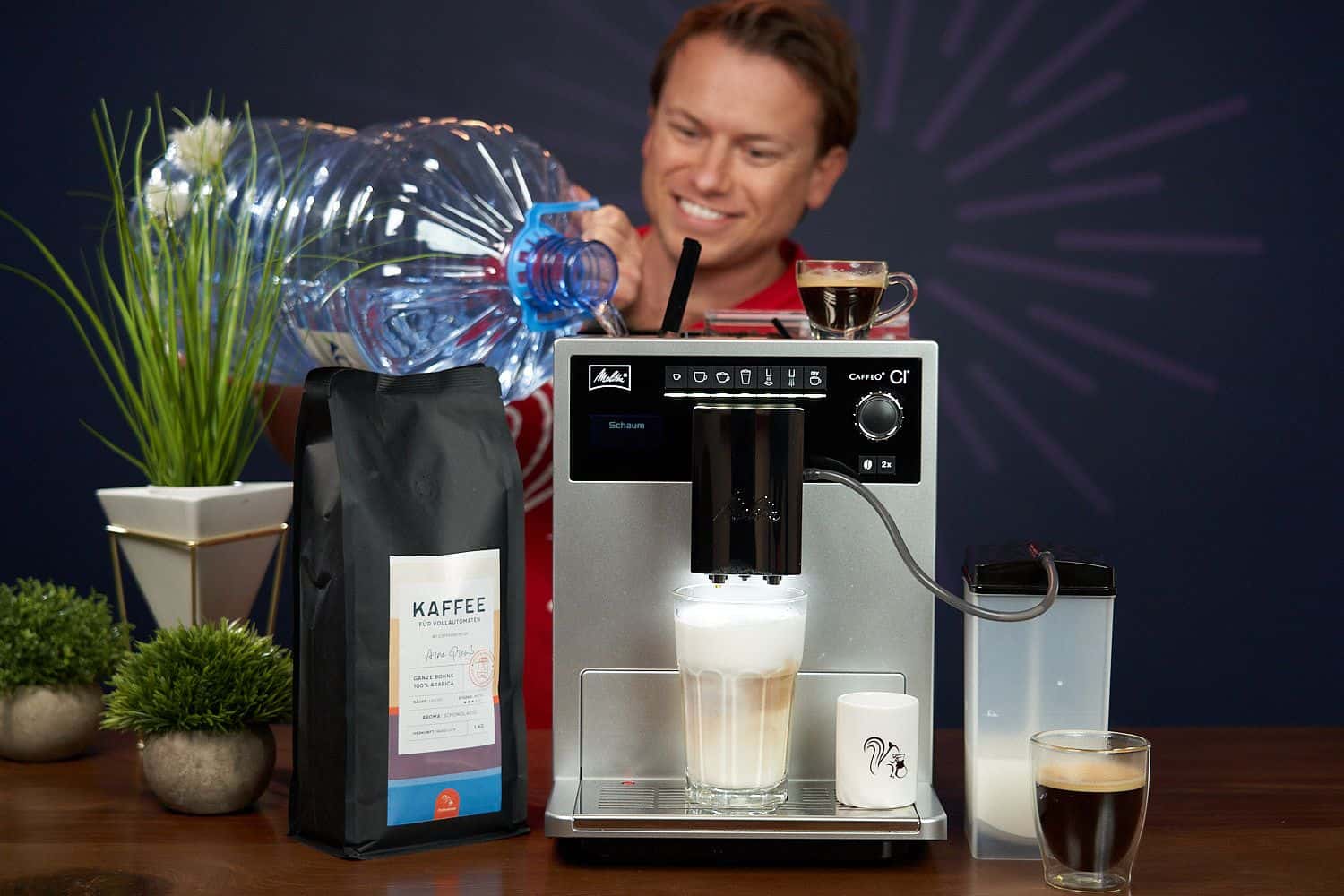
Unlike consumer devices, B2B coffee machines aren’t necessarily categorized according to functions or price ranges.
We are easily talking about several hundred drinks per day. To achieve this, the right coffee machine not only needs powerful components, but also containers with the appropriate capacity, solutions for water supply and drainage, etc.
The more hot drinks a machine can deliver, the higher the price and space requirements. That’s why it is very important to calculate the required capacity as realistically as possible. However, this isn’t as easy as it sounds.
Even with a fixed number of employees, it is difficult to predict coffee consumption. If coffee is to be served to guests and customers, it becomes even more difficult.
You also have to take peak times into account. During coffee breaks or breakfast time in hotels, demand skyrockets, while at other times of the day it is manageable. Therefore, average demand isn’t a suitable basis for calculation.
How to Calculate Daily Capacity
Precisely because so much depends on capacity, I wouldn’t necessarily rely solely on surveys, forecasts or statistics. Instead, I’d conduct practical tests: rent commercial super automatic espresso machines, measure their performance over a period of time and only then decide on a specific model.
Sure, this intermediate step does involve higher costs and more effort in the short term. However, experience shows that in the long run, you can save a lot of money, generate more revenue and optimize your coffee concept.
During a trial phase, you’ll not only see whether the coffee machine is powerful enough. You’ll also gain practical insights into important operational factors:
Functions actually required (e.g. chocolate, tea or hot water dispenser)
Operation (touchscreen vs buttons, menu navigation etc,)
Milk system
Aspects of installation (fixed water connection, drainage, etc.)
Maintenance and cleaning procedures (thoroughness, responsibility, workflow)
Which Option: Trendy Beverages or Popular Classics?
It really doesn’t really matter how many coffee specialties a machine has to offer. At the end of the day, it’s just espresso and milk in different proportions. Anyway, a latte from a commercial super automatic espresso machine can’t compare with a barista creation.
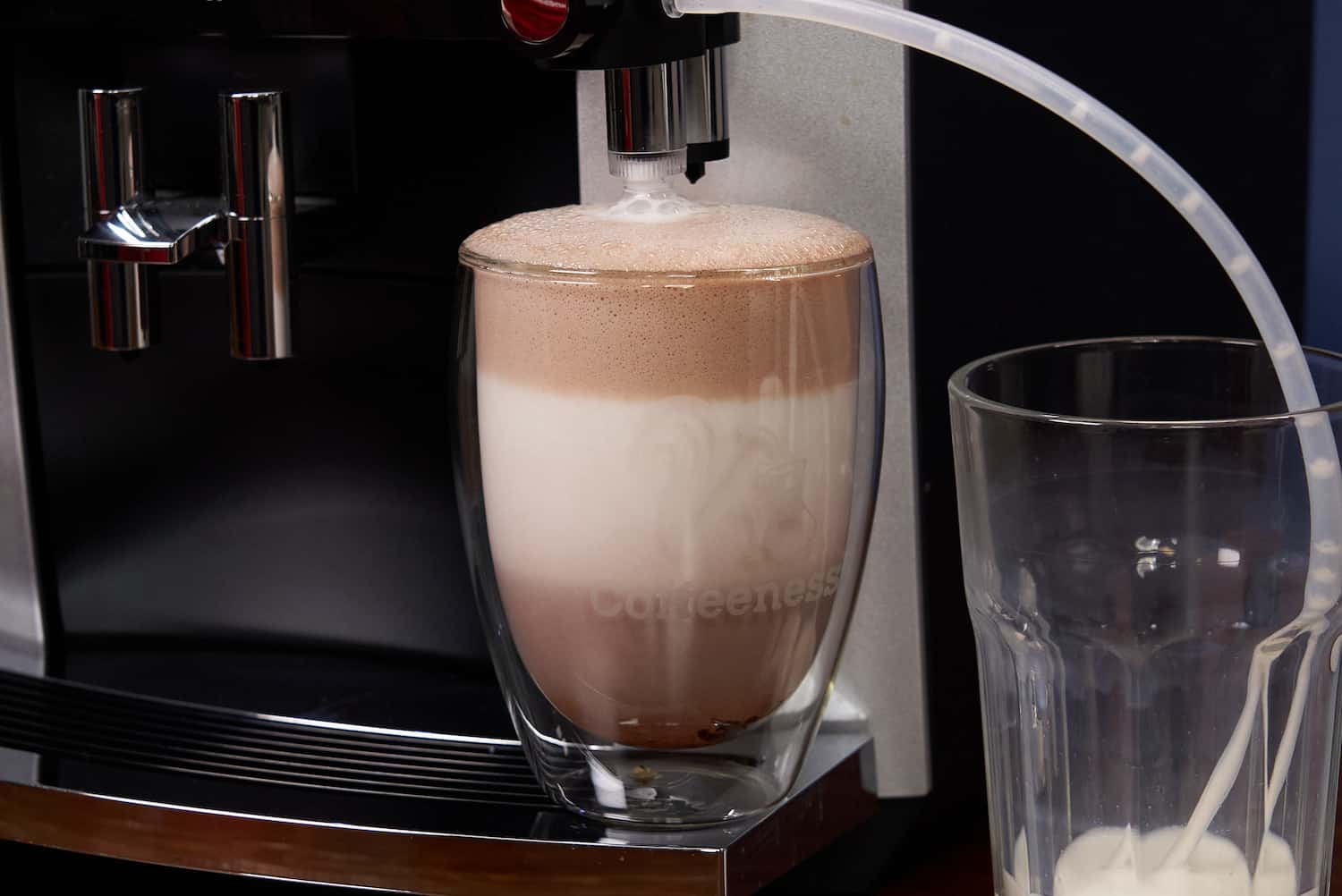
However, we still have to evaluate B2B fully automatic coffee machines differently from domestic models in terms of the range of beverages they offer:
Customers or (hotel) guests don’t care whether a cappuccino is basically nothing more than a flat white. They want a wide selection so they feel like they’re getting their money’s worth. This applies to a breakfast buffet with all-you-can-drink coffee just as much as it does to the counter at a bakery.
The selection of beverages available at the fully automatic coffee machine for employees during their coffee break can be limited to a few options – espresso, coffee, cappuccino and latte satisfy most people’s tastes.
Furthermore, serving hot beverages is not just about coffee, but also tea, cocoa, sweetened milk foam, etc. There are fully automatic coffee machines that can do all of this at once. However, each additional function makes the machine larger, more expensive and more complex.
That’s why you should evaluate during the recommended trial period whether other, cheaper options make sense for hot water or cocoa. After all, heavy-duty kettles are also available, and cocoa can be prepared in other ways.
The Drip Coffee Conundrum
In addition, we often forget something: fully automatic coffee machines can make just about any coffee specialty at the touch of a button. But they can’t make real drip coffee.
There are a few models that have both an espresso and a drip coffee option. But these are two different methods crammed into one coffee machine.
You should never underestimate how much people love their cup of joe. No fully automatic espresso machine can replace the taste, consistency and quantity at an affordable price per cup.
That’s why it’s often worth investing a little more in a drip coffee maker and also opting for a high-quality, commercial espresso machine.
Procurement Options Compared: Buy or Lease a Fully Automatic Coffee Machine?
Apart from all decisions regarding beverage variety or the configuration of your commercial super automatic espresso machine, the most important question is how you want to procure and pay for the machine. There are two main options for this, which once again satisfy different needs, and each have their own advantages and disadvantages.
Purchase a Commercial Super Automatic Espresso Machine
If you want to buy a fully automatic coffee machine for a small business, there are plenty of options available. For example, a high-end consumer model like the Miele CM 7750 or a commercial model like the Jura X10 will fit the bill nicely.
If there are up to six people in your group, a decent fully automatic machine could set you back around $5,000.00. You’ll have to pay for it out of your petty cash, but you can claim it back several times over on your taxes. What’s more, there’s no contract to tie you in.
On the other hand, you have to organize maintenance, coffee bean supplies and payment options yourself, and you’ll have a higher initial investment than with other options.
Lease a Commercial Super Automatic Espresso Machine
Professional fully automatic coffee machines are available to lease with various contract options – short-term rental, long-term service option, etc.
Here, you need to compare the terms and conditions carefully, as many providers don’t simply let you lease a fully automatic coffee machine, but often also require you to purchase beans on a regular basis or commit to additional services for cleaning and maintenance.
Coffee bean purveyors who also sell machines are best at this. That’s why it’s usually more worthwhile to contact independent companies. They usually offer more personalized customer service, but don’t always have the best selection on offer.
Understanding Cost Components: What’s Included in the Price Per Cup?
Whether you want to provide free coffee or sell it at a profit, the calculation is based on the price per cup. And there’s a whole lot more to consider than just the price of coffee beans and water:
Consumables (milk, sugar, cups)
Operating costs (electricity, water)
Purchase/leasing costs for the fully automatic coffee machine
Maintenance and repairs, cleaning products and employees
Depreciation
I’d say you can expect the average cost per cup to be anywhere from $0.50 to $1.00, depending on the quality of your coffee beans, milk and consumables.
Still, be careful not to confuse the price per cup of super automatics and drip coffee machines. As you’d expect, the amount will be significantly less for a simple coffee machine.
Payment Systems
Let’s assume you have 10 employees who each drink four cups a day. In a working year of, say, 230 days, that adds up to 9,200 cups, which cost a total of up to $9,200. Now add a zero to the multiplier of your choice…
With that in mind, it’s understandable that companies only want to offer their employees push-button coffee in exchange for payment. There are many options available for this, and technology has made enormous strides in recent years. From PINs to apps, touchscreens to card readers and chip cards, everything is possible.
Technical Requirements: What Can Commercial Super Automatic Espresso Machines Do?
Commercial coffee machines offer features that don’t exist or simply aren’t necessary in the consumer sector. In (big) business, however, they not only make sense, they are sometimes even essential.
If you’re using a commercial super automatic espresso machine, you’ll have to adhere to strict cleaning and maintenance protocols as per health department requirements.
Depending on the area of application, you should research your local health department standards before buying or leasing in order to learn which machines are suitable.
A fully automatic coffee machine with a fixed water connection may not be mandatory. But it always makes sense if you use the machine to make at least 50 cups a day. Just imagine how often you would otherwise have to refill the water tank or change the water filter.
Fully automatic coffee machines with two grinders are a great idea for beverage selection. For example, one side can dispense regular coffee, while the other side can be used for decaf beans. As with other features for B2B fully automatic coffee machines, the same applies here: each additional grinder and bean container makes the model significantly more expensive, larger and more complex.
As a barista, fresh milk is the only sensible option for me when it comes to coffee specialties from a modern fully automatic coffee machine. Realistically, however, powdered milk is often the more hygienic choice – especially in high-volume situations with minimal supervision or daily intensive cleaning. As an alternative, there are, for example, fully automatic coffee machines with milk coolers.
Compact fully automatic coffee machines can simply be placed on a work surface, with accessories and cleaning products stored nearby. Large fully automatic machines and self-service machines should have their own dedicated stations. These provide easy refills for latte macchiato and other drinks, offer space for lots of cups and help keep everything tidy.
Industry-Specific Recommendations: Which Fully Automatic Coffee Machine Is Right for Which Company?
Unlike with fully automatic coffee machines for home use, I can’t recommend any specific commercial super automatic espresso machines. On the one hand, this is because I only test B2B technology in exceptional cases. On the other hand, it’s because there are so many scenarios with different requirements. Still, I can provide you with a brief overview.
Fully Automatic Coffee Machines for Large Offices and Administrative Buildings
When internal consumption is high, the focus is on hygiene, ease of use for many users and coffee as an employee morale booster.
Fully Automatic Coffee Machines for Restaurants and Cafes
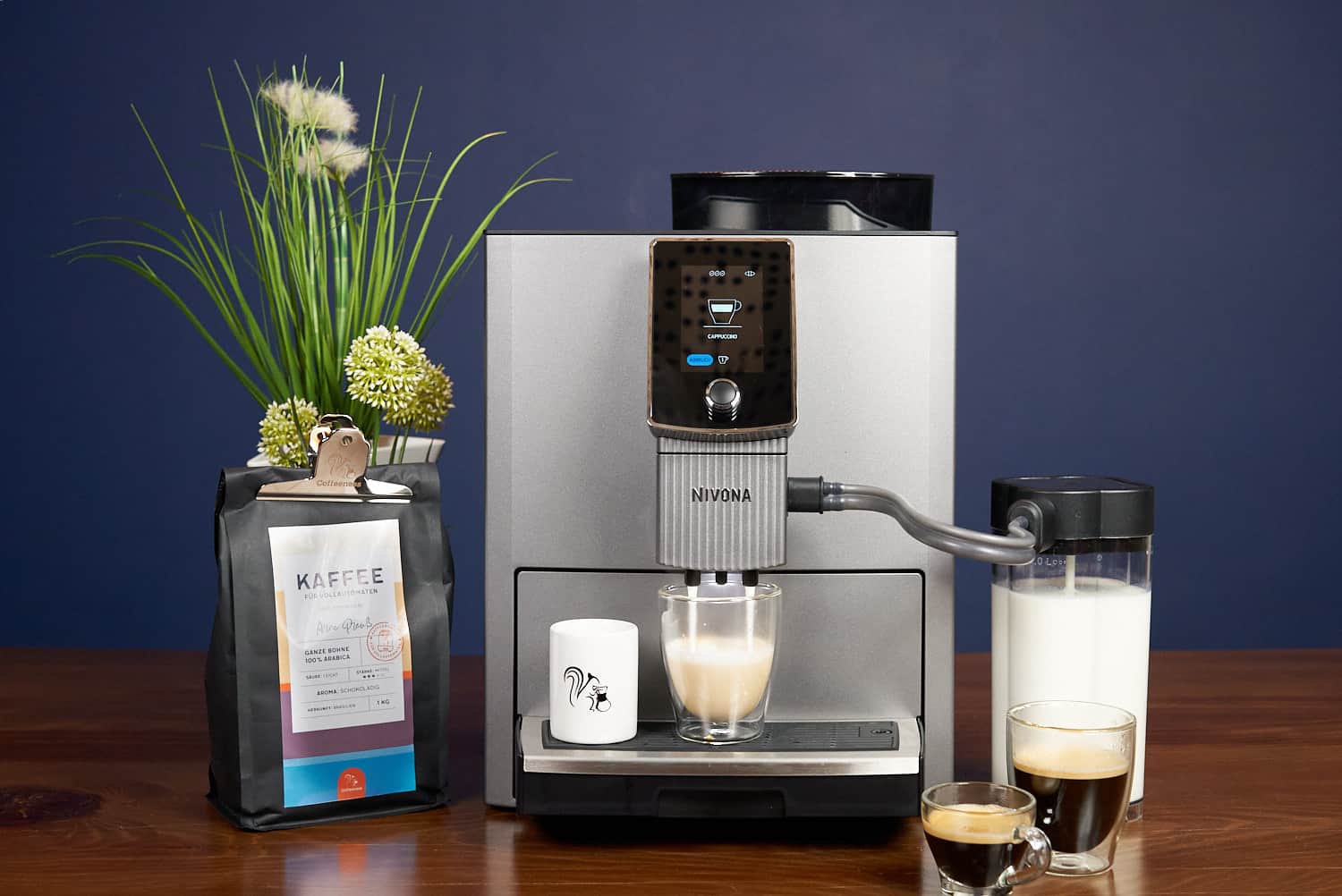
If you want to generate sales, you’ll have to meet your customers’ high expectations. Fully automatic coffee machines for the hospitality industry must combine efficiency with design, speed with durability and barista skills with uncomplicated operation.
Incidentally, the controversial LAP Coffee chain, which I have analyzed and tested for you, is currently demonstrating how this can look in practice.
Fully Automatic Coffee Machines for Hotels and Guesthouses
Fully automatic coffee machines for hotels must be designed for self-service and meet a variety of guest expectations. Easy operation via touchscreen is a key factor here, as are hygiene, water capacity and the size of the milk and bean containers.
Fully Automatic Coffee Machines for Commercial Use (Bakery, Kiosk, Gas Station)
If coffee is just a small aspect of a larger core business, the appropriate machine must deliver high-quality specialty coffees in sufficient quantities. However, they don’t need as many top-notch features as elsewhere. Nevertheless, fully automatic coffee machines for commercial use are just as complex as their counterparts.
Getting Quotes: How to Do It Right
Of course, you can compare the advantages and disadvantages of different fully automatic coffee machines yourself. But why bother? There are plenty of providers who can do it faster and better – free of charge and with no obligation. When contacting such providers, you will always need to provide the following information:
Industry and location
Estimated number of cups per day
Desired coffee specialties or hot drinks
Fresh milk vs other options
Desired procurement model (lease or purchase)
Budget or other special considerations
There are loads of companies offering their services in the U.S. Popular options include Spresco and Franke. Still, I do recommend checking to see if there are any local independent companies in your area.
Coffee Beans for Businesses: Quality vs Contractual Commitment
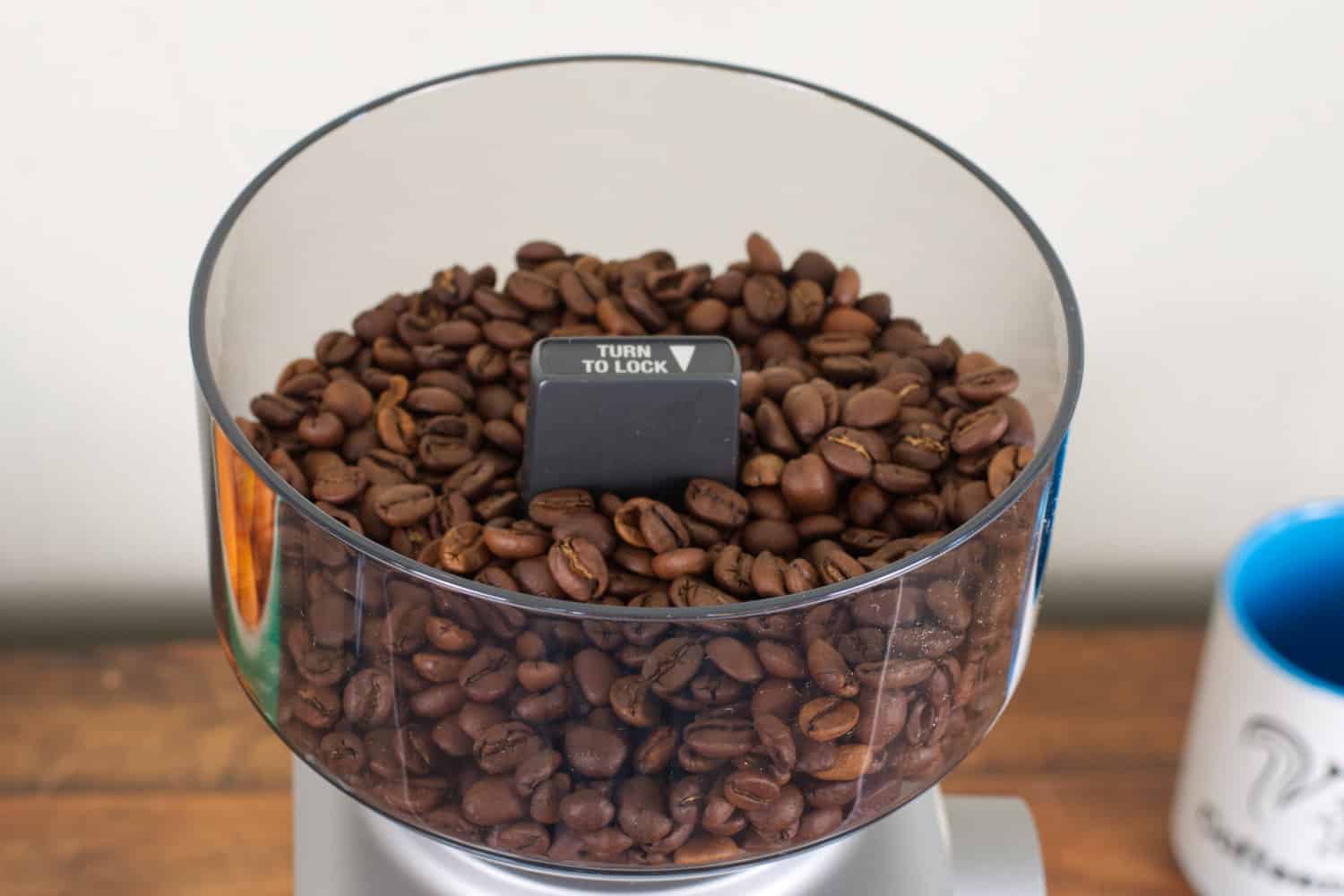
As I already mentioned, some suppliers will only lease you a fully automatic coffee machine if you also use their beans. This may have advantages, but in my opinion it’s the wrong approach.
Coffee subscriptions are great because they ensure that your commercial super automatic espresso machine is always well stocked. Still, when it comes to taste, quality and sustainability, being locked in to using mass-market beans is the wrong choice.
As soon as you want to generate revenue with your fully automatic coffee machine, these aspects become even more important the more expensive your cappuccino or latte is. Furthermore, I don’t see why I, as a company, should commit to a minimum purchase quantity, duration or delivery schedule, as some subscription models require.
More and more great roasters in your area are offering excellent coffee at B2B conditions. Do yourself a favor and compare them. The differences in taste are enormous, and the conditions are often better and more flexible than those offered by large suppliers.
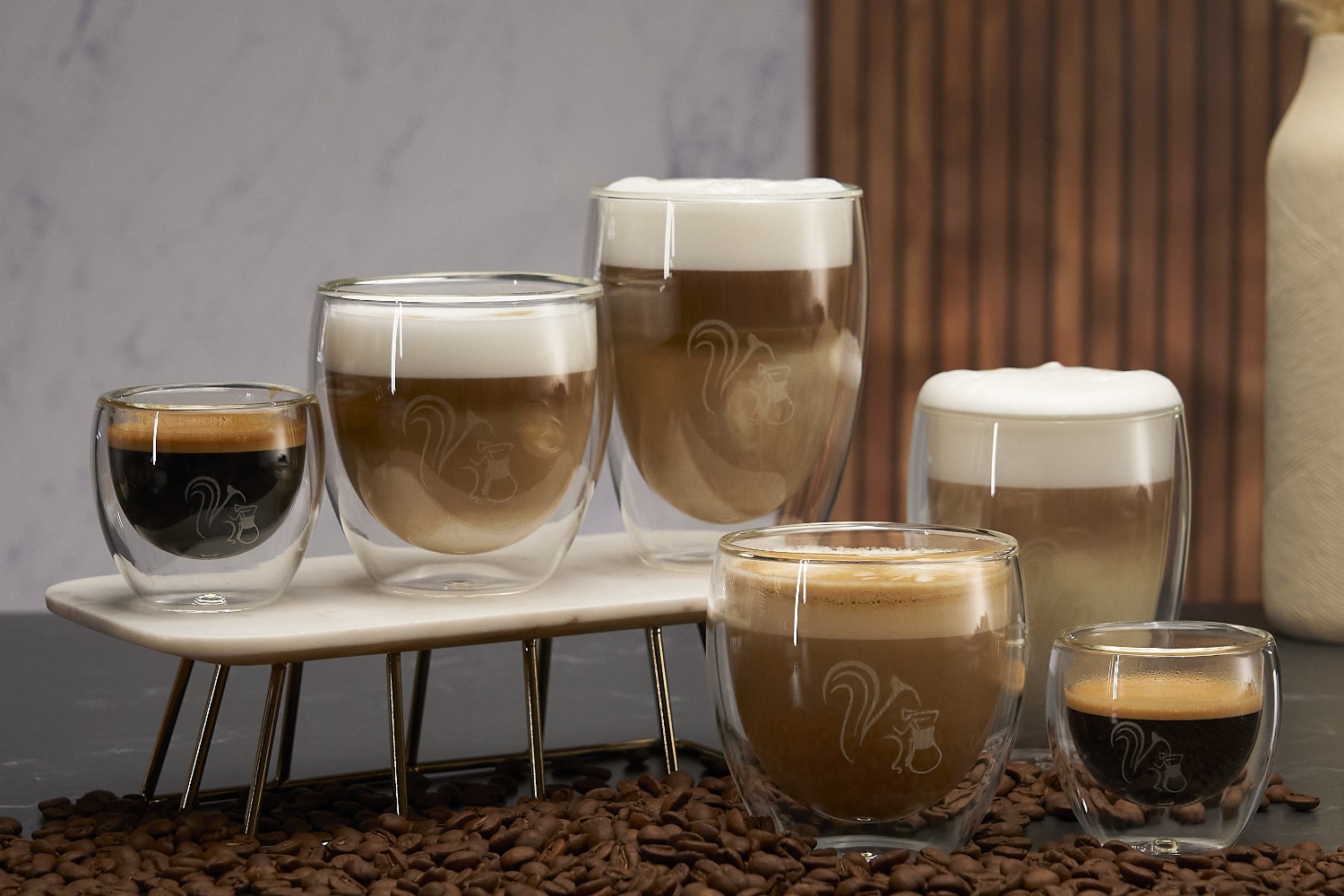
Double Walled Thermo Coffee Glasses
Enjoy your coffee drink hot for longer
Keeps your coffee warm longer
Made of robust borosilicate glass
Conclusion: The Right Coffee Strategy for Your Company? Plan Carefully!
Finding the best commercial super automatic espresso machine for your business isn’t rocket science. It just takes a bit of effort. The most important thing is to understand your needs and to compare and calculate the appropriate models realistically.
If you need help with this, you can seek professional advice. This saves time and stress as well as protecting you from making expensive mistakes.
Which B2B topic related to fully automatic coffee machines would you like me to explore in more detail? Feel free to leave me a comment!