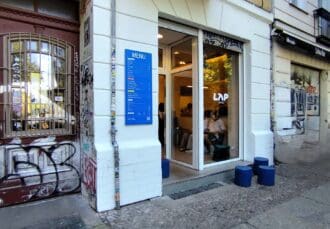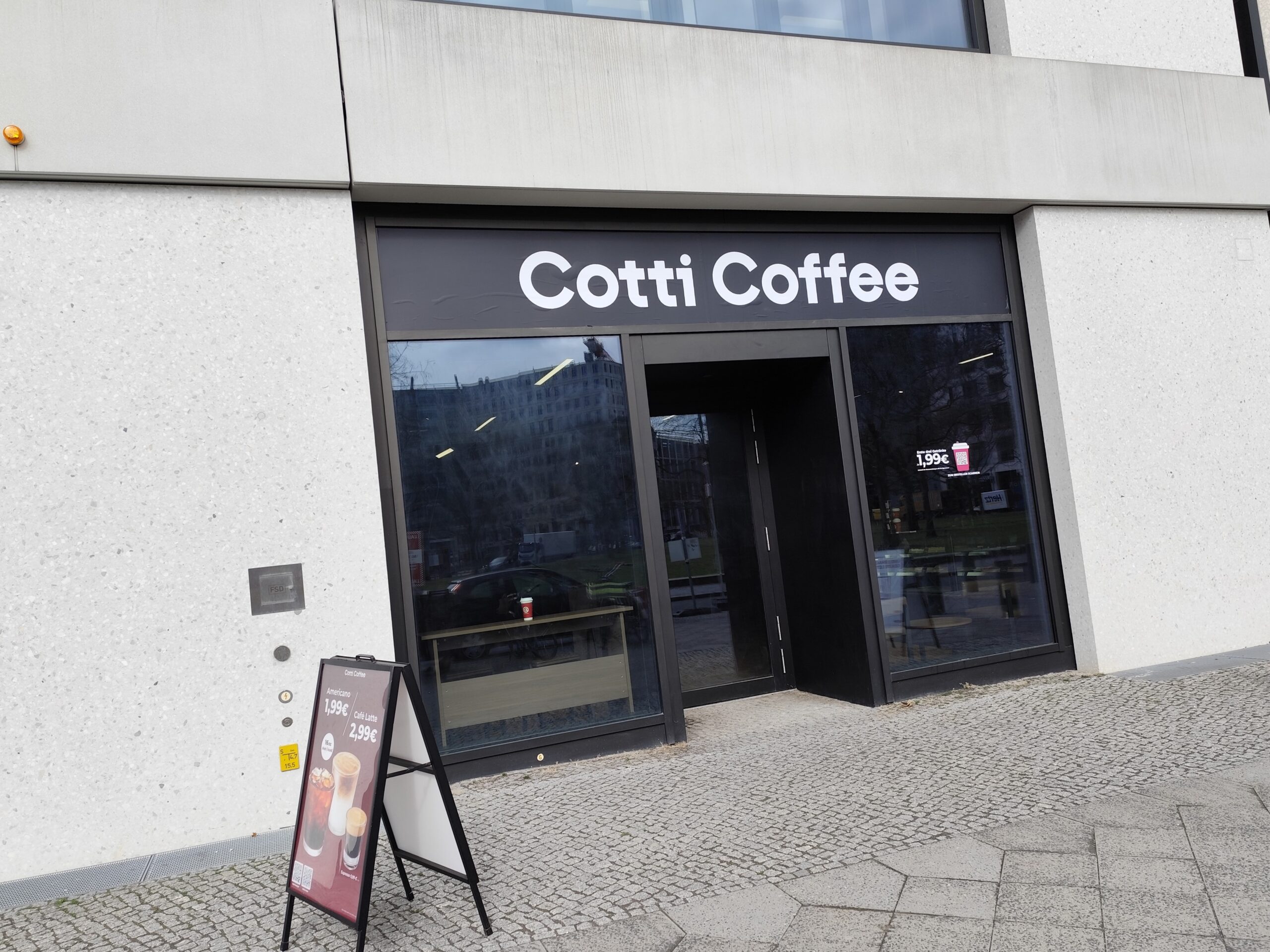



If it weren’t for LAP Coffee, I doubt whether the media would have even mentioned Cotti Coffee’s entry into the market. But the blue-and-white Berlin startup and the Chinese coffee chain follow the same basic concept and face the same criticisms.
These include selling coffee from fully automatic coffee machines at rock-bottom prices, too much emphasis on coffee-to-go, contributing to the decline of real cafés and so on and so forth.
A brief analysis of Cotti’s business model – and a visit to one of its locations – makes it clear that no one needs to fear this coffee chain. But above all, our Cotti Coffee review highlights just how hypocritical the media’s – and often the public’s – reactions to LAP were.
Table of Contents
New Kid on the Block: What Is Cotti Coffee?
Cotti Coffee may be a new name in North America, but elsewhere it’s an established behemoth. According to information on its website, the Chinese company operates more than 18,000 locations worldwide – most of them in China and across Asia, but also on other continents.
According to The Lowdown, this now makes Cotti the fourth-largest chain behind Starbucks, Dunkin and Luckin Coffee – the latter also a Chinese coffee chain.
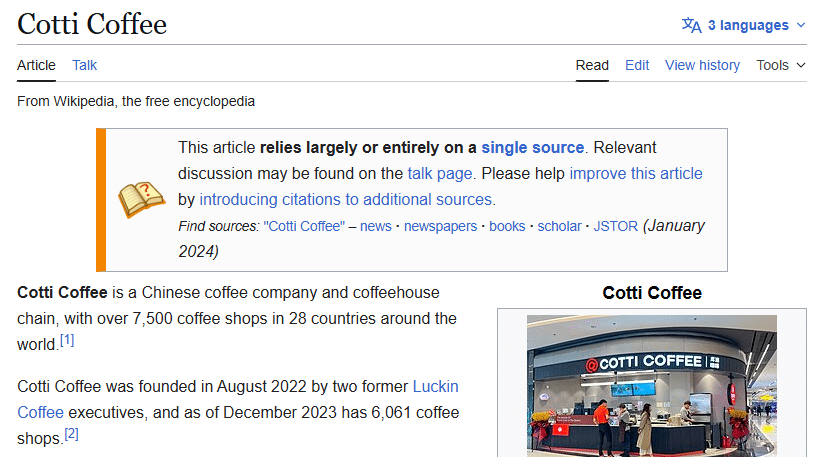
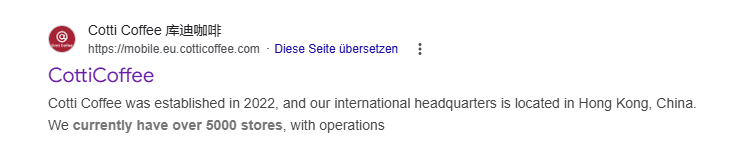
However, these figures cannot be independently verified, as all media outlets simply copy from Cotti and from one another, and different numbers appear depending on the search method. For example, the metadata for the Cotti mobile website lists 5,000 coffee shops, while the English Wikipedia page lists 7,500.
A somewhat older article in The Guardian seems to confirm that in China, Cotti is indeed competing with Starbucks and Luckin for the top spots. The company was founded in 2022 by Lu Zhengyao and Qian Zhiya, two former Luckin executives who were reportedly fired from the company for accounting fraud, as reported by Forbes, among others.
The only thing that is certain is that the company is now making a full-scale push into the U.S. In 2024, the first Cotti store opened in Hawaii, and since then the company has expanded into the California and New York markets. As for Germany, several branches will open in major cities in 2026. Many more are set to follow, from Frankfurt to Munich.
Low Prices and a Trendy Menu? The “99-Cent Espresso” Controversy
Cotti is waging war on Starbucks, Luckin and even LAP through its crazy pricing. At least, that’s what we’re being led to believe. The media’s hook is the “99-cent espresso,” which has already made headlines in Europe and North America. Not even LAP can compete with such a price, as they charge 1.5 euros ($1.75) for an espresso.
However, the joke is that the ultra-discount espresso doesn’t really exist. Neither does the $1.99 americano or the $2.99 latte, which Cotti proudly advertises on its signs.
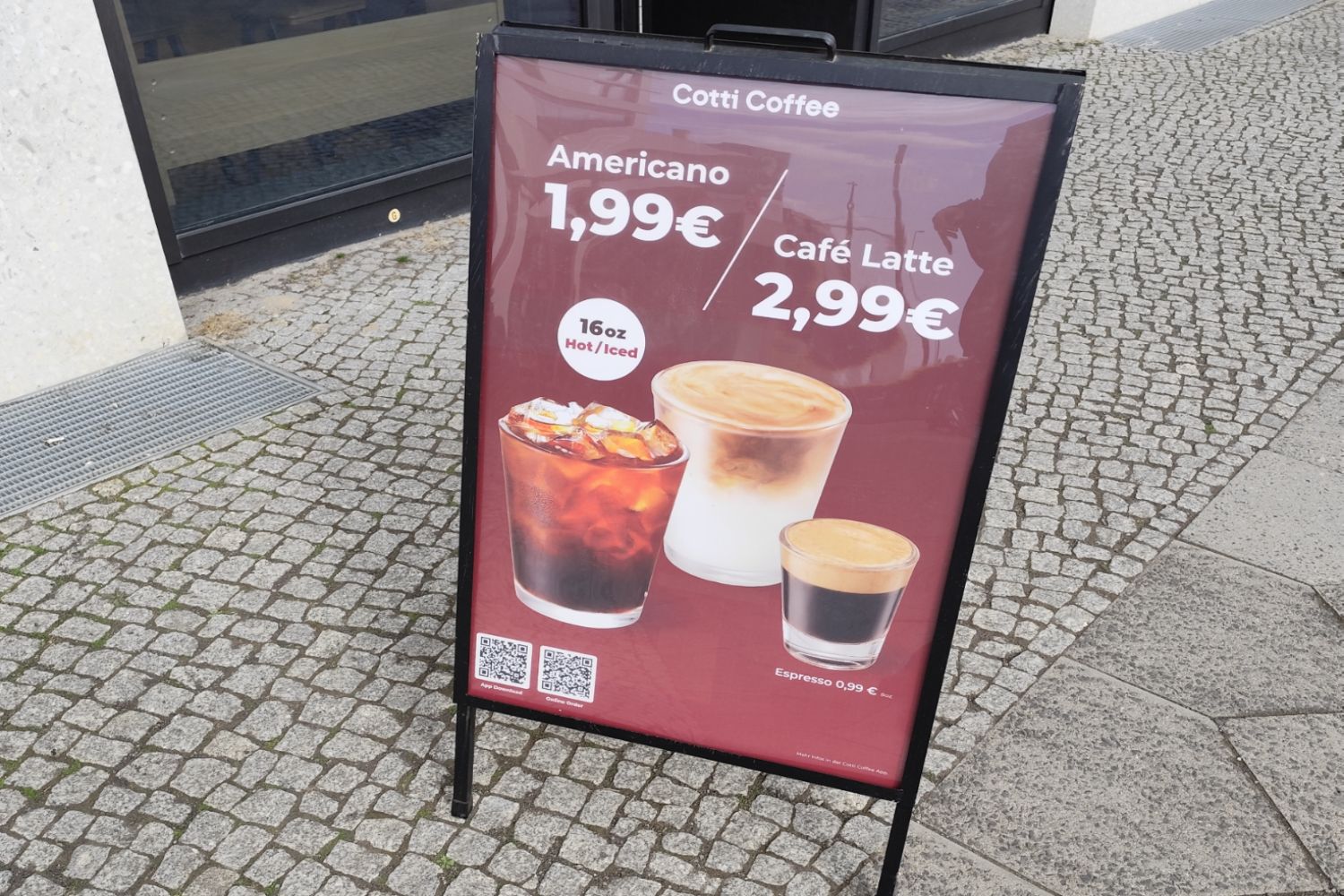
In reality, you can only access these offers if you download the Cotti app and use it to order your drink. Of course, this requires you to provide personal information and commit to remaining loyal to the chain. Besides, the 99-cent espresso is a one-time offer for new customers.
We’re already familiar with this kind of Chinese digital loss leader strategy – Temu has become famous for it, with Alibaba, Shein and other platforms operating in the same way. Cotti applies this principle to coffee and adds a twist: beverages that have little or nothing to do with coffee.
The Cotti menu features, among other things, Instagram-worthy concoctions like Matcha Mango Coconut and Pandan drinks, as well as signature drinks like the Apple Americano.
This quickly makes Cotti Coffee’s target demographic clear: young digital natives who don’t have much money to spare but love to snap photos of colorful drinks in plastic cups, and who understand and embrace trends from Asia.
The combination of coffee and fruit is all the rage in Asia, where coffee hasn’t yet become an everyday beverage. Rather, it offers a novel and exciting alternative to tea. Both there and in this country, young, visually driven trendsetters are the driving force behind Cotti’s success.
The Team Coffeeness Cotti Experience: Tragedy Coffee
Many on-site reports, such as those by Die Zeit, repeatedly note that the stores in Berlin, Cologne and Düsseldorf are primarily frequented by customers of Asian appearance.
What one might initially dismiss as a somewhat racially biased journalistic perspective is, however, confirmed during Team Coffeeness’s on-site visit to the Cotti branch at Potsdamer Platz. Apart from a small group of Asian customers, the place is virtually deserted.
The interior exudes the charm of an abandoned McCafé branch just before closing time. Despite the warm wood tones, the relatively large number of seats and the clean, tidy appearance, nothing about this place invites you to linger.
Of course, you could blame that on the fact that we visited early on a Tuesday morning. But right next door at Exclusive Coffee, a run-of-the-mill chain from Berlin, business is booming. Despite the higher prices.
The Cotti Coffee Menu: A Rude Awakening
This might also be because you quickly come back down to earth if the prices outside have lured you to the counter. The official menu looks altogether different.
A small cappuccino costs around 3 euros ($3.50) at the Potsdamer Platz store, while the viral matcha mango-coconut drink goes for almost 5 euros ($5.75). Meanwhile, an americano costs 2.7 euros ($3.15), and a latte 3.1 euros ($3.60). Those aren’t exactly competitive prices.
This makes sense, especially when you consider the rent for this prime tourist location and the large square footage compared to LAP. To cut costs, coffee is served in paper cups, and colorful drinks are served in plastic cups. Labor costs also seem low, as there is only one person behind the counter.
Cappuccino? No Comment!
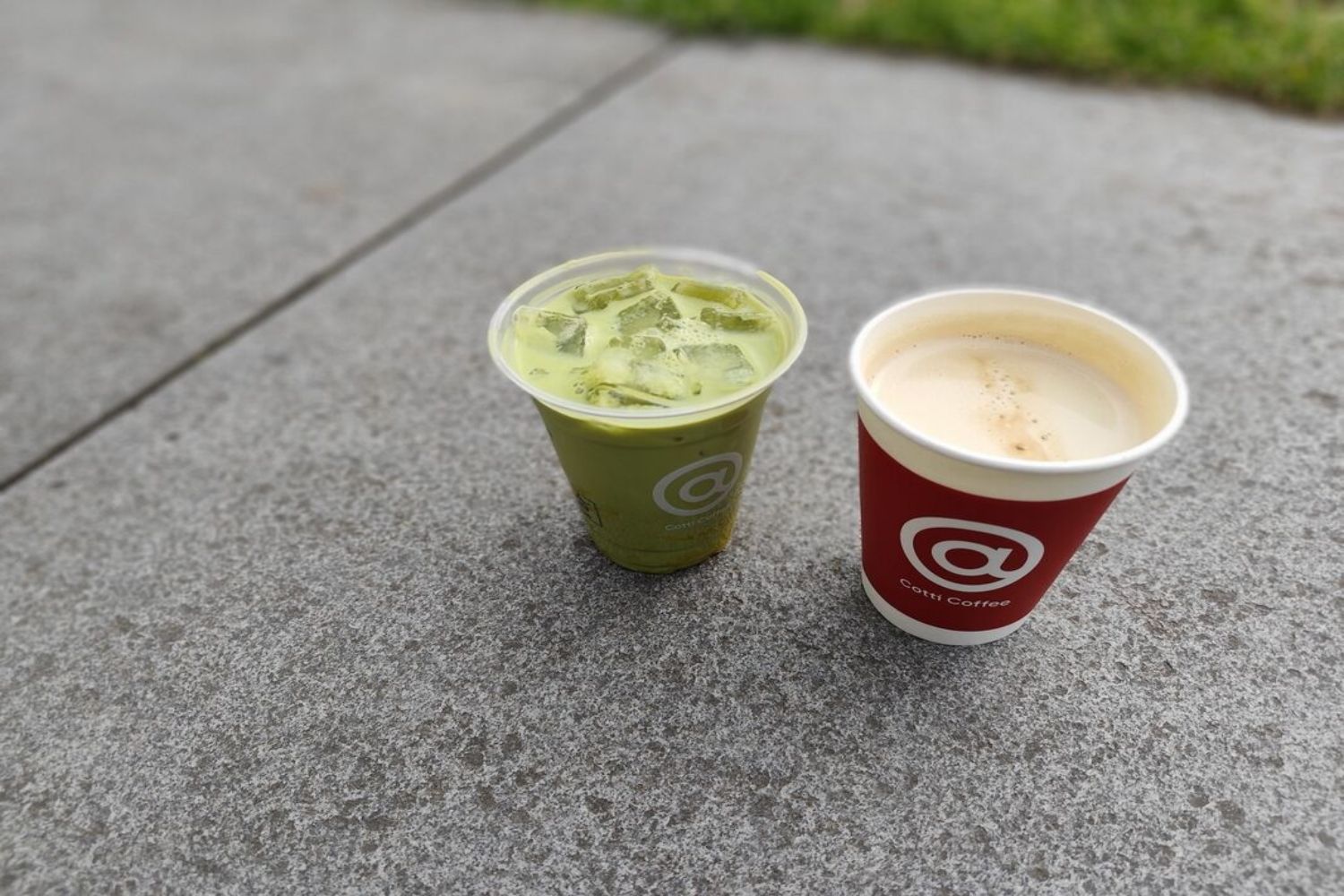
The idea that a fully automated concept doesn’t require trained staff turns out to be a fallacy, at least at this Cotti location. The lone counter clerk is clearly overwhelmed by the job, at least when it comes to operating the machines.
What’s sold as a cappuccino with (free) oat milk is about as far from the ideal as it’s possible to get. What ends up in the cup is a completely watery mixture that tastes neither like espresso nor contains any milk foam. Any other chain – or even a gas station with a fully automatic machine – does a better job.
The thing is so abysmal that we ended up tossing it after just a few sips. Ultimately, it makes us suspect that Cotti is mainly trying to attract customers and outshine the competition with its colorful trendy drinks.
After all, the matcha-mango-coconut specialty is much richer, and tastes exactly as you’d imagine it would: brash and way too sweet, but just right for a feature photo. Still, whether it’s really worth nearly six bucks is up for debate.
Full Marks for Friendliness, But No Coffee Bean Information
Despite the fact that the server at Cotti isn’t a barista, she’s certainly as friendly as the countless online reviews of the company consistently claim. However, good service doesn’t make up for bad coffee.
Of course, the lack of flavor could also be due to the coffee beans. A prominent sign in the store notes that the proprietary Gold Roast and Platinum Specialty have been certified as specialty coffee by the Specialty Coffee Association (SCA) and have won multiple awards.
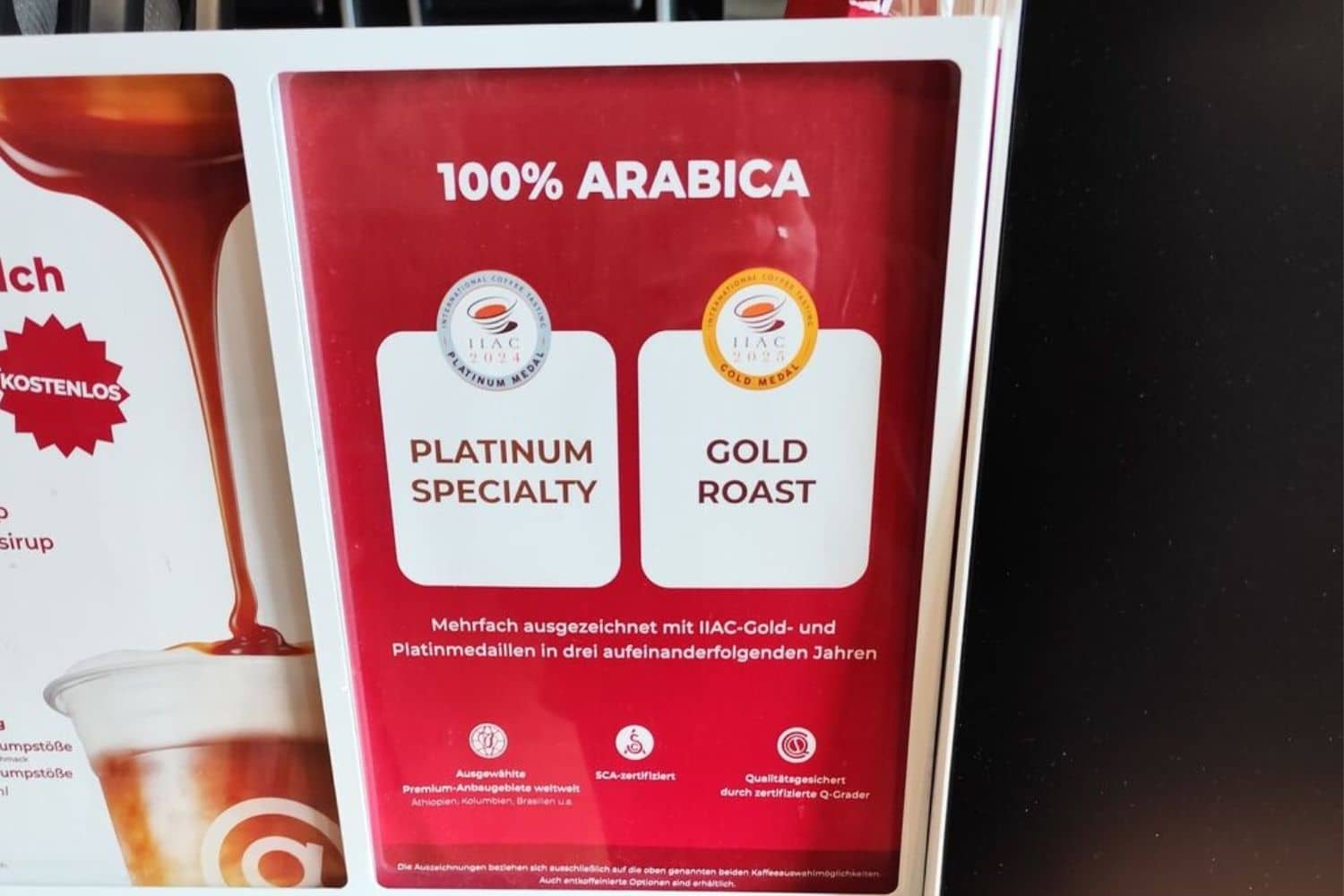
Unsurprisingly, there’s no information about the actual origin or procurement practices. At the end of the day, the message is clear: You can trust us, so don’t worry about a thing.
Just like with Starbucks and others, a lack of transparency is being masked here by a form of “fairwashing.” Grandiose language and a few casually dropped country names are meant to distract from the fact that the coffee industry is engaged in a cutthroat competition. And the fallout includes the exploitation of poor people and negative consequences for the environment.
Final Thoughts: Another LAP Coffee?
After all the disappointment with Cotti Coffee, one question really stands out: why aren’t the new locations in Germany being vandalized like the LAP cafes that were doused in paint?
Why do people and the media treat a Berlin-based startup with such hostility, while they more or less shrug off a Chinese chain with an adventurous appetite for expansion and questionable quality?
Don’t get me wrong: throwing paint bombs over alleged price dumping is completely out of line. It neither changes customers’ minds nor drives more business to competitors in the neighborhood. In spite of the abuse, LAP Coffee is doing just fine.
So, why isn’t there a similar outcry over Cotti Coffee? I have a clear opinion on this: because, in many ways, we’re all hypocrites.
I think Cotti Coffee is accepted – at least in terms of public opinion – because we’ve been conditioned to perceive Chinese products as affordable or even cheap. In public, we get upset about it, but when no one else is looking, we’re ordering stuff from Alibaba.
LAP irks people because it originated in Germany, went straight to the (cool) neighborhoods and supposedly started spoiling the local scene. Thus far, Cotti has only targeted soulless tourist hotspots in city centers.
What’s more, I’m convinced that LAP has really rattled the competition mainly because they don’t just offer a quick-and-dirty paper cup app concept, but actually serve objectively good drinks. And they even use fair-trade beans. How dare they?!
It doesn’t matter if Cotti Coffee opens more locations in Europe and the U.S., improves the quality of its coffee, or makes its espresso always available for 99 cents.
In my opinion, the company ultimately joins an endless line of generic franchise coffee shops as just another player. Nobody needs it; it’s just business as usual.
What do you think of Cotti and how do you feel about my review? Feel free to leave me a comment!
Cotti Coffee FAQ
Cotti Coffee is a Chinese brand formed in 2022 by two former employees of Luckijn coffee.
Cotti coffee is owned by Lu Zhengyao and Qian Zhiya
Cotti coffee has become popular because of its low-priced drinks and trendy, Instagrammable specialties.
Cotti Coffee employs a “profit sharing” franchise model.