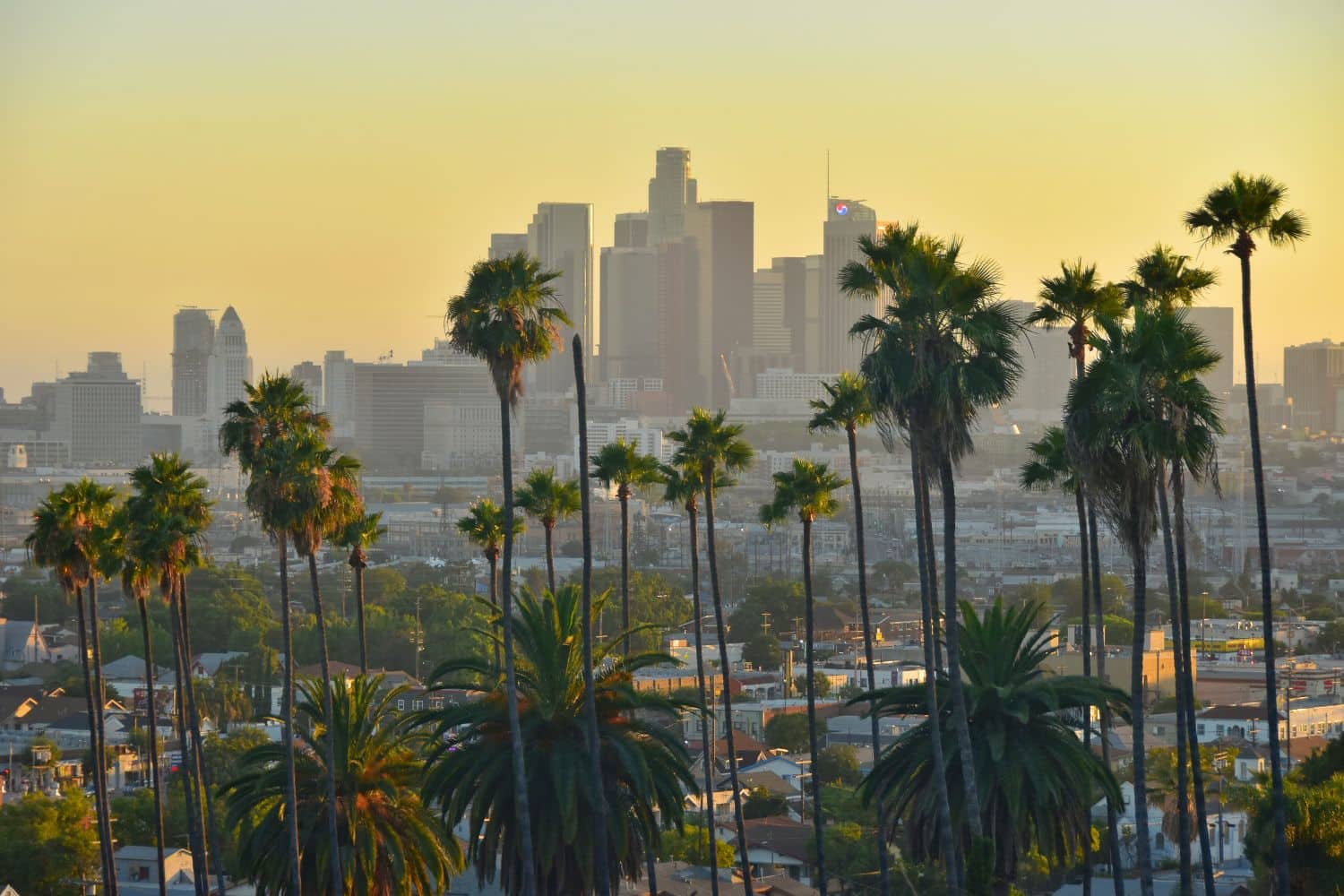




When we think of rural California, we likely picture sprawling vineyards alongside fruit and veggie farms. The idea of California grown coffee, therefore, may come as a surprise to many.
America’s richest state has come a long way coffee-wise, from cowboys enjoying frontier coffee in the 1800s, to producing some of the most terroir-centric coffee beans. And now, serious coffee lovers are beginning to pay attention.
Grown along the state’s southern coast, California coffee offers something truly rare: home-grown beans that embody craft and intention.
Ready to discover more about what could be your new favorite cup? Let’s dig in!
Table of Contents
Overview: Does California Really Produce Coffee?
Yes, California does cultivate coffee beans. And you know what? It’s surprisingly good!
Most of the world’s best coffee beans come from the “Bean Belt.” This is the equatorial band between the Tropics of Cancer and Capricorn, which spans Africa, South America, Asia and Oceania.
California lies at the northern edge of this zone. Like with Azores coffee, it sits at latitudes 32-34 north, enjoying conditions hospitable enough for coffee to thrive.
So, how did coffee get here in the first place? And who had the ingenious idea to introduce it?
The story begins in the early 2000s with FRINJ Coffee (more on this later). They began experimenting with Arabica varieties on their Goleta Ranch as an agricultural curiosity. This quickly grew into a quiet revolution.
Before FRINJ Coffee (FRINJ), Kona coffee, growing in Hawaii since the 1820s, was America’s only specialty coffee. California took its inspiration from Hawaii as both states enjoy similar zonal conditions.
Today, between 65 and 70 farms across the state cultivate California grown coffee, and they’re doing it extremely well. So much so that industry insiders have nicknamed the region “The Napa of Coffee.” They compare California’s emerging coffee identity to what the Napa Valley did for American wine in the 1970s.
What Makes California Grown Coffee Unique?
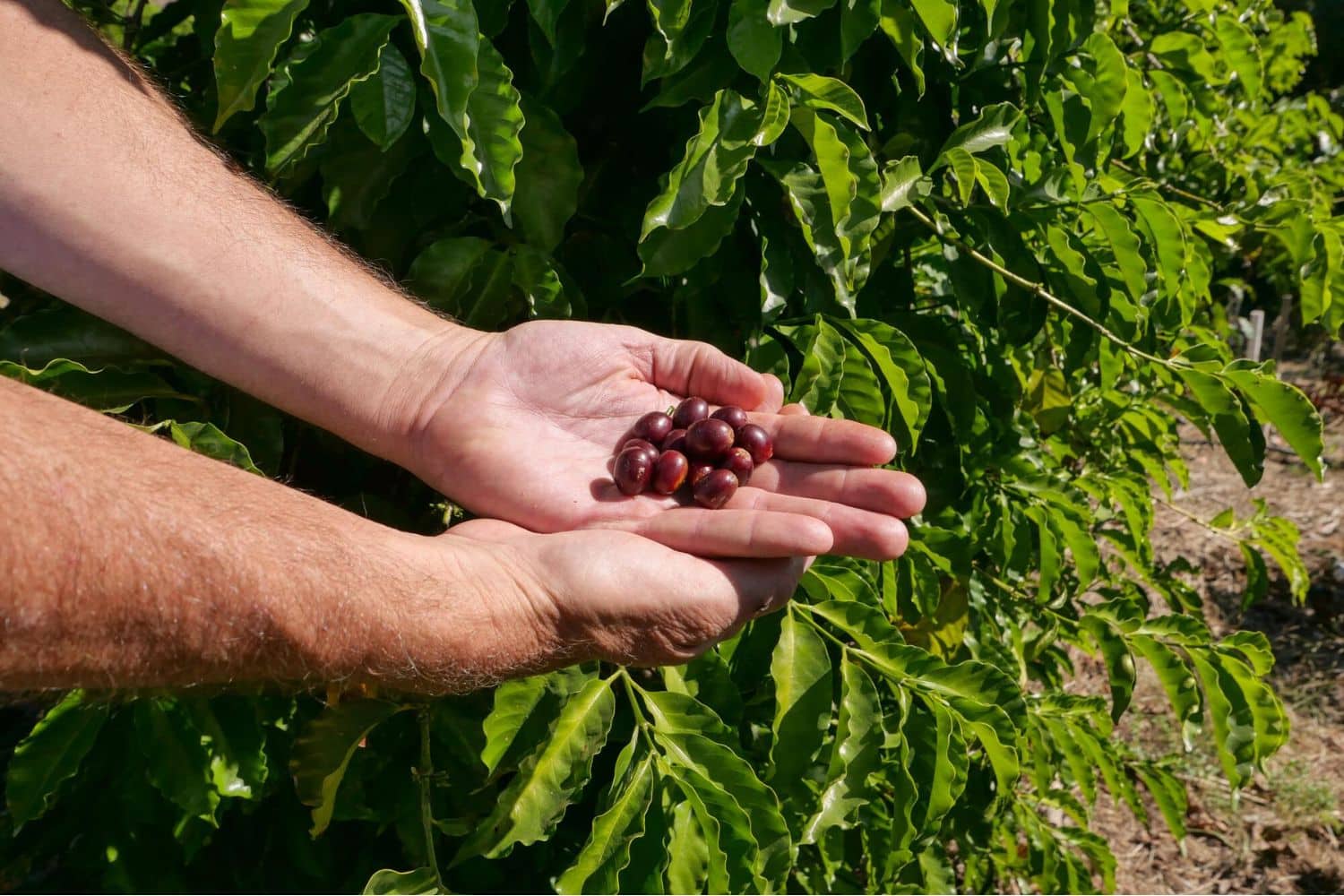
I suppose California coffee’s unique selling point comes down to its terroir. The growers’ farming philosophy and sheer obsession with quality also play a huge role.
Because California coffee farms operate on a micro scale, every harvest receives a ridiculous level of attention. Farmers hand-pick and carefully process their beans. Plus, they almost always sell their beans as direct-trade coffee.
The climate does something special, too. Cool Pacific breezes blow inland, slowing down cherry ripening. This allows sugars to develop more flavor complexity.
California growers also lean into experimental processing methods. These include honey and natural processing. These methods ramp up the fruit-forward complexity already baked into the bean. FRINJ also dabbles in anaerobic coffee.
Lastly, we can’t overlook the impact the United States Department of Agriculture (USDA) has on California grown coffee.
Although the USDA doesn’t regulate quality directly (there are no federal standards dictating how good your cup has to taste), it does control organic certification. This it does through the National Organic Program (NOP). The USDA Organic seal confirms that the beans underwent a rigorous process, covering everything from soil health to supply chain controls.
That said, there is a catch. This certification system tends to reward large-scale commodity coffee producers. As with Puerto Rican coffee, it sets a useful baseline. But California’s coffee quality story is really down to the growers themselves.
Where Does California Grow Coffee?
California coffee country looks a little different from traditional growing regions. It runs along the sun-drenched southern coast with just enough rainfall to keep plants happy.
Further, the cooling Pacific breeze and windbreaker fruit trees stand guard over rows of Arabica trees. These unconventional growing conditions are exactly what makes California grown coffee exciting.
On these farms, the elevation is much lower than you’d expect. Globally, Arabica coffee grows at between 900 and 2,200 meters above sea level (masl). But most farms in California sit at a mere 180-480 masl. Yet, they still produce premium beans.
So how is that possible? The answer lies in the region’s latitude, rich soil and dry Mediterranean climate.
First, California’s southern coastal regions sit at 32-34 degrees north. Here, growing conditions mimic higher elevations nearer the equator. In effect, the latitude does what the mountains do in Puerto Rico, Hawaii and elsewhere.
Then, California’s coastal microclimates nail the Arabica coffee-growing temperature range (60-70 degrees Fahrenheit or 15-21 degrees Celsius). As such, this coffee avoids accelerated ripening, which hurts flavor development. It also avoids devastating frost occurring in cooler climates.
Lastly, California has the right soil. According to Griffin Hall of Good Land Organics, the Santa Barbara region benefits from healthy, well-drained soil that is neither too hot nor too cold. These conditions are well adapted for subtropical crops like coffee.
Since 2015, FRINJ Coffee has helped farmers plant over 100,000 coffee trees across more than 70 farms. These plantations span Los Angeles, San Diego, Santa Barbara, Ventura and San Luis Obispo counties.
Coffee Varietals in California
For a country that doesn’t even rank as one of the biggest coffee producers in the world, America, courtesy of California, grows an impressive number of Arabica varieties. Each behaves a little differently in the state’s coastal microclimate.
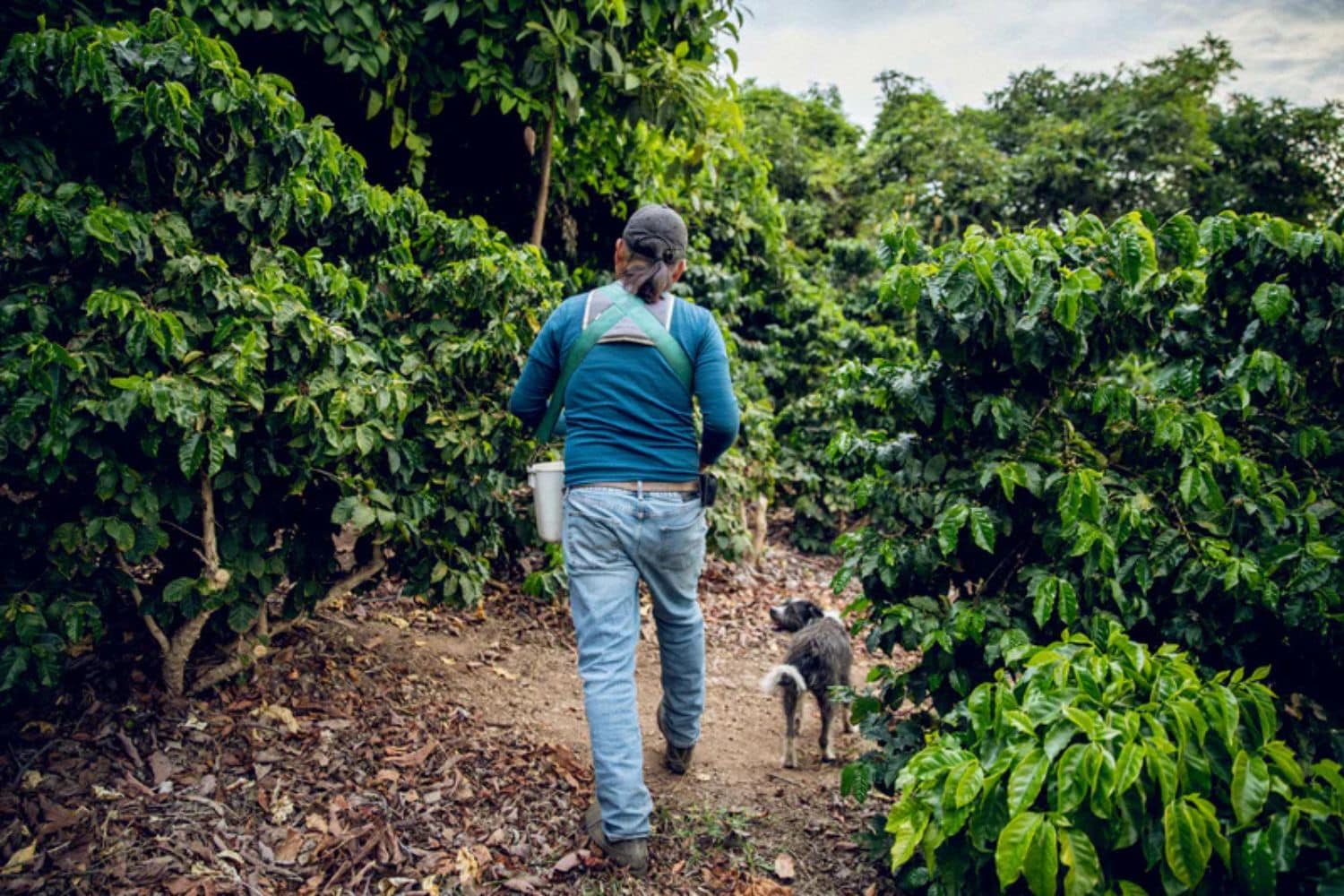
The long, sun-drenched growing season (up to 12 months), produces exceptional sweetness in the beans. Further, the marine fog, warm days and cool Pacific nights conspire to create an entirely new flavor profile.
Jay Ruskey of FRINJ notes that most farms grow at least two to three varieties. This ensures diversification, which maximizes farmers’ return on investment.
Caturra and Catuai, grown as Red Caturra, Yellow Caturra and Red Catauai are among the more popular varietals. They are critically important to California’s commercial coffee future. Both are high yielding, with farmers opting for Catuai for its vigor and disease resistance.
Then, there’s Geisha, of Panamanian Geisha fame. It boasts delicate floral and fruit tasting notes and commands high prices at market.
Next, Typica. Although this varietal is low-yielding, it has exceptional cup quality. In California, Typica’s sensitivity to disease is less of a problem given the dry Mediterranean climate.
Another California grown coffee variety is Bourbon. It expresses itself beautifully with red, yellow and orange ripening cherries, and yields exceptionally balanced coffees.
Pacas and Pacamara also thrive here. Farmers love Pacamara for its visually striking and flavor-intense beans. They gravitate toward Pacas for its manageable plant size and clean cup profile.
A few farms also grow Laurina. It’s naturally lower in caffeine (a third to half that of typical Arabica coffee varieties), has exceptional cup quality and, on average, produces more cherries per tree.
Because it’s lower in caffeine, its disease resistance isn’t great. But California’s dry, pest-averse climate works in its favor. As such, Laurina thrives without much farmer intervention.
Frinj Coffee: Pioneers of California Grown Coffee
For as long as coffee cultivation has existed, one geographic rule governed the industry: grow between the tropics. The idea of growing coffee in California would have struck seasoned agricultural professionals as folly.
But Jay Ruskey paid this no mind. An organic farmer based at Goleta Ranch near Santa Barbara, he had been working with agricultural scientists on the market potential of tropical fruits in California since the early 1990s.
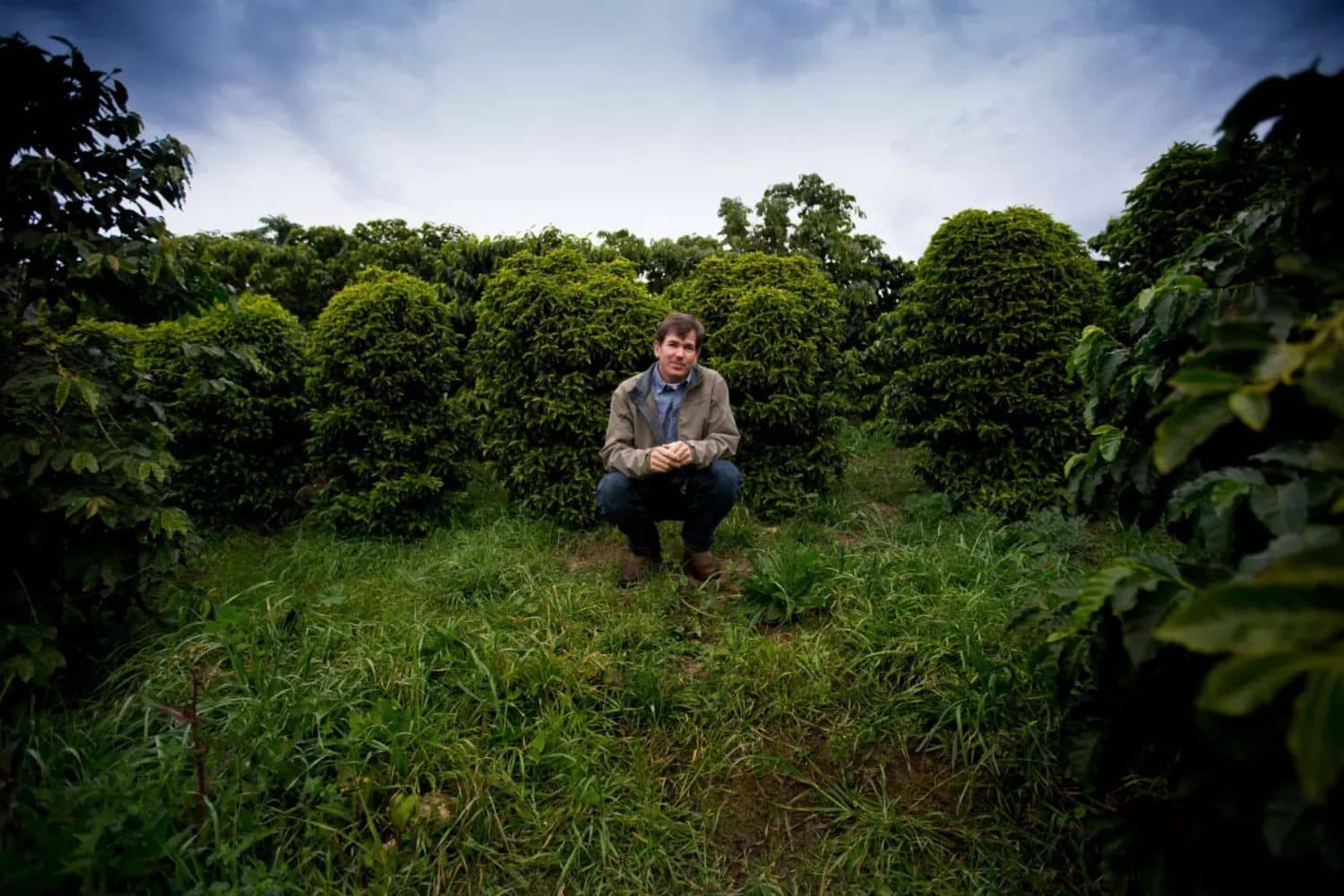
By 2002, Ruskey formed a unique working relationship with Mark Gaskell, PhD, a California Cooperative Extension Farm Advisor. Gaskell gave Ruskey 40 Typica and Caturra seedlings grown from Costa Rican seed.
What Ruskey did next was ingenious. He planted these seedlings among avocado trees at his Good Land Organics farm. This enabled the two plant species to sustainably share water and nutrients, while providing shade.
Ruskey soon realized that producing high-quality California grown coffee was going to take extra care and attention. He not only perfected growing the trees, but also coffee processing, fermentation, drying, milling and roasting.
His efforts paid off. In 2014, Ruskey submitted one of his coffees for evaluation by Coffee Review, a leading rating organization. His Caturra 2014 crop was the first California grown coffee ever tested. It ranked 27th worldwide with an exceptional score of 92.
As he gained success, Ruskey began sharing his knowledge with other farmers across Southern California. Recognizing the potential for an entire California coffee industry, he co-founded FRINJ in 2017.
FRINJ opened massive doors for Ruskey. Blue Bottle Coffee bought their entire 2017 crop of California-grown coffee beans, putting the state firmly on the specialty coffee map!
FRINJ Coffee Today
Today, FRINJ Coffee is an integral part of the California coffee scene. The progress achieved from those first seedlings is nothing short of remarkable.
There are now approximately 65-70 farms comprising the FRINJ network, ranging from Goleta north of Santa Barbara down to communities just north of San Diego.
FRINJ farmers produce over 14 varieties of coffee, including Gesha, Laurina, Caturra, Catuai and Pacamara. They share up to 45 percent of the revenue, which ensures their long-term sustainability.
Besides providing seedlings, FRINJ also buys, washes and processes farmer coffee, offers training and links farmers to roasters. FRINJ has also collaborated with UC Davis and biosystems researchers to ensure coffee’s resilience in the state.
In a remarkable final chapter of Ruskey’s work, FRINJ made history by fetching $256 per kilogram for a 20-kilogram lot of fully-washed Gesha at the 2025 DMCC Dubai Coffee Auction. This not only captured international attention, but also cemented California’s place in the world of fine coffee.
What Jay and Kristen Ruskey built will outlive them. The industry they imagined into existence from 40 coffee seedlings and a scientific hunch is now very real, and, as the specialty coffee world has come to understand, exceptionally good.
Where Can I Buy California Grown Coffee?
California grown coffee is still a rare, small-batch product. And that’s exactly the point!
Because supply is limited, the best way to get the real thing is to go close to the source. But be ready to pay. While the average specialty coffee runs about $1.40 per ounce, California grown coffee averages ten times more, around $10 per ounce.
As mentioned, FRINJ Coffee is the most direct route to farm-grown California beans. While they mostly sell green coffee, you may also buy roasted coffee directly from their website.
Good Land Organics (Jay Ruskey’s original Santa Barbara farm) also sells coffee. They specialized in medium roasts.
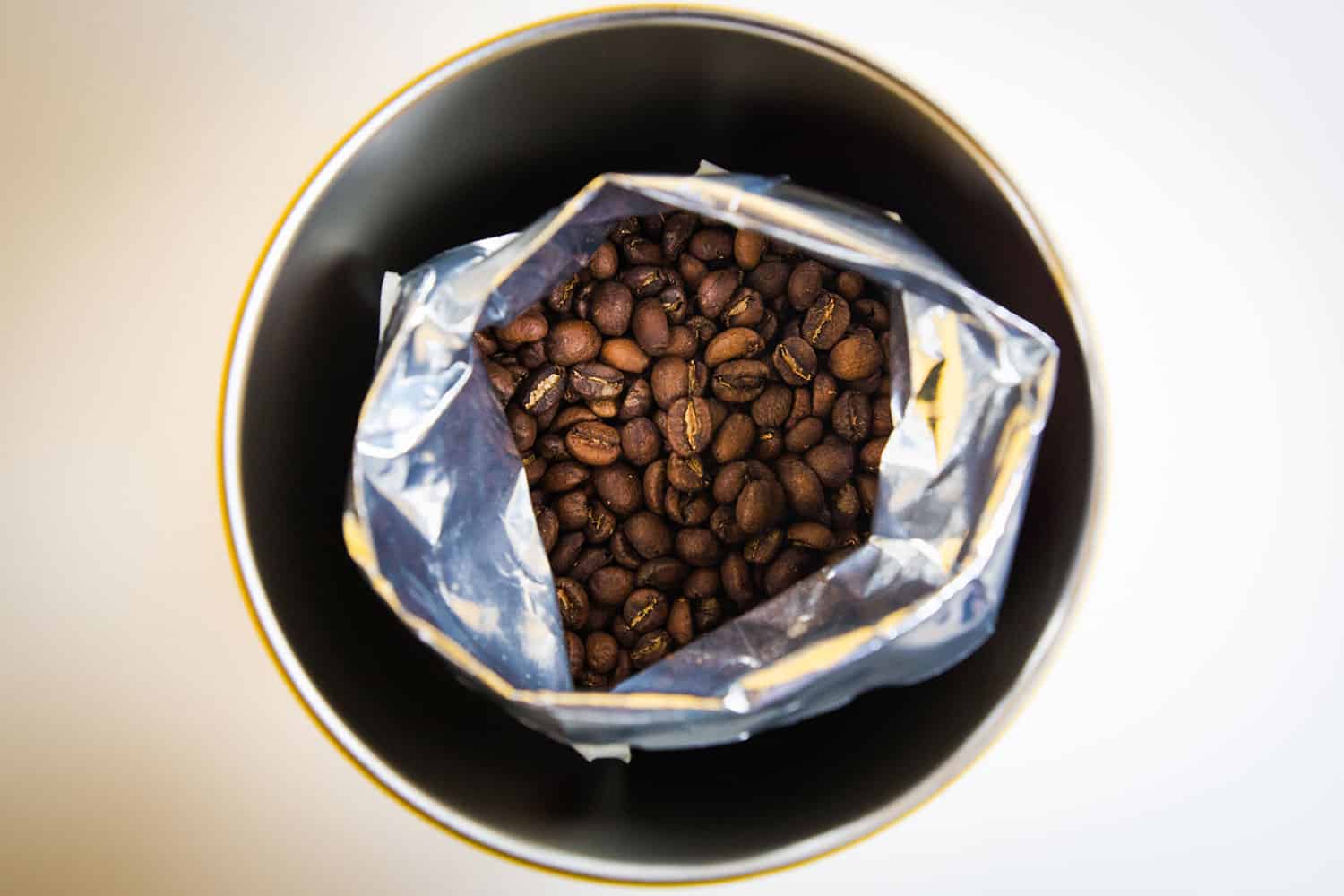
And here’s something pretty cool: If you’re into coffee with a purpose, you should check out Flip Coffee. Pet rescue advocates Rocky Kanaka and his wife Kelly started Flip Coffee Farm and Roasters as a tribute to Rocky’s childhood dog Flip, a Boxer whose life began in a shelter.
Flip became a mentor and guide to all the foster dogs Rocky and Kelly brought into their home. These beans are organic and grown specifically to support dog rehabilitation.
Several specialty roasters also sell California grown coffee, most notably the famous Blue Bottle Coffee Company. Watch out for their single-origin coffee releases or exceptional blends like the “Exceedingly Rare California FRINJ Naturals.”
Bird Rock Coffee Roasters, based in La Jolla, San Diego, is another. They focus on organic and socially responsible coffees and source directly from California farms. They have multiple San Diego locations and also sell online.
Last but not least, there’s Prospect Coffee Roasters. This family-owned specialty roaster (founded in 2014 by brothers Blake and Derek Ulrich) prioritize full traceability. They also have a coffee shop on South Laurel Street, Ventura.
Final Thoughts: What Does the Future Hold for California Grown Coffee?
California grown coffee is no longer a curiosity, but a verifiable movement. What began with a handful of pioneering farmers in Santa Barbara and Ventura Counties has quietly grown into an agricultural force.
California already accounts for nearly a quarter of all US coffee market revenue. As homegrown production steps up, the state is uniquely positioned to lead the next chapter of American specialty coffee.
This coffee offers exactly what today’s consumers are hungry for: traceable, sustainable, story-rich beans with uncompromising quality. Aren’t we lucky Ruskey took the risk?
Don’t wait for California coffee to go mainstream! Discover it now by ordering beans directly from California farms or specialty roasters before the rest of the world catches on.
I would like to note something important that emerged as I was writing this post. Jay Ruskey and his wife Kristen, the visionaries behind FRINJ, tragically passed away on February 8, 2026, in Cambria, California, in what is described as a tragic accident. This blog post honors their coffee legacy and life’s work.
FAQs
The most famous coffee brand grown in California is FRINJ Coffee. Notable roasters that roast California grown coffee include Prospect Coffee Roasters, Blue Bottle Coffee, Bird Rock Coffee Roasters and Cafe Altura.
Yes! What it lacks in production volumes it makes up for in flavor. In 2014, FRINJ Coffee was rated the 27th best coffee in the world with a score of 92 points. The price tag also reflects this coffee’s quality.
Hawaii and California. Puerto Rico, an unincorporated territory of the US, also grows coffee.